
Best Supplements for Performance: What Actually Works
Table of Contents
- The Performance Supplement Tier List: What Science Supports
- Creatine Monohydrate: The Gold Standard for Power and Strength
- Caffeine: The Most Studied Ergogenic Aid for Endurance and Focus
- Nitrates and Beta-Alanine: Fueling Endurance and Delaying Fatigue
- Best Supplements for Muscle Recovery: Protein and Beyond
- How to Choose Safe Supplements: Third-Party Testing and Labels
- FDA Supplement Regulation Explained: What the Label Doesn't Tell You
- How to Stack and Time Your Supplements for Best Results
- Frequently Asked Questions
Last Updated: September 5, 2026
Walk into any gym and you will hear a dozen different claims about what supplements for performance actually work. In this JordanWellnessCo guide, we break down the compounds with the strongest clinical support and the ones you can safely skip.
A handful of ingredients have decades of research behind them, while others rely on clever branding rather than biology. Below, we show you exactly how to choose, stack, and time these supplements.
The Performance Supplement Tier List: What Science Supports
Ergogenic aids are substances used to enhance physical performance, and the research base for them varies wildly by compound. The most effective supplements fall into a clear hierarchy based on clinical trial quality.
Tier 1 (Strong evidence): Creatine monohydrate, caffeine, and beta-alanine have the deepest research support for improving muscle power, explosive strength, and endurance. These are the foundational supplements that most athletes should build around.

Tier 2 (Moderate evidence): Nitrates from beetroot, citrulline, and protein supplements show meaningful benefits for specific outcomes like aerobic endurance and muscle recovery.
Tier 3 (Weak or mixed evidence): Most proprietary blends, "testosterone boosters," and exotic ingredients lack the clinical backing to justify their price tags.
| Tier | Supplement | Primary Benefit | Evidence Quality |
|---|---|---|---|
| 1 | Creatine Monohydrate | Strength, power output | Extensive clinical trials |
| 1 | Caffeine | Endurance, cognitive focus | Decades of research |
| 1 | Beta-Alanine | Delays muscle fatigue | Multiple meta-analyses |
| 2 | Beetroot Nitrates | Oxygen efficiency | Strong for endurance |
| 2 | Protein | Muscle recovery | Well established |
| 3 | Proprietary blends | Varies | Often unproven |
Creatine Monohydrate: The Gold Standard for Power and Strength
Creatine monohydrate is the most studied supplement for performance in the world. It works by increasing stored phosphocreatine, which helps regenerate adenosine triphosphate during short bursts of intense effort, translating into more reps, heavier lifts, and greater muscle power.
The standard protocol is a loading phase of 20 grams daily for five to seven days, split into four 5-gram doses, followed by a maintenance dose of 3 to 5 grams daily. You can skip the loading phase and reach the same levels in about three to four weeks.
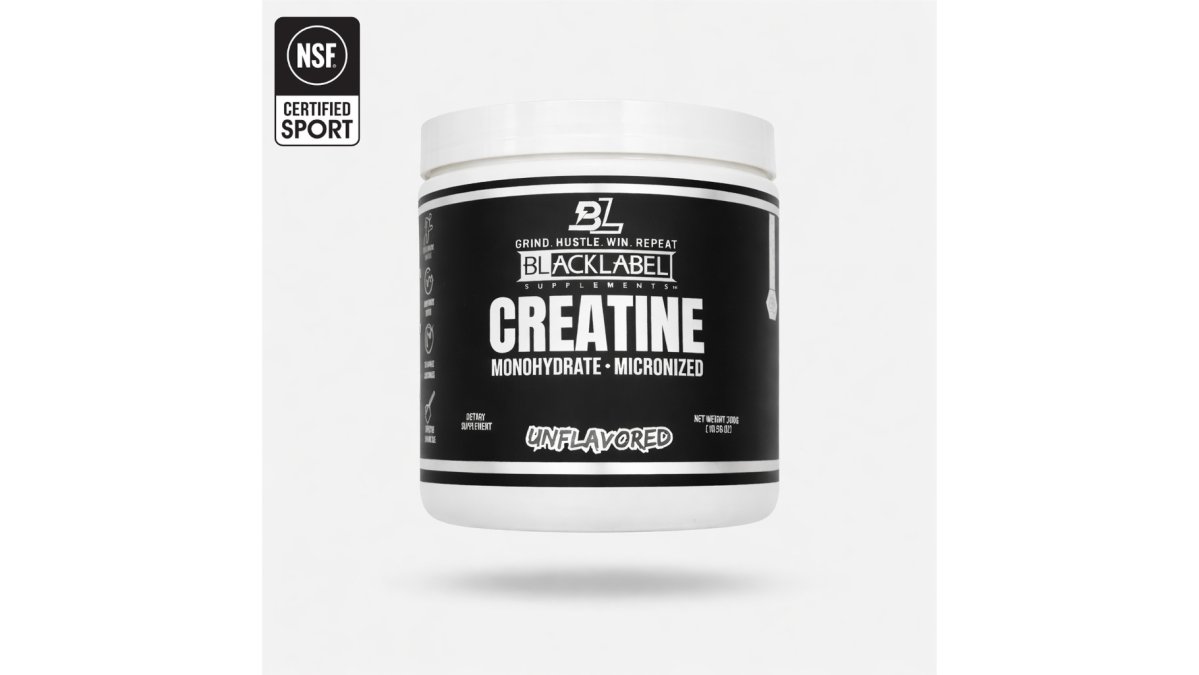
JordanWellnessCo carries several creatine options, including a straightforward CREATINE MONOHYDRATE at $29.99 with 5 grams of pure creatine per serving, and a Creatine Hydration Formula at $34.99 that pairs creatine with magnesium, sodium, and potassium to support electrolyte balance and hydration status during training.
Caffeine: The Most Studied Ergogenic Aid for Endurance and Focus
Caffeine stands apart from nearly every other ergogenic aid because it improves both physical output and mental performance simultaneously. It blocks adenosine receptors in the brain, reducing perceived effort and fatigue while sharpening cognitive focus.
Doses between 3 and 6 milligrams per kilogram of body weight, taken 30 to 60 minutes before exercise, produce the most consistent improvements in aerobic endurance and anaerobic capacity. A 70 kg athlete would therefore need roughly 210 to 420 mg, well within the range of a single strong pre-workout scoop.
The one drawback is tolerance; regular high-dose use dulls the response, so many athletes cycle caffeine or reserve it for demanding sessions. The APS Mesomorph Pre-Workout at $39.95 delivers 300 mg of caffeine alongside citrulline malate and beta-alanine.

Nitrates and Beta-Alanine: Fueling Endurance and Delaying Fatigue
Nitrate and beta-alanine work through different mechanisms, but both extend your ability to keep working when muscles tire. For aerobic endurance and oxygen efficiency, these two offer the most compelling evidence outside Tier 1 staples.
Nitrates, found concentrated in beetroot, convert to nitric oxide in the body, which dilates blood vessels and improves blood flow. This vasodilation reduces the oxygen cost of exercise, meaning you can sustain a given pace with less effort. A Beetroot Max powder at $15.95 or Beetroot capsules at $22.99 both provide convenient ways to get these benefits without drinking liters of juice.
Beta-alanine, by contrast, increases intramuscular carnosine, which acts as a buffer against lactic acid accumulation. This buffering capacity delays the burning sensation and muscle fatigue during high-intensity efforts lasting one to four minutes. A common side effect is a harmless tingling sensation, which many users find uncomfortable at first.
Best Supplements for Muscle Recovery: Protein and Beyond
Recovery is a process of repairing muscle damage, replenishing glycogen, and reducing inflammation. While protein is foundational, the real utility comes from understanding how to use it and what else has genuine support.
Protein: The Non-Negotiable Foundation
Protein provides the essential amino acids, particularly leucine, that trigger muscle protein synthesis (MPS). The consensus is that total daily protein intake, not a single post-workout shake, drives recovery, roughly 1.6 to 2.2 grams per kilogram of body weight per day.
The 'anabolic window' is real but often overstated; aim for 20 to 40 grams of high-quality protein within two hours post-exercise.
When choosing a protein powder, the type matters less than total leucine content. Whey is fast-digesting and rich in leucine; casein is slower and may help before sleep. Plant-based blends can be equally effective if fortified with leucine.
Beyond Protein: What the Evidence Actually Supports
Creatine is the most underrated recovery supplement. By accelerating phosphocreatine resynthesis, it helps muscles recover faster between sets and sessions, allowing higher training volume over a week.
For inflammation, tart cherry juice has the most consistent, albeit modest, evidence; consuming it for several days around intense exercise reduces muscle damage markers and soreness. Omega-3s have anti-inflammatory properties, but their impact on acute recovery is less conclusive.
A Practical Recovery Protocol
To move beyond generic advice, a recovery stack should be timed to the specific demands of your training week:
- Immediately Post-Exercise (0-2 hours): A fast-digesting protein source (20-40g) to initiate MPS. If you train fasted, adding a carbohydrate source can help replenish glycogen more rapidly.
- Daily (any time): 5 grams of creatine monohydrate. Consistency is more important than timing.
- On High-Volume or Eccentric-Focused Days: Consider 30-60 mL of tart cherry concentrate in the evening for a few days following the session to help manage inflammation.
- Before Bed: A slow-digesting protein like casein (or Greek yogurt) can support overnight MPS, particularly if your total daily protein intake is borderline.
For a sustained overnight option, a casein-based product can be a useful addition to your routine.
How to Choose Safe Supplements: Third-Party Testing and Labels
How to choose safe supplements comes down to one question: do you trust what is in the container? Quality varies enormously between brands, and the label is not always accurate.
Third-party testing programs like NSF International and Informed Sport verify that label ingredients match container contents and test for banned substances. A product bearing one of these seals has undergone a rigorous review most supplements have not.
NSF International's certified for sport program requires annual re-testing and facility audits, making it one of the most respected verification systems available. When you see this seal, you know the product has been checked for over 280 substances banned by major athletic organizations.
The PURE POWER supplement at $44.99 is NSF Certified for sport, meaning it has passed independent testing for banned substances and label accuracy. It is designed for athletes who want to build strength and endurance without stimulants or the tingling sensation that beta-alanine can cause.

FDA Supplement Regulation Explained: What the Label Doesn't Tell You
The regulatory framework for dietary supplements in the US is fundamentally different from that of pharmaceuticals, the single most important factor in evaluating any supplement's safety and efficacy claims.
Under DSHEA (1994), supplements are regulated as food, not drugs, and do not need FDA approval before sale. The manufacturer is responsible for safety and truthful labeling; the FDA's role is primarily post-market, acting only after a product is shown unsafe or misbranded.
This 'innocent until proven guilty' approach places the burden on you. The label is a starting point, not a guarantee of quality. Here is what it does not tell you:
- It does not verify the ingredients are in the amounts claimed. A 2020 study by the National Institutes of Health's Office of Dietary Supplements found that many supplements on the market do not contain the labeled amount of key ingredients.
- It does not guarantee the product is free from contaminants. This includes heavy metals, pesticides, and undeclared pharmaceutical ingredients.
- It does not confirm the product will do what it claims. The FDA does not evaluate structure/function claims, such as 'supports energy' or 'promotes muscle growth,' for scientific validity before they appear on a label.
The Practical Path to Safety: Third-Party Certification
Given this regulatory reality, the most reliable way to assess a product's quality is to look for third-party certification. These programs are voluntary, but they provide an independent layer of verification that the FDA's framework does not.
- NSF Certified for Sport: This program is specifically designed for athletes. It tests for over 280 substances banned by major athletic organizations, as well as verifying label claims for accuracy. It also includes facility audits to ensure good manufacturing practices.
- Informed Sport: Similar to NSF, this program tests every batch of a product for banned substances. It is widely used by professional and Olympic athletes.
- USP Verified: This program focuses on general supplement quality, verifying that the product contains the ingredients listed on the label in the declared amounts and is free from harmful levels of contaminants.
Who Should Be Cautious?
Even with third-party certification, supplements are not for everyone. Certain populations should exercise extra caution or avoid them altogether without medical supervision:
- Pregnant or Nursing Women: The safety of most performance supplements has not been established for this population.
- Individuals with Pre-existing Medical Conditions: Those with kidney or liver disease, heart conditions, or diabetes should consult a physician before starting any supplement, as ingredients can interact with medications or exacerbate underlying issues.
- People Taking Prescription Medications: Caffeine can interact with certain antibiotics and antidepressants, while creatine may affect kidney function tests.
This is why the PURE POWER supplement at $44.99 is a standout choice. It is NSF Certified for Sport, providing a level of assurance that is rare in the industry and your best defense against regulatory gaps.
How to Stack and Time Your Supplements for Best Results
Supplement stacking protocols matter because some ingredients work synergistically while others compete for the same pathways. A well-designed stack addresses your training demands without overlap or wasted money.
A practical daily stack for most athletes looks like this:
- Pre-workout (30-45 minutes before training): Caffeine and beta-alanine for energy, focus, and fatigue delay
- During or immediately after training: Creatine (5 grams) with a fast-digesting protein source
- Daily: Creatine maintenance dose on rest days, plus beetroot or citrulline for nitric oxide production and circulation
Start with half the recommended dose of any new supplement to assess tolerance, especially for stimulants. Give each compound two to three weeks before evaluating whether it works.
The Nitric Oxide capsules at $24.99 combine L-citrulline and L-arginine in a simple two-capsule daily dose, making them an easy addition to any stack for those focused on blood flow and endurance. For athletes who prefer a stimulant-free daily builder, PURE POWER fits that niche without requiring cycling or losing effectiveness over time.
Choosing the right supplements for performance does not have to be complicated. Focus on compounds with real clinical support, verify quality through third-party testing, and build a stack that matches your training goals. JordanWellnessCo curates products that meet these standards, from NSF Certified options like PURE POWER to clinically dosed creatine and nitrate formulas. Get started with JordanWellnessCo and build a routine backed by evidence, not hype.
Frequently Asked Questions
What are the big 3 supplements for athletic performance?
The 'big 3' performance supplements with the strongest evidence are creatine monohydrate, caffeine, and beta-alanine. Creatine supports explosive strength and power by helping regenerate ATP. Caffeine improves endurance, alertness, and perceived effort. Beta-alanine buffers lactic acid to delay muscle fatigue during high-intensity work. Together, they address three different metabolic demands. Start with creatine and caffeine first since their clinical trials and systematic reviews show the most consistent benefits across different athletes.
Are performance supplements regulated by the FDA?
The FDA regulates dietary supplements as food, not drugs. That means manufacturers are responsible for product safety and label accuracy before they go to market, but the FDA does not approve supplements for effectiveness or safety before sale. The FDA can take action against unsafe or mislabeled products after they reach the market. For this reason, look for third-party testing seals from organizations like NSF International or Informed Sport, which verify that what is on the label is actually in the product.
How do I choose safe and high-quality supplements?
Check for third-party testing seals from NSF International, Informed Sport, or USP. These programs verify ingredient accuracy and screen for banned substances. Read the supplement facts panel to confirm you are getting clinically studied dosages, like 3-5 grams of creatine monohydrate or 3.2 grams of beta-alanine. Avoid proprietary blends that hide individual ingredient amounts. Buy from established brands with transparent sourcing and look for products made in facilities that follow current Good Manufacturing Practices.
Do I need supplements to improve my athletic performance?
No, supplements are not required to improve performance. Your training program, sleep, and diet are the foundation. Whole foods provide the protein, carbohydrates, and micronutrients your body needs. Supplements like creatine monohydrate and caffeine provide a measurable edge once your basics are covered. If you are new to training, focus on consistent workouts and adequate protein intake first. Add supplements one at a time to assess tolerance and track whether you notice a difference in your performance.
This article was written using GrandRanker