
7 Essential Oils for Morning Focus
Table of Contents
- How Aromatherapy Affects the Brain for Focus
- Top 7 Essential Oils for Morning Focus
- Essential Oil Diffuser Blends for Productivity
- How to Use Essential Oils for Focus
- Aromatherapy for Brain Fog: Creating Your Morning Ritual
- Safety Precautions and Application Guidelines
- Conclusion
Last Updated: August 14, 2026
How Aromatherapy Affects the Brain for Focus
When you inhale an essential oil, aromatic compounds travel directly to your olfactory system, the sensory neurons in your nasal cavity that process smell. These signals bypass your thalamus and reach the limbic system, the brain region controlling emotion, memory, and motivation, within seconds. This direct pathway explains why certain oils can shift your mental state faster than other wellness interventions.

The limbic system connects to your prefrontal cortex, which governs executive function, your ability to concentrate, plan, and resist distractions. Oils rich in compounds like limonene (found in citrus) and 1,8-cineole (found in rosemary and peppermint) enhance cognitive function by modulating neurotransmitters like dopamine and norepinephrine, which directly influence focus and motivation.
Timing amplifies aromatherapy's effectiveness. Your cortisol levels naturally peak in early morning hours, supporting alertness. Pairing this natural rhythm with invigorating essential oils amplifies the effect. The olfactory system doesn't habituate as quickly to scent as other senses do, meaning consistent use maintains cognitive benefits over weeks and months.
Top 7 Essential Oils for Morning Focus
1. Peppermint: The Alertness Booster
Peppermint's high menthol content directly stimulates the trigeminal nerve, signaling your brain to increase alertness and respiratory rate. Most people report noticeable mental clarity within 30 seconds of inhalation. Peppermint works whether you diffuse it, apply it topically (diluted), or use an aromatherapy inhaler.
NOW Foods offers pure peppermint essential oil. If you're new to essential oils, peppermint is forgiving and difficult to overuse. Start with a single drop in your diffuser rather than the typical 3-5 drops if the aroma feels overwhelming.
2. Lemon: Citrus Energy for Mental Clarity
Lemon essential oil delivers sustained mental energy without peppermint's intensity. Its limonene content supports cognitive function and mood regulation. Lemon is gentler but still highly effective for sharpening focus and reducing mental fatigue.
Lemon pairs exceptionally well with other oils in diffuser blends, making it a versatile foundation for productivity rituals. Unlike oils that dominate a blend, lemon complements and enhances other aromatic compounds.
Note: Lemon oil is photosensitive and can cause skin irritation if applied topically and exposed to direct sunlight. Stick to diffusion or inhalation methods rather than topical application on exposed skin.
3. Rosemary: Herbal Support for Memory
Rosemary has been studied for its effects on cognitive function, particularly memory retention and mental clarity. Compounds including 1,8-cineole and camphor support nervous system function. If your morning focus challenges include remembering details, rosemary addresses that specific need more directly than purely energizing oils.
Rosemary works best as part of a blend rather than used alone. Pairing it with lighter citrus oils creates a more balanced aroma while still delivering cognitive support.
4. Frankincense: Grounding Focus Blend
Frankincense brings a grounding, meditative quality to morning focus rituals. While not primarily stimulating like peppermint, frankincense supports deep concentration and emotional regulation. Its boswellic acids support nervous system balance, making it particularly valuable if your focus challenges stem from anxiety or mental restlessness.
Frankincense works best combined with other oils. Paired with lemon or peppermint, it creates a blend that supports both mental clarity and emotional stability, the ideal state for sustained focus.
5. Cedarwood: Calm Concentration
Cedarwood supports calm, sustained concentration rather than energetic alertness. Its warm, woody aroma promotes grounding and mental stability. If your mornings involve high-stress work requiring precision, cedarwood prevents the scattered feeling that sometimes accompanies pure stimulation.
Use cedarwood in afternoon focus blends more than morning ones. Its grounding quality is better suited for maintaining focus after the initial morning energy peak, around 10 AM or later.
6. Bergamot: Uplifting Mental Energy
Bergamot brings an uplifting, effervescent quality to focus blends. Its complex citrus character combines mental energy with emotional uplift, making it valuable for mornings when facing challenging or tedious tasks.
Bergamot blends well with herbal oils like rosemary and lavender, creating sophisticated combinations that support focus without feeling clinical.
7. Vetiver: Grounding for Deep Focus
Vetiver offers the deepest, most grounding support for sustained focus. Its earthy aroma promotes mental stability and emotional grounding. If you need to maintain focus for extended periods, particularly for analytical or creative work, vetiver provides neurological support for sustained concentration.
Vetiver alone feels too subtle for immediate morning energy, but in combination with citrus or herbal oils, it anchors a blend and prevents the scattered, overstimulated feeling that can come from using only energizing oils.
Essential Oil Diffuser Blends for Productivity
Creating your own diffuser blends gives you precise control over the aroma and its cognitive effects. Custom blends let you adjust ratios based on your response and preferences.
Morning Energy Blend Recipe
Ingredients:
- 3 drops peppermint
- 2 drops lemon
- 1 drop rosemary
Add drops to your diffuser 30 minutes before your most important work. The peppermint provides immediate stimulation, lemon sustains mental clarity, and rosemary supports memory and focus. Run your diffuser for 30-60 minutes.
Deep Work Blend Recipe
Ingredients:
- 2 drops frankincense
- 2 drops cedarwood
- 1 drop bergamot
- 1 drop vetiver
Use this blend during mid-morning through early afternoon for tasks requiring several hours of concentrated attention. The frankincense and cedarwood provide grounding stability, bergamot maintains mental clarity, and vetiver prevents mental fatigue. Run for 60-90 minutes, then turn off for 30 minutes before restarting.
Mental Clarity Blend Recipe
Ingredients:
- 2 drops rosemary
- 2 drops lemon
- 1 drop peppermint
- 1 drop frankincense
Use this combination on mornings when you're struggling to concentrate or feel mentally cloudy. Rosemary and lemon address mental fog directly, peppermint provides alertness, and frankincense prevents scattered thinking. Run for 45 minutes to start.
How to Use Essential Oils for Focus
Diffusion Methods
Ultrasonic diffusers are the most popular choice for home and office use. They disperse essential oil particles into the air using ultrasonic vibrations, creating a fine mist. The Vitruvi Stone Diffuser exemplifies this category, covering rooms up to 500 square feet and running for up to 8 hours.
Passive diffusion using a tissue or cotton ball works when you can't use an electric diffuser. Place 1-2 drops on a tissue and keep it near your workspace. This method lasts 15-20 minutes and requires no electricity, making it practical for offices or shared spaces.
Nebulizing diffusers disperse pure essential oil without water or heat, delivering the strongest aromatic concentration. These work quickly but use oil faster and can feel overwhelming in small spaces.
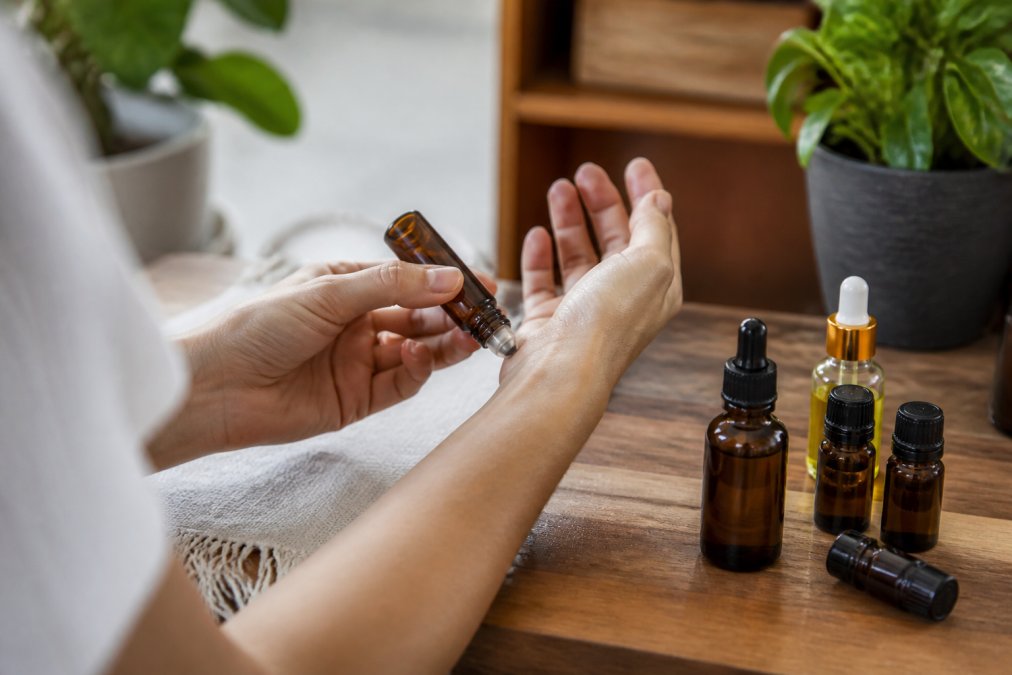
Topical Application on Pulse Points
Applying diluted essential oils to pulse points delivers sustained aromatherapy throughout your morning. Pulse points, wrists, behind ears, inner elbows, have higher skin temperature, which intensifies the aroma.
Never apply undiluted essential oils directly to skin. Mix essential oils with a carrier oil like jojoba, coconut, or almond oil at a 2-3% dilution (roughly 12-18 drops of essential oil per ounce of carrier oil). Pre-diluted roll-ons like doTERRA's InTune Focus Blend or Rocky Mountain Oils' Attention Assist Roll-On are ready to apply directly.
Roll or dab the diluted oil on your inner wrists, then bring your wrists to your nose and inhale deeply for 10-15 seconds. Reapply every 2-3 hours as needed throughout your workday.
Inhalation Techniques
Direct inhalation delivers the fastest cognitive response. Hold a bottle of essential oil 2-3 inches from your nose and inhale deeply for 5-10 seconds. This method works instantly but lasts only 5-10 minutes, making it best for acute focus challenges.
Aromatherapy inhalers like the rareESSENCE Focus Aromatherapy Inhaler offer portable, discreet inhalation. These personal inhalers contain a cotton wick saturated with essential oil blend and last weeks while fitting in a pocket.
Aromatherapy for Brain Fog: Creating Your Morning Ritual
Brain fog responds particularly well to deliberate aromatherapy rituals. Rather than haphazardly using oils when you remember, a consistent morning protocol creates predictable cognitive benefits.
5-Minute Morning Aromatherapy Protocol
Step 1 (1 minute): Start your diffuser with your chosen morning blend while you prepare breakfast or coffee.
Step 2 (2 minutes): Apply your diluted essential oil blend to pulse points, wrists and behind ears. Inhale deeply from your wrists.
Step 3 (1 minute): Sit quietly for 60 seconds while the aroma surrounds you, allowing your nervous system to register the aromatic signal and begin the neurological shift toward focus.
Step 4 (1 minute): Begin your first task. The combination of diffused and topically applied oils creates a multi-sensory focus cue that your brain learns to associate with concentrated work.
Consistency matters more than perfection. Using this protocol daily for two weeks creates a conditioned response, your brain begins anticipating focus when it detects these specific aromas.
Timing Your Oils for Maximum Alertness
Your cortisol levels naturally peak 30-45 minutes after waking. This is your brain's optimal window for focus and alertness. Time your aromatherapy ritual to coincide with this peak for maximum effect.
If you wake at 6 AM: Use your diffuser and topical oils between 6:30-6:45 AM.
If you wake at 8 AM: Apply your protocol between 8:30-8:45 AM.
Most people experience a secondary alertness dip around 2-3 PM. This is an ideal time to reapply topical oils or use an aromatherapy inhaler for afternoon focus support.
Safety Precautions and Application Guidelines
Dilution is non-negotiable for topical use. Applying undiluted essential oils to skin causes irritation and potential sensitization. Use a 2-3% dilution ratio (12-18 drops per ounce of carrier oil) for adult topical application. Children and pregnant individuals require lower dilutions, consult qualified aromatherapy practitioners for specific guidance.
Photosensitivity affects citrus oils. Lemon, bergamot, and other citrus-based oils can cause skin irritation or hyperpigmentation when applied topically and then exposed to direct sunlight. Avoid topical application on exposed skin, or wait at least 12 hours before sun exposure.
Individual sensitivity varies significantly. Start with lower dilutions and fewer diffuser drops, then increase as you assess your response. If you experience headaches, dizziness, or skin irritation, reduce concentration or discontinue use.
Pets require special consideration. Cats and some birds are particularly sensitive to essential oils. Use essential oils in well-ventilated spaces and monitor for signs of respiratory distress.
Quality matters for safety and efficacy. Therapeutic-grade oils from reputable sources contain the aromatic compounds that support focus. JordanWellnessCo curates a selection of high-quality aromatherapy products designed for this purpose, ensuring you're using oils that deliver both safety and results.
Pregnancy and medical conditions require professional guidance. If you're pregnant, nursing, or managing medical conditions, consult a healthcare provider before starting an aromatherapy practice. Some essential oils can interact with medications or affect pregnancy outcomes.
Storage extends oil lifespan and maintains potency. Keep essential oils in dark glass bottles away from direct sunlight and heat. Properly stored oils maintain their aromatic compounds for 2-3 years.
Morning focus doesn't require complicated routines or expensive supplements. A deliberate aromatherapy practice, using essential oils strategically timed with your natural cortisol rhythm, creates the neurological conditions for sustained concentration. Your brain learns to associate these specific aromas with focused work, creating a conditioned response that strengthens over weeks.
JordanWellnessCo offers a curated selection of therapeutic-grade essential oils and diffusers designed to support your morning focus ritual. Shop now and establish the aromatherapy foundation that transforms your mornings from scattered to sharp.
Frequently Asked Questions
What essential oils are best for morning focus and alertness?
Peppermint, lemon, and rosemary are the most effective for morning focus. Peppermint stimulates the olfactory system and activates the nervous system for immediate alertness. Lemon and other citrus oils uplift mood and sharpen mental clarity. Rosemary supports memory retention and cognitive function. Many people combine these in diffuser blends or use them topically on pulse points for a quick mental boost when morning fog sets in.
How do essential oil diffuser blends for productivity work?
Diffusing essential oils releases aromatic compounds into the air, which reach your olfactory system and limbic system, the brain regions controlling focus and mood. A morning energy blend combining peppermint, orange, and bergamot creates an invigorating atmosphere that supports concentration. Diffusing for 15-30 minutes before or during work stimulates the senses and reduces mental fatigue, helping you stay on task longer.
Can aromatherapy actually help with brain fog?
Yes. Brain fog occurs when the nervous system lacks stimulation and mental clarity diminishes. Invigorating oils like peppermint and rosemary activate the olfactory system, signaling the brain to increase alertness and clear mental cobwebs. Creating a morning aromatherapy ritual, diffusing oils for 10 minutes while you prepare for your day, primes your nervous system for focus. Many people notice improved mental clarity within the first week of consistent use.
Are there any safety concerns with using essential oils daily?
Essential oils are safe when used properly. Always dilute oils with a carrier oil (like jojoba or coconut oil) before topical application, never apply undiluted oils directly to skin. Use a diffuser in well-ventilated spaces and limit diffusion to 30-60 minutes per session. If you have pets, check that your chosen oils are pet-safe, as some oils can be harmful to cats and dogs. Pregnant women and those on medications should consult a healthcare provider before use.
This article was written using GrandRanker