

Table of Contents
- Why Shopping for Holistic Supplements and Skincare Online Requires a Smarter Approach
- FDA Regulations for Dietary Supplements: What Every Online Shopper Should Know
- How to Choose Holistic Supplements That Actually Fit Your Routine
- The Benefits of Natural Skincare Ingredients and How They Work
- Clean Beauty, Vitamins, and Herbal Remedies: Building a Complete Wellness Routine
- Targeted Solutions for Skin Conditions, Sports Nutrition, and Eco-Friendly Home Care
- How JordanWellnessCo Curates Holistic Supplements and Skincare Online
- Conclusion
Last Updated: August 5, 2026
Why Shopping for Holistic Supplements and Skincare Online Requires a Smarter Approach
The wellness aisle has moved online, and navigating thousands of products, dozens of certifications, and questionable marketing claims requires more than a search bar. At JordanWellnessCo, we see customers who've spent money on products that didn't deliver or supplements that turned out to be poorly sourced.
The key insight most shopping guides miss: holistic wellness is a system, not a product category. Supplements, skincare, and lifestyle choices work together. A vitamin C serum applied topically works differently than vitamin C taken as an ingestible. A probiotic that supports gut health also influences skin clarity through the gut-skin axis. Understanding these connections separates a routine that works from an expensive collection of half-used bottles.
Below, we'll walk through FDA regulations you need to know, how to pair supplements with topicals, which natural skincare ingredients have real clinical backing, and how to build a complete wellness routine that accounts for targeted skin conditions, sports nutrition, and eco-conscious home care.
FDA Regulations for Dietary Supplements: What Every Online Shopper Should Know
The U.S. Food and Drug Administration does not approve dietary supplements before they go to market. Instead, according to FDA dietary supplement overview, manufacturers are responsible for ensuring their products are safe and that any claims made are truthful and not misleading. The FDA steps in after the fact, typically when a product causes harm or when labeling violations are flagged.
This matters enormously when you shop holistic supplements and skincare online. A product can legally appear on a reputable-looking website while containing undisclosed ingredients, inaccurate dosages, or contaminants. The safest way to protect yourself is to look for supplements independently tested by organizations like NSF International or USP, which verify that what's on the label is actually in the bottle.
What the FDA does regulate: supplement manufacturers must follow Current Good Manufacturing Practices (CGMPs), and they cannot make drug-like claims (such as "cures diabetes"). They can make structure/function claims ("supports immune health"), but these must be accompanied by the disclaimer: "This statement has not been evaluated by the Food and Drug Administration."
Key things to verify before purchasing:
- Third-party testing seal from NSF, USP, or Informed Sport
- Clear ingredient list with dosages per serving
- No claims that the product diagnoses, treats, cures, or prevents disease
- Manufacturer contact information and a lot number for traceability
Contraindication Warnings: When to Pause Before You Purchase
Contraindication warnings are one of the most underreported topics in the online wellness space. Certain supplements interact with prescription medications in ways that can cause real harm. St. John's Wort, for example, reduces the effectiveness of birth control pills, blood thinners, and some antidepressants. Vitamin K supplements can interfere with warfarin therapy. High-dose fish oil may increase bleeding risk before surgery.
Before adding any new supplement to your routine, cross-reference it with your current medications using a tool like the NIH Office of Dietary Supplements interaction checker. If you're managing a chronic condition, consult a healthcare provider first.
How to Choose Holistic Supplements That Actually Fit Your Routine
Choosing holistic supplements starts with identifying a specific goal rather than a vague desire to "be healthier." Specific goals, like improving sleep quality, supporting post-workout recovery, or addressing skin dullness, allow you to select targeted products and measure whether they're working.
A practical framework for evaluating any supplement:
| Evaluation Criteria | What to Look For | Red Flag |
|---|---|---|
| Ingredient sourcing | Organic, non-GMO, sustainably sourced | No sourcing information listed |
| Third-party testing | NSF, USP, or Informed Sport certification | No testing seal or vague "quality assured" language |
| Bioavailability | Active or methylated forms (e.g., methylfolate vs. folic acid) | Cheapest form of nutrients used |
| Dosage transparency | Full ingredient amounts listed | Proprietary blend with hidden amounts |
| Clean label | Free from unnecessary fillers, artificial colors | Long list of unrecognizable additives |
Whole-food-based supplements tend to have better bioavailability than synthetic isolates because the body recognizes and processes food-matrix nutrients more efficiently.
Personalized Supplement-Skincare Pairing: Matching Ingestibles to Topicals
The biggest gap in most wellness routines is the disconnect between what you put on your skin and what you put in your body. Personalized supplement-skincare pairing means selecting ingestible and topical products that work on the same biological pathway, amplifying each other's effects.
Here's a practical pairing guide:
Goal: Skin barrier repair
- Topical: Ceramide-rich moisturizer or hyaluronic acid serum
- Ingestible: Essential fatty acids (omega-3s from fish oil or flaxseed)
Goal: Collagen synthesis and firmness
- Topical: Vitamin C serum to stimulate collagen production
- Ingestible: Collagen peptides or vitamin C supplement
Goal: Acne and inflammation reduction
- Topical: Niacinamide or zinc-based formulas
- Ingestible: Zinc supplement and probiotic
Goal: Antioxidant support and UV protection
- Topical: Vitamin E or resveratrol serum
- Ingestible: Astaxanthin or mixed carotenoids
The Benefits of Natural Skincare Ingredients and How They Work
Natural skincare ingredients work through specific biological mechanisms, not through vague "nourishing" effects. Understanding those mechanisms helps you make better purchasing decisions.
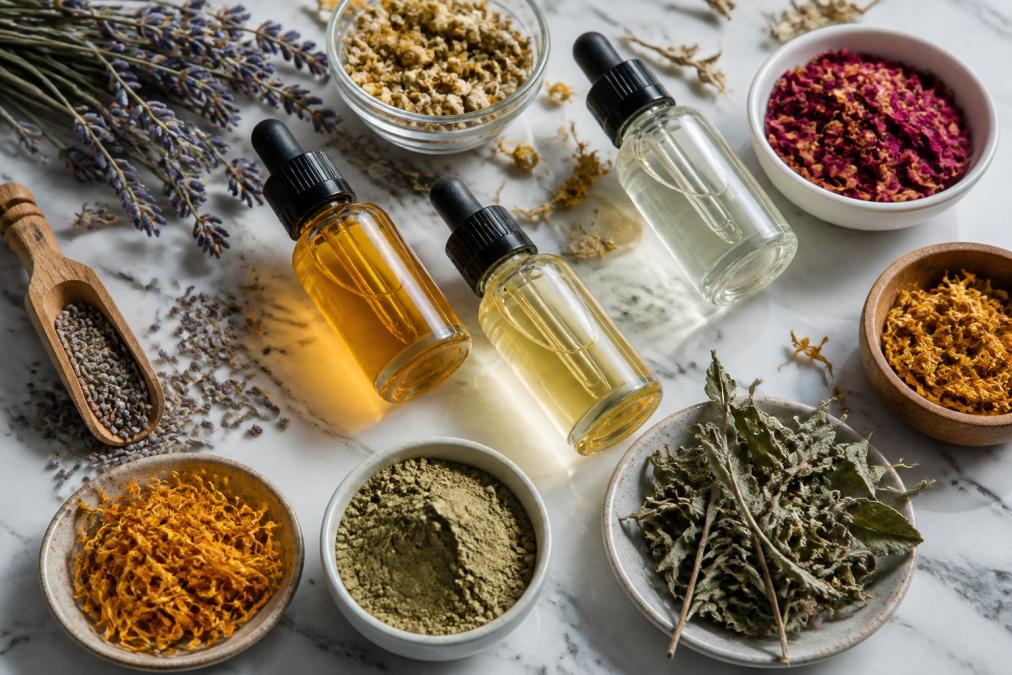
Bakuchiol is a phytonutrient derived from the Babchi plant that mimics retinol's effect on skin cell turnover without the irritation associated with synthetic retinoids. It's particularly valuable for sensitive skin types.
Niacinamide (vitamin B3) reduces melanin transfer to skin cells, making it effective for hyperpigmentation, and strengthens the skin barrier by increasing ceramide production.
Hyaluronic acid holds up to 1,000 times its weight in water, making it the primary driver of skin hydration and plumpness.
Herbal extracts like green tea polyphenols, calendula, and chamomile provide antioxidant support and anti-inflammatory action. Their therapeutic grade matters: poorly extracted botanicals lose most of their active compounds.
The Gut-Skin Axis: Why Ingestible Beauty Starts from Within
The gut-skin axis is the bidirectional communication pathway between the gastrointestinal microbiome and skin health. When gut microbiome diversity is low or intestinal permeability is compromised, inflammatory signals circulate systemically and manifest in the skin as acne, eczema flares, rosacea, and accelerated aging.
According to National Institutes of Health research on the gut-skin connection, the relationship between gut microbiota and inflammatory skin conditions is an active area of clinical research, with evidence supporting probiotic supplementation as a complementary approach.
Ingestible beauty supplements that target this pathway include:
- Probiotics (particularly Lactobacillus and Bifidobacterium strains) to restore microbiome balance
- Prebiotics (inulin, FOS) to feed beneficial bacteria
- Collagen peptides to support gut lining integrity and skin structure
- L-glutamine to repair intestinal permeability and reduce systemic inflammation
Clean Beauty, Vitamins, and Herbal Remedies: Building a Complete Wellness Routine
Clean beauty describes products formulated without ingredients considered harmful, though specific exclusion lists vary by brand. The most reliable frameworks are those backed by strict ingredient vetting, like the Credo Clean Standard, which bans over 2,700 ingredients.
A complete wellness routine integrates clean beauty topicals with vitamins and herbal remedies that address the same goals systemically:
Morning:
- Gentle cleanser (non-toxic, fragrance-free)
- Vitamin C serum (antioxidant support, collagen synthesis)
- Moisturizer with SPF (skin barrier repair and UV protection)
- Ingestible: Omega-3 supplement, vitamin D, probiotic
Evening:
- Oil cleanser followed by water-based cleanser
- Bakuchiol or niacinamide serum (cell turnover, barrier support)
- Heavier moisturizer or facial oil
- Ingestible: Magnesium glycinate (sleep and cortisol regulation), collagen peptides
Weekly:
- Herbal remedies as needed: adaptogenic herbs like ashwagandha for stress-related skin flares, milk thistle for liver support
- Exfoliation with enzyme-based or AHA formulas
Vegan cosmetics and cruelty-free products are increasingly available across all price points. Sustainable sourcing and eco-conscious packaging are now standard expectations.
Targeted Solutions for Skin Conditions, Sports Nutrition, and Eco-Friendly Home Care
The most effective approach to skin conditions like acne, eczema, and psoriasis combines targeted topical treatment with systemic support. For acne, this means addressing hormonal triggers (zinc, spearmint, or DIM supplementation), gut dysbiosis (probiotics), and topical inflammation (niacinamide, salicylic acid from willow bark). For eczema and psoriasis, essential fatty acids, vitamin D, and barrier-focused topicals form the core protocol.
Sports nutrition is a distinct category within holistic wellness. Performance supplementation includes creatine monohydrate for strength output, branched-chain amino acids (BCAAs) for muscle protein synthesis, beta-alanine for endurance buffering, and adaptogenic herbs like rhodiola rosea for cortisol management during heavy training blocks.
Eco-friendly home care rounds out a truly holistic wellness approach. The products you use to clean your home affect indoor air quality, skin exposure to chemical residues, and environmental impact. According to EPA guidance on indoor air quality and cleaning products, many conventional cleaning products release volatile organic compounds (VOCs) that contribute to indoor air pollution. Plant-based, biodegradable cleaning formulas reduce this exposure without sacrificing effectiveness.
Key criteria for eco-conscious home care products:
- Biodegradable surfactants
- Concentrated formulas (reduce packaging waste)
- No synthetic fragrances or chlorine bleach
- Recyclable or refillable packaging
- Certified by organizations like EPA Safer Choice
How JordanWellnessCo Curates Holistic Supplements and Skincare Online
JordanWellnessCo was built around a straightforward premise: serious wellness shoppers shouldn't have to maintain accounts at five different retailers to cover their full routine. When you shop holistic supplements and skincare online through a single curated destination, you get consistency in product quality standards, a clearer picture of how products work together, and a shopping experience that respects your time.

The curation approach at JordanWellnessCo covers the full spectrum: performance supplements for athletes, clean skincare and personal care essentials, fitness gear, and self-care products. This isn't a general marketplace where anyone can list a product. The selection reflects a deliberate editorial point of view about what belongs in a holistic wellness routine.
What this means practically for shoppers:
- Performance athletes find the serious supplementation they need: creatine, protein, amino acids, and adaptogens alongside recovery-focused skincare
- Mindfulness-focused shoppers find aromatherapy, self-care essentials, and stress-support supplements in one place
- Busy professionals can build and reorder their full routine without managing multiple subscriptions
- Active adults focused on recovery get targeted products for both training support and skin health, curated to work as a system
The one-stop wellness destination model solves the consolidation problem: mismatched product quality standards, inconsistent shipping timelines, and no coherent view of how everything in your routine fits together.
Visit JordanWellnessCo to explore the current selection and find products that fit your specific goals. Pricing varies by product and quantity, so check the site directly for current availability and details.
Building a holistic wellness routine that actually holds together is harder than it looks, especially when you're sourcing products from multiple places with inconsistent quality standards. JordanWellnessCo addresses this directly as a curated one-stop destination for supplements, fitness gear, and skincare, offering products selected to support purposeful training, better recovery, and daily well-being. Shop now at JordanWellnessCo and build a routine where everything you use is working in the same direction.
Frequently Asked Questions
Are holistic supplements regulated by the FDA?
Yes, but with important limits. The FDA regulates dietary supplements under the Dietary Supplement Health and Education Act (DSHEA) of 1994, which means manufacturers must ensure safety before selling but do not need FDA approval before launching a product. The FDA can act against unsafe supplements after they reach the market. To reduce risk, look for products that carry third-party certifications such as NSF International, USP, or Informed Sport, which verify purity and label accuracy independently of the manufacturer.
How do I know if a supplement brand is truly holistic?
A genuinely holistic supplement brand addresses the whole body rather than a single symptom. Look for clean-label formulations free from artificial fillers, transparent sourcing disclosures, and certifications like USDA Organic or Non-GMO Project Verified. Brands that pair ingestible supplements with topical skincare and explain the science behind ingredient bioavailability tend to take a more complete, holistic approach. Avoid brands that rely on vague health claims without referencing the underlying nutritional or herbal mechanism.
What should I look for when buying clean skincare online?
Start with the ingredient list. Clean skincare avoids synthetic preservatives, mineral oils, PEGs, and artificial fragrances. Look for products that are cruelty-free, vegan where possible, and backed by a clear ingredient standard from the brand or a third-party retailer standard. Sustainable sourcing and eco-conscious packaging are additional trust signals. If the brand publishes its full formulation rationale and lists any known contraindications for sensitive skin types, that transparency is a strong indicator of quality.
How can I verify the quality of natural supplements online?
Check for third-party testing certificates on the product page or the brand's website. Certifications from NSF International, USP, or Informed Sport confirm that what is on the label is actually in the bottle and that no banned substances or contaminants are present. Also review the supplement facts panel for active ingredient dosages and look for whole-food or bioavailable forms of key micronutrients, such as methylfolate instead of folic acid, which signals a more research-backed formulation.
This article was written using GrandRanker


