

Table of Contents
- Why Look for Natural Alternatives to Synthetic Retinol
- Bakuchiol Benefits for Skin: The Closest Natural Match
- How to Use Rosehip Oil for Anti-Aging Results
- Sea Buckthorn and Carrot Seed Oil for Skin Regeneration
- Is Bakuchiol Safe for Pregnancy? What to Know Before You Switch
- Matching Natural Retinol Alternatives to Your Skin Type
- How to Layer Natural Retinol Alternatives Without Irritation
- Cost Per Ounce: What Natural Retinol Alternatives Really Cost
- Frequently Asked Questions
Last Updated: September 11, 2026
Why Look for Natural Alternatives to Synthetic Retinol
The best natural alternatives to synthetic retinol deliver gentler results without the peeling, redness, and sun sensitivity that send many people running from prescription-strength retinoids, which is why so many readers search for the best natural alternatives to synthetic retinol. This guide from JordanWellnessCo explores plant-based ingredients, how to layer them, and their general cost.
Synthetic retinol, a form of vitamin A, speeds up cell turnover and boosts collagen production. It works, but it also strips the skin barrier, causing irritation that makes daily use difficult for many people, especially those with sensitive skin or conditions like rosacea. Natural alternatives offer a slower, steadier path to smoother skin texture and fewer fine lines.
Below, we'll show you exactly how bakuchiol, rosehip oil, sea buckthorn oil, and carrot seed oil compare, plus how to match each to your skin type.
Bakuchiol Benefits for Skin: The Closest Natural Match
Bakuchiol is a meroterpene phenol extracted from the seeds of the Psoralea corylifolia plant, and it is the closest natural match to synthetic retinol in how it behaves on skin, not because it is a retinoid, but because it produces overlapping cosmetic outcomes through a different route.
Unlike trans-retinoic acid, which binds directly to retinoic acid receptors and can trigger the inflammation, peeling, and barrier disruption that define the "retinization" period, bakuchiol does not bind those receptors. Instead, it appears to influence collagen-related gene expression and to act on some of the same downstream signaling that retinol touches, which is why researchers describe it as retinol-like rather than retinol-equivalent.
What the Clinical Comparison Actually Shows
The most-cited head-to-head study compared a bakuchiol cream against a retinol cream over 12 weeks in a split-face design. Both sides showed comparable improvement in fine lines and wrinkle severity by the end of the study, but the bakuchiol side reported significantly less stinging and scaling. That is the honest summary of the evidence: similar visible results on a 12-week timeline, better tolerability, and a much smaller body of long-term data than retinol has accumulated over decades.
A few practical implications follow from that:
- Speed: Trans-retinoic acid is the active form of vitamin A your skin can use immediately, so it typically shows texture and fine-line changes sooner. Bakuchiol works more gradually, and most users should expect to judge results at the 8-to-12-week mark, not at two weeks.
- Concentration: Bakuchiol is commonly formulated between 0.5% and 2% in facial products. Below roughly 0.5%, the ingredient is often present for label appeal rather than effect.
- Stability: Bakuchiol is far less prone to oxidation than retinol, which is one reason it shows up in more shelf-stable, airless-pump, and oil-based formats.
- Photosensitivity: Unlike retinol, bakuchiol does not carry the same daytime sun-sensitivity warning, though daily sunscreen remains non-negotiable for anyone treating fine lines or uneven tone.
How Bakuchiol Compares to Trans-Retinoic Acid
Trans-retinoic acid works fast and irritates because it is the receptor-active form of vitamin A. Bakuchiol is not a retinoid at all, so it does not cause the same barrier disruption, and many users skip the retinization period entirely.
The trade-off is depth of evidence. Retinol has decades of dermatology research behind it; bakuchiol has a smaller but genuinely promising set of trials, most of them short and most of them industry-funded. For anyone with sensitive skin, rosacea, or a history of failed retinol attempts, that slower curve and gentler profile is often worth the swap. For someone chasing aggressive resurfacing, bakuchiol is a supporting player, not a replacement.
How to Use Rosehip Oil for Anti-Aging Results
Rosehip oil is a cold-pressed botanical oil rich in vitamin A precursors, vitamin C, and essential fatty acids, and it's best applied at night after cleansing and before moisturizer.
The oil's natural vitamin A content is much lower than a synthetic retinoid, so it won't resurface skin the way retinol does. What it does well is support skin barrier function, calm inflammation, and improve the appearance of dullness and uneven skin tone over consistent use.
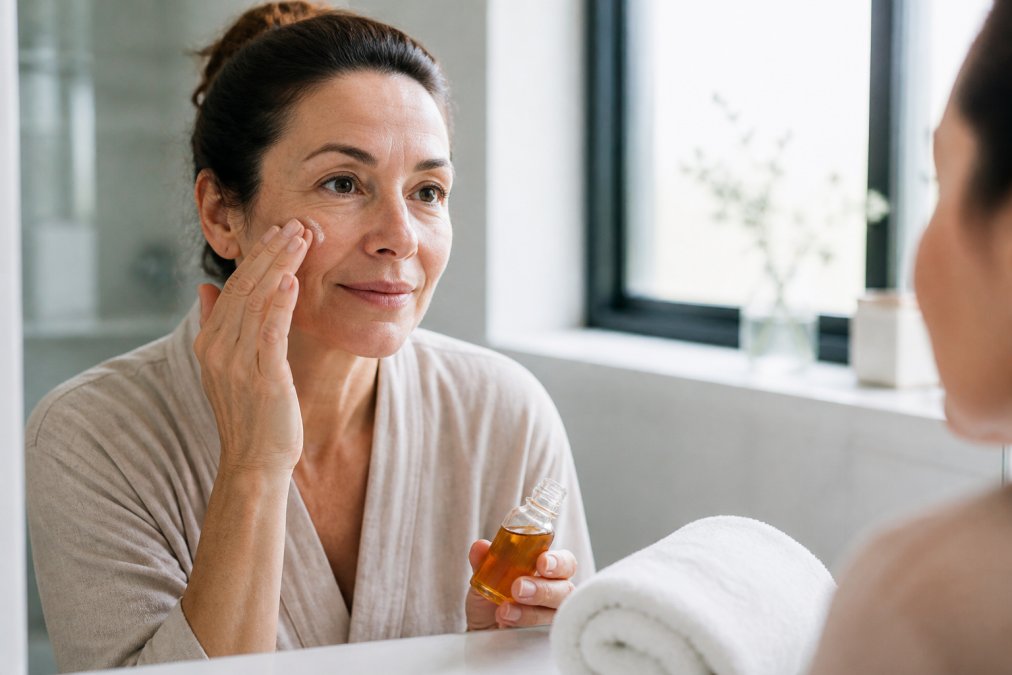
How to apply it:
- Cleanse and pat skin dry
- Apply 3-5 drops to your palm and press into skin
- Follow with a moisturizer to seal in hydration
- Use nightly, or every other night if your skin is reactive
Rosehip oil is non-comedogenic for most people, but it can go rancid if stored in heat or direct sunlight. Keep the bottle cool and dark.
Sea Buckthorn and Carrot Seed Oil for Skin Regeneration
Sea buckthorn oil and carrot seed oil both support skin regeneration, but they work through different mechanisms, suit different concerns, and, critically, are not interchangeable in a routine. This is the section most guides skip, and it is where skin-type matching actually happens.
Sea Buckthorn Oil: Antioxidant and Barrier Support
Sea buckthorn (Hippophae rhamnoides) is pressed from the berries and seeds of a shrub, and the two oils are not the same product. Berry oil is deep orange-red and rich in carotenoids and palmitoleic acid; seed oil is lighter and higher in linoleic and alpha-linolenic acid. Most cosmetic products blend the two, which is why texture varies so much between brands.
What it brings to skin:
- Fatty acid profile: A high proportion of palmitoleic acid (an omega-7) plus omega-3 and omega-6, which supports the lipid barrier and helps skin hold moisture.
- Antioxidants: Carotenoids, tocopherols, and flavonoids that help defend against free radical damage from UV and pollution.
- Vitamins: Naturally occurring vitamins A, C, and E, though at concentrations far below what a formulated retinol product delivers.
Best for: mature, dry, or stressed skin that needs barrier support and antioxidant defense more than resurfacing. The rich texture makes it a poor fit for oily or acne-prone skin, where it can feel heavy and contribute to congestion.
Carrot Seed Oil: Free Radical Defense and Tone
Carrot seed oil (Daucus carota) is steam-distilled from the seeds, not the root, and it is a different product from carrot seed carrier oil or carrot tissue oil. It is high in carotenoids and brings vitamin A precursors along with antioxidants that help defend against photo-aging.
Two things most guides get wrong:
- It is potent and must be diluted. Essential-oil-grade carrot seed oil should be diluted in a carrier oil, a common starting ratio is a few drops per tablespoon of carrier, before topical application. Undiluted use can irritate sensitive skin.
- It is not a retinol substitute. The vitamin A precursors it contains are not the same as retinol, and the concentrations are far lower. Treat it as an antioxidant and tone-supporting oil, not a resurfacing active.
Best for: photo-aged skin, dullness, and uneven tone, especially when paired with daily sunscreen. Not ideal as a standalone treatment for deep lines.
Matching These Oils to Your Skin Type
| Ingredient | Key Strength | Best For | Texture | Watch Out For |
|---|---|---|---|---|
| Bakuchiol | Retinol-like effects, low irritation | Sensitive skin, first-timers, acne-prone | Light serum | Needs 8-12 weeks to judge |
| Rosehip oil | Barrier support, vitamin A precursors | Dry or dull skin | Medium oil | Goes rancid in heat or light |
| Sea buckthorn oil | Antioxidants, elasticity support | Mature, dry, stressed skin | Rich oil | Too heavy for oily skin |
| Carrot seed oil | Free radical defense, tone | Photo-aged skin | Light oil | Must be diluted; not a retinol swap |
How to Choose Between Them
- Dry or mature skin: Sea buckthorn as your evening oil, layered under a richer moisturizer.
- Photo-aged or uneven tone: Carrot seed oil (diluted) in the morning under sunscreen, or at night before moisturizer.
- Oily or acne-prone skin: Skip both heavy oils and stay with bakuchiol.
- Sensitive or reactive skin: Introduce one oil at a time, every other night, for two weeks before adding anything else.
Is Bakuchiol Safe for Pregnancy? What to Know Before You Switch
Bakuchiol is generally considered a safer option during pregnancy than synthetic retinol, which many healthcare providers advise avoiding. That said, "generally considered" isn't the same as "approved for everyone," and you should confirm with your own healthcare provider before switching.
The concern with synthetic retinoids in pregnancy centers on potential risk to fetal development, which is why many providers recommend avoiding them. Bakuchiol doesn't share the same mechanism, so it's often suggested as a substitute. Rosehip oil and other botanical oils are also commonly used during pregnancy, though individual sensitivities vary.
This is general information, not medical advice. Talk to your provider about what's right for your situation.
Matching Natural Retinol Alternatives to Your Skin Type
The right natural alternative depends less on hype and more on your skin type and how reactive it is.
- Sensitive or reactive skin: Start with bakuchiol in a light serum. It's the gentlest option and least likely to trigger redness.
- Dry or mature skin: Layer rosehip oil under a richer moisturizer, or try sea buckthorn for added antioxidant support.
- Oily or acne-prone skin: Bakuchiol and carrot seed oil tend to work better than heavy oils, which can clog pores.
- Photo-aged skin: Carrot seed oil plus a daily sunscreen addresses free radical damage and dullness together.
A common mistake is treating these ingredients as a direct one-to-one swap for retinol. They're not. They're a different category of skincare, and they work best when you build a routine around them rather than expecting an overnight transformation.
How to Layer Natural Retinol Alternatives Without Irritation
Layering natural retinol alternatives correctly means applying the lightest product first and giving each layer a moment to absorb.
The general order:
- Cleanse
- Apply water-based serum, such as a bakuchiol serum
- Apply oil-based products, such as rosehip or sea buckthorn oil
- Seal with moisturizer
- Apply sunscreen in the morning
If you're using an exfoliating acid, keep it on a different night than your botanical oils to avoid over-processing the skin barrier. And if you're combining a natural alternative with a synthetic retinoid, alternate nights rather than stacking them.
For a simpler routine, a [curated set like the Beauty Bundle: Anti-Aging Skin & Hair Care](https://jordanwellnessco.com/products/beauty-bundle-anti-aging-skin-hair-care) combines a plant-based serum, a tallow-based moisturizer, and a scalp oil, which removes the guesswork of layering separate products.

Cost Per Ounce: What Natural Retinol Alternatives Really Cost
Natural retinol alternatives vary widely in cost per ounce, and the cheapest option isn't always the best value once you factor in how long a bottle lasts.
Bakuchiol serums tend to cost more per ounce than single botanical oils because the ingredient is harder to source and stabilize. Rosehip and carrot seed oils are usually the most affordable, while sea buckthorn sits in the middle. Bundles and multi-product sets often bring the effective cost per ounce down compared to buying each item separately.
What matters most is consistency. A moderately priced product you actually use every night beats a premium one that sits on the shelf because it irritates your skin.
Finding a routine that respects your skin barrier while still targeting fine lines and dullness takes some trial and error, but the payoff is skin that looks better without the irritation. At JordanWellnessCo, we stock plant-based skincare and wellness essentials designed to work together, from botanical serums to [daily hydration support like Women's Skin Hydration](https://jordanwellnessco.com/products/womens-skin-hydration) and Collagen Powder. Get started with JordanWellnessCo and build a natural anti-aging routine that fits your skin.


Frequently Asked Questions
What is the best nontoxic retinol alternative?
Bakuchiol is the most studied plant-based option. It works through different pathways than synthetic retinol, supporting collagen production and cell turnover without the same irritation risk. Rosehip oil, sea buckthorn oil, and carrot seed oil also provide vitamin A precursors and antioxidants that support skin texture and elasticity. The best choice depends on your skin type: bakuchiol suits most people, while oil-based options work well for dry or sensitive skin that needs barrier support alongside anti-aging benefits.
Can plant-based oils provide the same anti-aging results as retinol?
Plant-based oils like rosehip and sea buckthorn contain natural vitamin A precursors and antioxidants that support collagen production and defend against free radical damage. They work more gradually than synthetic retinol and typically cause less irritation, making them a better fit for sensitive skin or anyone who cannot tolerate retinoids. Results show up over weeks rather than days, and consistent topical application matters more than concentration. Pairing oils with bakuchiol can cover both collagen support and barrier hydration.
Is bakuchiol safe for pregnancy?
Bakuchiol is plant-based and does not share the same chemical structure as synthetic retinoids, which are typically avoided during pregnancy. Many people switch to bakuchiol as a gentler alternative while pregnant or nursing. However, individual circumstances vary, and research on topical bakuchiol during pregnancy is still limited. Talk to your healthcare provider before adding any new active ingredient to your routine, especially if you have sensitive skin or existing skin conditions.
How do natural retinol alternatives affect skin sensitivity?
Natural alternatives generally cause less irritation than synthetic retinol because they work through different mechanisms and do not trigger the same shedding of the skin barrier. Bakuchiol, for example, supports cell turnover without the peeling and redness that trans-retinoic acid can cause. Oils like rosehip and carrot seed are non-comedogenic and soothing, making them suitable for sensitive skin. Start with a patch test and introduce one product at a time to see how your skin responds.
How do I layer natural retinol alternatives with other skincare products?
Apply water-based products first, then oils and creams. A typical routine: cleanse, apply a hydrating serum or hyaluronic acid, follow with bakuchiol or rosehip oil, then seal with a moisturizer. If you use vitamin C in the morning, keep bakuchiol or rosehip for your evening routine to avoid interactions. Always finish with sunscreen during the day, since photo-aging and free radical damage from UV exposure can undo the benefits of any anti-aging ingredient.


