

Table of Contents
- Aroma Medallion Necklace Review: What to Know Before You Buy
- Essential Oil Diffuser Jewelry: Necklace, Earrings, and Bracelet Options
- How to Use an Aromatherapy Necklace: Steps for Daily Wear
- Best Essential Oils for Stress Relief in Diffuser Jewelry
- Skin Sensitivity and Metal Allergies: What to Check
- Scent Longevity and Cleaning Protocols for Scent Switching
- Conclusion
- Frequently Asked Questions
Last Updated: September 19, 2026
Aroma Medallion Necklace Review: What to Know Before You Buy
An aroma medallion necklace is wearable aromatherapy jewelry that holds essential oils close to the body, releasing scent gradually through the day. An aroma medallion necklace is wearable aromatherapy jewelry that holds essential oils close to the body, releasing scent gradually through the day.

Essential Oil Diffuser Jewelry: Necklace, Earrings, and Bracelet Options
Essential oil diffuser jewelry covers any wearable piece designed to carry essential oil, including necklaces, earrings, and bracelets. The right pick depends on how often you reapply oil and where scent sits relative to your nose.
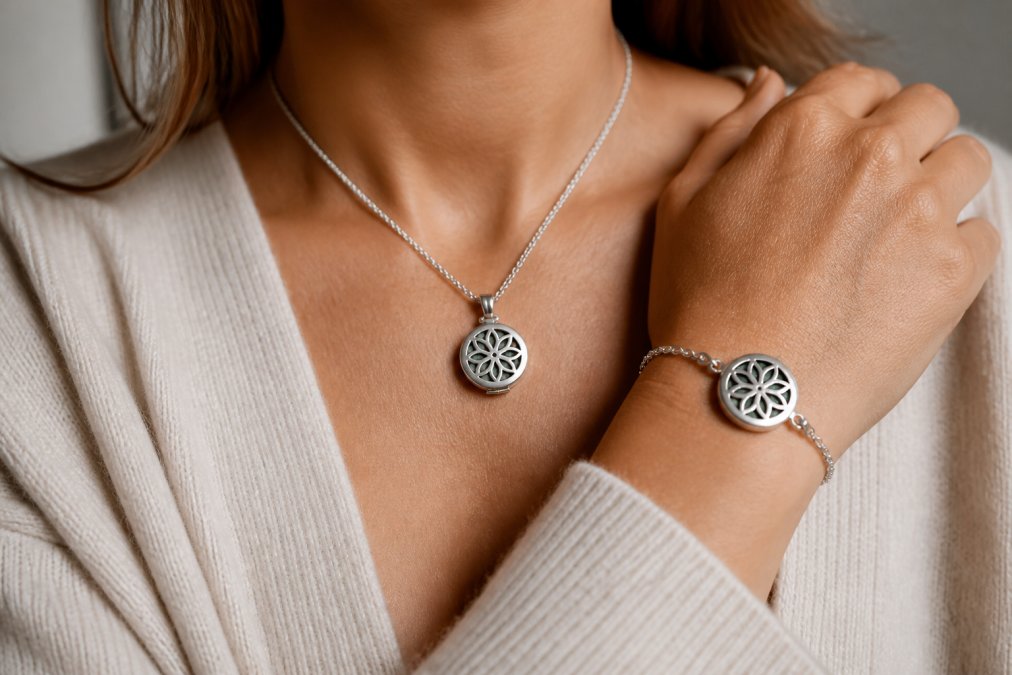
Aromatherapy Medallion Necklace: Faux Leather and Ceramic Bead
The Aromatherapy Medallion Necklace is our top pick for most people at $16.00. It pairs quality faux leather with a single ceramic bead you apply oil to directly; the ceramic absorbs oil and releases it slowly rather than flashing off in twenty minutes.
Antiqued Aromatherapy Earrings: Haitian Clay Beads
For $8.00, the Antiqued Aromatherapy Earrings use unglazed Haitian clay beads on a 19mm antique brass-plated steel fishhook post. The unglazed terra cotta is genuinely porous, making it one of the better oil-absorbing materials in this category; add a drop or two directly to the bead.

Locket Aromatherapy Bracelet: Zinc Alloy and Popcorn Chain
The Locket Aromatherapy Bracelet is the budget entry at $6.99: a zinc alloy charm bracelet on a popcorn chain with a lobster clasp and a 14mm ball. Zinc alloy is sealed metal, so it doesn't absorb oil like clay or ceramic.

| Piece | Price | Material | Scent Holding | Best For |
|---|---|---|---|---|
| Aromatherapy Medallion Necklace | $16.00 | Faux leather, ceramic bead | Good | Daily wear, most people |
| Antiqued Aromatherapy Earrings | $8.00 | Haitian clay, brass-plated post | Good | Subtle, close-range scent |
| Locket Aromatherapy Bracelet | $6.99 | Zinc alloy, popcorn chain | Moderate | Discreet, low-scent wear |
How to Use an Aromatherapy Necklace: Steps for Daily Wear
Using an aromatherapy necklace takes about thirty seconds once you've done it once. These steps work for any porous-bead piece.
- Choose your oil and dilute if needed. For skin-adjacent wear, many people prefer a carrier-diluted blend.
- Apply one to two drops directly to the bead, medallion, or felt pad. Start with one; you can always add more.
- Let it sit for a minute so the material absorbs rather than pools on the surface.
- Wear it as normal.
- Refresh mid-day with a single drop if you want a stronger presence.
- Wipe the bead with a dry cloth before switching oils.
Best Essential Oils for Stress Relief in Diffuser Jewelry
For stress relief in diffuser jewelry, common choices include lavender, bergamot, chamomile, and cedarwood.
Note families and how they behave on jewelry
- Top notes (citrus, peppermint, eucalyptus): Bright, fast, and volatile. They release quickly.
- Middle notes (lavender, chamomile, geranium, rosemary): The workhorse range for diffuser jewelry. They offer a steady release.
- Base notes (cedarwood, sandalwood, vetiver, frankincense): Slow, heavy, and long-lasting. They can hold on porous beads for a full day.
Practical picks and how to apply them
- Lavender: the default for winding down; widely tolerated and blends well. One drop on a ceramic bead provides a soft, steady presence.
- Bergamot: bright and citrus-forward, good for daytime stress without drowsiness.
- Roman chamomile: gentle and warm; a good option if lavender feels too heavy. Pairs well with a clay bead.
- Cedarwood: grounding and woody; pairs well with a subtle, low-scent bracelet. On unglazed clay it can linger.
- Peppermint: use sparingly on skin-adjacent pieces.
Dilution and drop counts
For skin-adjacent wear, most practitioners recommend diluting essential oils in a carrier oil first, a common starting ratio is roughly 1 drop of essential oil to 4-6 drops of fractionated coconut oil or jojoba. For a felt pad inside a locket, undiluted oil is usually fine since the pad sits behind metal. For an unglazed clay or ceramic bead worn on the collarbone, a diluted blend is the safer default, especially for the first few wears.
Patch-testing and who should be cautious
If you're new to a specific oil, patch-test it on the inside of your wrist and wait 24 hours before full-day wear. Citrus oils and peppermint are the most common culprits for irritation because they're phototoxic or cooling at full strength. This is general guidance, not a substitute for advice from a qualified professional, especially if you're pregnant, nursing, or managing a health condition.
Skin Sensitivity and Metal Allergies: What to Check
Skin sensitivity is the most overlooked issue in aromatherapy jewelry, and it's why a piece that works for one person can irritate another. Two things drive reactions: the metal in the findings and the oil concentration at the contact point.
Aromatherapy Medallion Necklace →
Scent Longevity and Cleaning Protocols for Scent Switching
Scent longevity depends mainly on the bead material. Here's a realistic range based on normal wear.
How long each material actually holds a scent
- Unglazed clay (terra cotta, Haitian clay): The most porous common material. A single drop can release a noticeable scent for several hours.
- Ceramic bead: Slightly less porous than raw clay but still absorbent. Expect several hours of steady release from one drop.
- Felt pad inside a locket: Holds oil well while sealed.
- Lava stone: Very porous and popular.
- Sealed metal (zinc alloy, plated brass, stainless steel): No absorption at all. Oil sits on the surface and evaporates.
Why scent switching is the real problem
Porous materials don't just hold oil, they hold the memory of oil. A clay bead used with a bright citrus blend keeps releasing citrus notes for days, even after you apply a woodsy oil on top, producing a muddy mixed scent. It's the most common complaint from people who own more than one oil, and almost no buying guide addresses it.
Deep-clean protocol for switching scent families
Use this routine when moving from one scent family to a completely different one, for example, citrus to woodsy, or floral to mint.
- Remove the bead, pad, or locket insert from the jewelry.
- Wipe the surface with a dry, lint-free cloth to lift any pooled oil.
- For clay or ceramic: place the bead in a small bowl of warm water with a drop of mild dish soap and let it soak for 15-20 minutes.
- Rinse thoroughly under warm running water and blot dry with a clean cloth.
- Let the bead air out in a well-ventilated spot for a full 24 hours.
- For metal pieces: wipe with a barely damp cloth, dry completely, and skip the soak, metal doesn't absorb oil, so a surface wipe is enough.
- For felt pads: don't try to wash them. Replace the pad.
- Store the cleaned bead in a small pouch away from other scented items so it doesn't pick up ambient fragrance.
The two-bead system
If you switch oils often, owning two beads or two pieces can be a helpful approach.
Conclusion
The hardest part of buying an aroma medallion necklace isn't finding one, it's picking a material that matches how you actually wear scent. Get that right and the piece becomes part of your daily routine.
Frequently Asked Questions
How does an aroma medallion necklace work?
An aroma medallion necklace works by holding a small absorbent element, such as a ceramic bead or felt pad, inside a pendant or locket. You add a drop or two of essential oil to the bead, and the scent diffuses gradually through the day. The necklace in our catalog uses a single ceramic bead on a faux leather cord. For diffuser earrings, you apply oil directly to unglazed clay beads. The oil absorbs into the material and releases scent slowly as you move.
How long do scent necklaces last?
Scent longevity depends on the oil you use, the absorbent material, and how much you apply. A ceramic or clay bead typically holds a scent for several hours. Lighter oils may fade faster than heavier ones. You can reapply a drop to the bead as needed. You can also carry a small vial of oil with you for quick touch-ups.
Can I use any essential oil in a diffuser necklace?
Most essential oils work in diffuser jewelry. Citrus oils may fade quickly, while heavier oils like sandalwood or patchouli may last longer. If you have sensitive skin, dilute strong oils before applying them to the bead, or apply the oil to the pad rather than directly on the jewelry. Always check that the oil is pure and not a fragrance oil, which may contain synthetic ingredients. For stress relief, lavender and chamomile are common choices.
How do I clean my aroma medallion necklace?
To clean your aroma medallion necklace, remove the absorbent bead or pad first. Wipe the pendant and cord with a soft, dry cloth. If you need to switch scents, replace the pad or bead, or wash clay and ceramic beads with mild soap and warm water, then let them dry completely before adding new oil. Avoid soaking faux leather or metal parts. For the locket bracelet, wipe the metal with a dry cloth and avoid harsh cleaners that could damage the finish.
Are aroma medallion necklaces safe for daily wear?
Aroma medallion necklaces are generally safe for daily wear when used as directed. If you have metal allergies, check the materials: the locket bracelet uses zinc alloy, while the medallion necklace uses faux leather and ceramic. Apply oils to the bead or pad, not directly to your skin, to reduce irritation risk. If you are pregnant, nursing, or have a medical condition, talk to a qualified healthcare professional before using essential oils. Keep oils away from children and pets.


