

Table of Contents
- Why Food Supplements for Vitamin B12 Matter
- Who Actually Needs a B12 Supplement
- Recommended Daily Allowance of B12: How Much You Need
- Methylcobalamin vs Cyanocobalamin: Which Form Works Better?
- Vitamin B12 Deficiency Symptoms You Should Not Ignore
- B12 Supplements Compared: Drops, Capsules, and Multivitamins
- Food Sources and Bioavailability: Diet vs Supplements
- Frequently Asked Questions
Last Updated: September 12, 2026
Why Food Supplements for Vitamin B12 Matter
Vitamin B12 is a water-soluble nutrient your body cannot make on its own, which is why food supplements for vitamin B12 matter for anyone whose diet or absorption falls short. This guide covers who needs a supplement, how much to take, which form absorbs best, and how to spot a deficiency early.
B12 does three daily jobs: it supports red blood cell formation, keeps nerve function intact, and helps convert food into usable energy through normal metabolism. When intake drops, those systems slow down quietly at first.
B12 deficiency develops slowly. Your liver stores a reserve, so symptoms can take months or years to surface, by the time fatigue or tingling shows up, levels have often been low for a while.
NIH Office of Dietary Supplements Vitamin B12 Fact Sheet
Who Actually Needs a B12 Supplement
The people who benefit most from a B12 supplement fall into a few clear groups, and the list is wider than most assume. Vegans and vegetarians top it, since B12 occurs naturally almost exclusively in animal-derived foods.
Absorption is the second gate. Some people eat plenty of animal products but still run low because their gut cannot pull B12 out of food efficiently, including adults over 60, people who have had gastrointestinal surgery, and those with stomach or small intestine conditions.
Medications matter too: long-term acid reducers and metformin can interfere with B12 absorption, so discuss your levels with a physician if either applies.
- Vegans and strict vegetarians
- Adults over 60
- People with gastrointestinal conditions or prior surgery
- Long-term users of acid reducers or metformin
- Pregnant or nursing individuals, per their physician's guidance
Recommended Daily Allowance of B12: How Much You Need
The recommended daily allowance of B12 for most adults is 2.4 micrograms (mcg), according to the Dietary Guidelines for Americans. That number shifts for specific life stages, and it's smaller than most people expect.
Pregnant individuals generally need 2.6 mcg daily and nursing individuals 2.8 mcg. The daily value on supplement labels is set at 2.4 mcg, which is why a single capsule often shows several hundred percent of the daily value.
That oversized label number is not a mistake. Because only a fraction of oral B12 is absorbed, manufacturers dose well above the RDA to ensure a usable amount reaches your bloodstream. Your body absorbs what it needs and passes the rest.
| Life Stage | Daily B12 Needs |
|---|---|
| Adults | 2.4 mcg |
| Pregnant | 2.6 mcg |
| Nursing | 2.8 mcg |
| Label daily value | 2.4 mcg |
Methylcobalamin vs Cyanocobalamin: Which Form Works Better?
The methylcobalamin vs cyanocobalamin question comes down to how each form is absorbed, converted, and retained, not which sounds more natural.
Cyanocobalamin: The Stable Workhorse
Cyanocobalamin is the synthetic, shelf-stable form used in most oral supplements and fortified foods. It carries a cyanide group your body safely removes and excretes, leaving the B12 molecule, which is then converted into the two active coenzymes: methylcobalamin and adenosylcobalamin.
It resists heat, light, and moisture, so it holds potency through long storage and shipping, and it is inexpensive to produce, which is why it dominates the market and most clinical research on B12 deficiency uses it.
Methylcobalamin: The Pre-Converted Form
Methylcobalamin is one of the two active forms circulating in your blood, so it skips the conversion step cyanocobalamin requires. Some prefer it on the theory that bypassing conversion means faster use, and it is commonly sold in sublingual tablets and liquid drops.

The trade-offs are real: methylcobalamin is more expensive, less stable in storage, and more sensitive to heat and light. It also appears in a smaller share of the clinical evidence base, so claims that it 'works better' are not firmly established for the general population.
What Actually Differs in Practice
| Factor | Cyanocobalamin | Methylcobalamin |
|---|---|---|
| Source | Synthetic | Naturally occurring active form |
| Stability | High; long shelf life | Lower; heat- and light-sensitive |
| Cost | Lower | Higher |
| Conversion needed | Yes, to active coenzymes | No |
| Evidence base | Extensive | Smaller |
| Common formats | Capsules, tablets, fortified foods | Sublingual, liquid drops |
Absorption Rate: The Number Most Guides Skip
Oral B12 absorption is not a fixed percentage, it is dose-dependent, which overshadows the form debate. Your body absorbs B12 through two pathways:
- Intrinsic factor pathway: A specialized protein in your stomach binds B12 and carries it to the ileum for absorption. This pathway is efficient but saturates at roughly 1 to 2 micrograms per dose.
- Passive diffusion: When you take a large oral dose, the excess crosses the intestinal wall without intrinsic factor. This pathway is inefficient, only about 1 percent of the dose is absorbed this way, but it scales with dose size.
That is why a 1,000 mcg tablet can deliver a meaningful amount even when the intrinsic factor pathway is impaired: the high dose overwhelms the saturated pathway and pushes the rest through passive diffusion. For most people with a functioning gut, both forms reach the bloodstream effectively at these doses.
When Form Choice Actually Matters
For the vast majority correcting a simple dietary shortfall, either form works, and consistency and dose matter more than the label. A few scenarios warrant a physician's closer look:
- Documented absorption disorders affecting the ileum or intrinsic factor production, where high-dose oral or injectable routes may be preferred.
- Specific genetic variants affecting B12 metabolism, which a clinician can assess.
- Personal tolerance or preference, since some people report feeling different on one form, though this is not well established in controlled research.
Vitamin B12 Deficiency Symptoms You Should Not Ignore
Vitamin B12 deficiency symptoms range from subtle fatigue to neurological changes and tend to appear in stages. Early signs are easy to dismiss: tiredness, weakness, and a general sense of running low.
As levels stay low, more specific signals emerge. Megaloblastic anemia, where red blood cells grow large and immature, is a classic outcome and shows up on a standard blood panel, which is why testing matters more than guessing.
Neurological symptoms are the ones to take seriously. Numbness or tingling in the hands and feet, balance problems, memory trouble, and mood changes can all trace back to low B12, and these nerve-related effects can become difficult to reverse if unaddressed for a long time.
If any of this sounds familiar, ask a physician about a serum B12 test rather than self-diagnosing. A blood test gives you a real number to work from.
CDC on Vitamin B12 and Anemia
B12 Supplements Compared: Drops, Capsules, and Multivitamins
Choosing between drops, capsules, and multivitamins is mostly about how you'll stick with it. All three deliver B12; the difference is convenience, dose flexibility, and whether you want B12 alone or bundled.
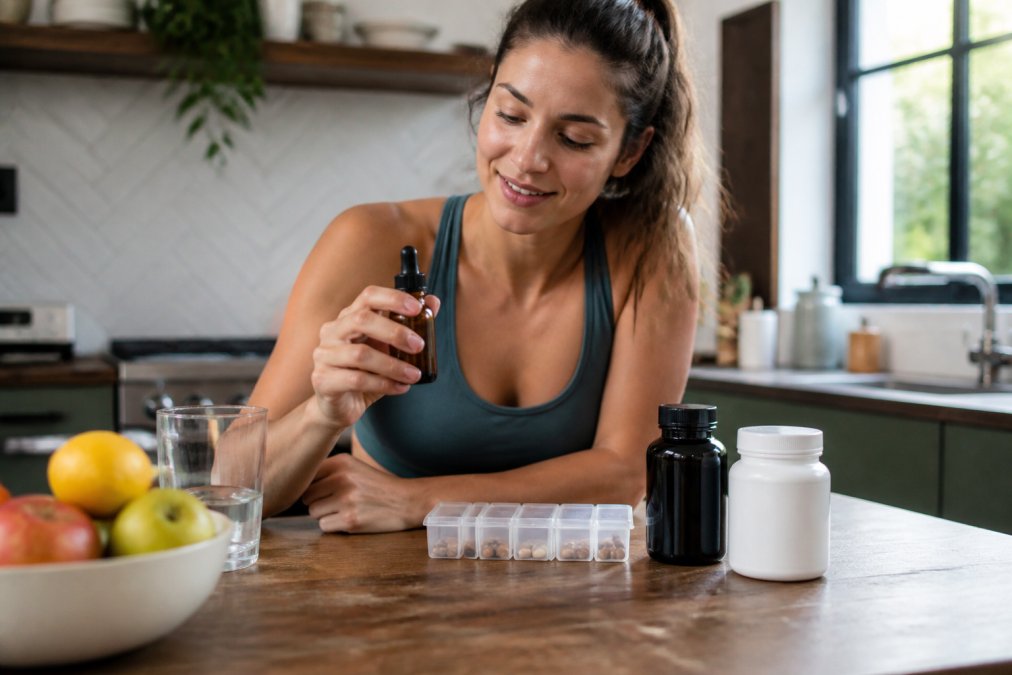
B-12 Liquid Drops
Liquid drops are the most flexible option: you control the dose by the drop, and some people find liquid easier to take than a pill. JordanWellnessCo's B-12 Liquid Drops at $9.99 offer complete B-vitamin support for energy, metabolism, and everyday wellness, a solid fit if you want to adjust intake without switching products.
B-12 Capsules
Capsules are the simplest habit to build: one serving, no measuring. The B-12 Capsules at $5.74 deliver a comprehensive blend of essential B vitamins to support energy production and nervous system health, for most people, the easiest daily format to keep up with.

Complete Multivitamin Options
If you'd rather cover your whole nutrient base in one product, a multivitamin makes sense. JordanWellnessCo's Complete Multivitamin at $24.99 includes a full B-vitamin complex plus minerals and botanical ingredients in a two-capsule daily serving.

For a more targeted daily formula, the Women's Daily Multivitamin at $6.99 and the Men's Daily Multivitamin at $6.58 both supply B vitamins alongside nutrients tailored to each. And if you prefer a chewable, the Daily Multivitamin Gummies at $9.99 cover the essentials in a gummy.
| Format | Product | Price | Best For |
|---|---|---|---|
| Liquid drops | B-12 Liquid Drops | $9.99 | Flexible, adjustable dosing |
| Capsules | B-12 Capsules | $5.74 | Simple daily routine |
| Multivitamin | Complete Multivitamin | $24.99 | Full nutrient coverage |
| Gummies | Daily Multivitamin Gummies | $9.99 | Chewable preference |
Food Sources and Bioavailability: Diet vs Supplements
Bioavailability is the share of a nutrient your body actually absorbs and uses, and it explains why two people eating the same diet can have very different B12 levels. In food, B12 is bound to protein, so stomach acid and enzymes must free it before absorption; in supplements, B12 is already unbound, which changes the math considerably.
Food-Bound vs Free B12: The Absorption Gap
The absorption gap between food and supplements is the most under-explained part of this topic. Food-bound B12 must be cleaved from protein by stomach acid and pepsin, bound to intrinsic factor, then absorbed in the ileum, a chain with several break points: low stomach acid, reduced intrinsic factor, or intestinal damage.
Supplement B12 arrives already free. It still uses the intrinsic factor pathway at low doses, but at higher doses it also absorbs through passive diffusion, which does not depend on stomach acid or intrinsic factor. That is why someone with impaired absorption may still respond well to a high-dose oral supplement even when food sources fail them.
Animal vs Plant-Based Sources
Animal products are the natural home of B12. Meat, poultry, fish, eggs, and dairy all supply it. Clams and liver are among the richest sources, though most people get their daily amount from ordinary servings of fish, eggs, or milk.
Plant foods do not make B12 on their own, so for vegans and vegetarians fortified foods do the heavy lifting: fortified breakfast cereal, nutritional yeast, and plant milks with added B12 are the standard ways to hit the target. Check labels, because fortification levels vary widely between brands.
How Cooking and Storage Affect B12 in Food
B12 is relatively heat-stable, so normal cooking does not destroy most of it, but two mechanisms matter:
- Leaching: When meat, fish, or canned animal products are boiled or canned, some B12 dissolves into the cooking liquid or brine. Discarding that liquid discards the nutrient with it. This is why the liquid from canned fish or boiled meat is worth using when possible.
- Prolonged high heat: Extended cooking at high temperatures, particularly with moisture loss, can degrade a portion of the B12 in meat and dairy. Normal home cooking is not a major concern, but overcooking is not free.
For supplements, storage is the bigger variable. Keep bottles cool, dry, and out of direct light, and check expiration dates, heat and moisture degrade potency, and a bottle left in a warm car or steamy bathroom is not doing you any favors. Methylcobalamin is more sensitive to this than cyanocobalamin.
Medication Interactions That Reduce B12 Absorption
This is the gap most articles skip, and it matters for many adults. Several common medications interfere with B12 absorption:
- Metformin: The first-line diabetes medication reduces B12 absorption in a dose- and duration-dependent way. Long-term users are at elevated risk of deficiency, and periodic monitoring is a common clinical recommendation.
- Proton pump inhibitors (PPIs): Drugs like omeprazole and esomeprazole suppress stomach acid, which is needed to free B12 from food protein. Long-term use is associated with lower B12 levels.
- H2 blockers: Medications like famotidine reduce acid production and can have a similar, though often milder, effect.
- Antacids: Frequent use of antacids can raise stomach pH enough to impair food-bound B12 absorption.
If you take any of these long-term, food alone may not keep your B12 in range. A supplement, especially a higher-dose oral form that can use passive diffusion, is often the more reliable route, and your physician can confirm whether your levels need monitoring.
Putting It Together
For omnivores with normal absorption, food plus occasional fortified foods usually suffices. For vegans, vegetarians, adults over 60, and anyone on the medications above, supplements are the more dependable path, and form matters less than dose and consistency.
Frequently Asked Questions
What food is highest in vitamin B12?
Animal-derived foods top the list. Beef liver and clams are the richest sources, followed by fish like salmon and trout, then meat, poultry, eggs, and dairy. For plant-based eaters, fortified foods such as nutritional yeast, breakfast cereal, and plant milks provide reliable B12. Because B12 is water-soluble and not stored long-term, consistent intake matters more than any single meal.
How can I raise my B12 levels quickly?
If your levels are low, a healthcare professional may recommend high-dose oral supplements or injections. Oral B12 supplements, including liquid drops and capsules, can raise serum levels effectively when absorption is normal. For severe deficiency or absorption issues, injections bypass the digestive tract. Always confirm your level with a blood test before self-treating.
Are there different forms of vitamin B12 supplements?
Yes, the two main forms in supplements are cyanocobalamin and methylcobalamin. Cyanocobalamin is synthetic, stable, and converts to active forms in the body. Methylcobalamin is a naturally occurring active form. Both can correct deficiency. Cyanocobalamin appears in most multivitamins and fortified foods, while methylcobalamin is common in specialized B12 products.
How much vitamin B12 do I need daily according to the NIH?
The National Institutes of Health sets the Recommended Dietary Allowance at 2.4 micrograms per day for adults. Pregnant women need 2.6 mcg, and breastfeeding women need 2.8 mcg. People over 50 often need fortified foods or supplements because absorption declines with age. Always check with your doctor if you have absorption concerns or take medications that interfere with B12.
What are the signs of a vitamin B12 deficiency?
Common signs include fatigue, weakness, pale skin, tingling in hands and feet, and balance problems. Some people develop megaloblastic anemia, which causes larger-than-normal red blood cells. Neurological symptoms like memory loss or confusion can appear if deficiency goes untreated. Because symptoms overlap with other conditions, a blood test is the only way to confirm low B12.


