
Holistic Wellness Shop vs Amazon Quality: What Matters
Table of Contents
- Why Supply Chain Integrity Matters for Holistic Wellness Products
- How to Identify Counterfeit Health Products
- FDA Supplement Regulation and What It Means for Your Purchases
- The Commingled Inventory Problem on Marketplace Platforms
- Benefits of Professional-Grade Supplements from Curated Sources
- Storage, Potency, and Temperature-Controlled Conditions
- Direct-to-Consumer vs. Third-Party Sellers: What the Data Shows
- Conclusion
Last Updated: August 26, 2026
Why Supply Chain Integrity Matters for Holistic Wellness Products
When you buy a supplement from an unknown marketplace seller, you're trusting an entire supply chain you can't see. The difference between a holistic wellness shop vs amazon quality often comes down to how rigorously each source manages that chain.
Supply chain integrity determines whether the product you receive actually contains what the label promises. A curated wellness retailer typically maintains direct relationships with manufacturers, verifies batch testing, and enforces storage standards throughout distribution. Marketplace platforms rely on third-party sellers with minimal oversight. Since supplements are lightly regulated compared to pharmaceuticals, the burden falls on retailers to ensure authenticity.
At JordanWellnessCo, supply chain transparency is foundational to how we source every product. We work directly with manufacturers who provide certificates of analysis and maintain temperature-controlled storage from production through delivery. This approach eliminates the commingled inventory problem that plagues many general retailers.
How to Identify Counterfeit Health Products
Counterfeit supplements are more common than most consumers realize. The first defense is learning to spot red flags before you buy.
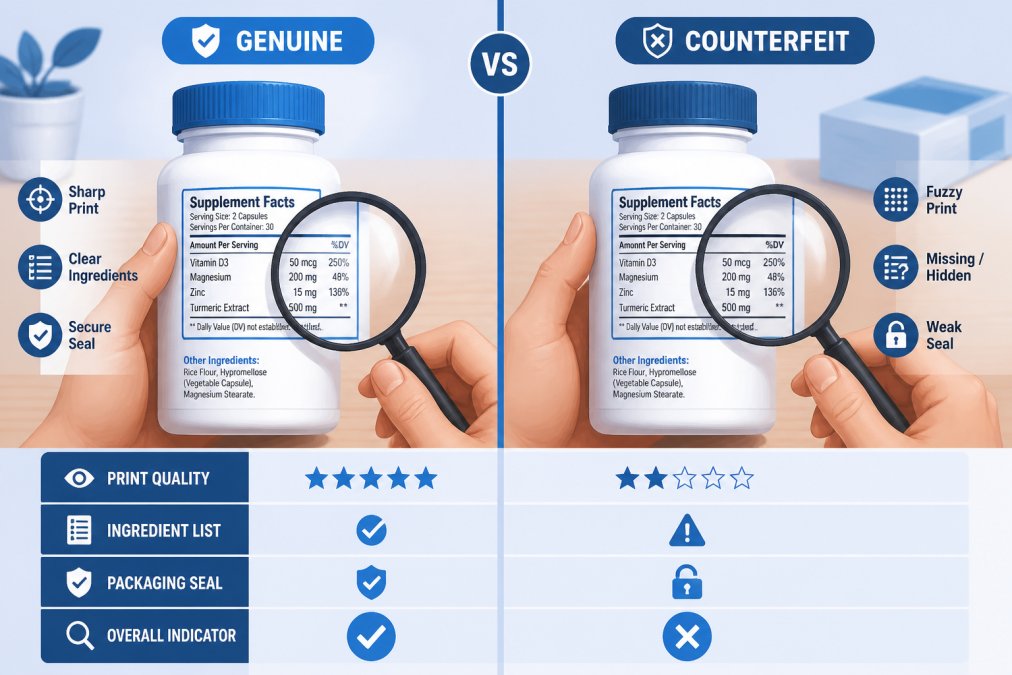
Authentic products have consistent, professional label printing with no smudging or misalignment. Check the ingredient list for vague terms like "proprietary blend" without specific dosages; legitimate manufacturers disclose exact amounts. The batch number and expiration date should be clearly printed, not handwritten or faded.
Pricing tells a story. If a supplement costs 70% less on a marketplace than on the manufacturer's official site, investigate why. Legitimate discounts rarely exceed 20-30%.
The Certificate of Analysis (COA): Your Most Powerful Verification Tool
The single most reliable way to verify authenticity is requesting a Certificate of Analysis from the seller or manufacturer. A COA is a third-party lab report that confirms the product contains what the label claims and is free of contaminants.
- Batch/Lot Number Match: The COA's batch number must match the number on your product's label.
- Active Ingredient Potency: The COA lists measured potency of key ingredients. For example, a vitamin D3 supplement labeled "1,000 IU" should show a result close to that range (typically 90-110% of label claim is acceptable).
- Contaminant Screening: Look for sections testing for heavy metals, microbial contamination, and pesticide residues. Results should show "Not Detected" or be below FDA and USP regulatory limits.
- Lab Credentials: The testing lab should be accredited by an independent body. Look for ISO 17025 certifications.
- Test Date: The COA should be dated within the past 12-18 months to reflect current batch stability.
Counterfeiters rarely provide COAs because they're expensive and require transparency. If a seller can't or won't provide one when asked, that's a red flag. Verify the seller's legitimacy by checking whether they're an authorized distributor on the manufacturer's website.
Look for third-party testing seals from organizations like NSF International or USP. These certifications mean an independent lab has verified the product's contents and purity.
FDA Supplement Regulation and What It Means for Your Purchases
The FDA does not approve dietary supplements before they reach the market, unlike prescription medications. Manufacturers are responsible for ensuring their products are safe and properly labeled. This regulatory gap means the FDA can only take action after a product is already on shelves and causing harm.
What this means for your shopping decisions: the retailer you choose becomes your primary quality gatekeeper. A curated wellness retailer typically conducts its own testing beyond FDA requirements. General marketplaces often assume the manufacturer's claims without independent verification.
For more information on how the FDA oversees supplements, consult the FDA's dietary supplement guidance.
The Commingled Inventory Problem on Marketplace Platforms
When multiple sellers list the same product on marketplaces like Amazon, inventory from all sellers is often stored in the same warehouse location. When you order, you might receive stock from any of those sellers, even if you specifically selected one. This system is efficient for Amazon's logistics, but it's a nightmare for product integrity.
Seller A might store supplements properly while Seller B cuts corners on storage. When Amazon picks your order, you have no way to know which seller's inventory you're receiving. You ordered from what looked like a reliable source, but you might get a product that sat in a hot warehouse for months.
This commingled inventory problem doesn't exist at a dedicated wellness retailer. When you order from JordanWellnessCo, you know exactly where your product came from and how it was handled. There's no middleman, no commingling, no surprise inventory swaps.
Benefits of Professional-Grade Supplements from Curated Sources
Professional-grade supplements differ from mass-market versions in formulation, potency, and ingredient sourcing. These products are typically designed for practitioners to recommend to clients, which means manufacturers invest in higher-quality raw materials and stricter manufacturing standards.
The difference shows up in bioavailability, how effectively your body absorbs and uses the supplement. A professional-grade formula might use chelated minerals (bound to amino acids for better absorption) instead of cheaper mineral salts. It might use standardized herbal extracts with verified potency rather than whole plant powders of unknown strength.
Curated wellness retailers stock these professional-grade options because they understand their customers are serious about results. A general marketplace prioritizes volume and low prices, which naturally favors mass-market formulations that compete primarily on cost.
When you buy professional-grade supplements from a dedicated retailer, you also gain access to knowledgeable staff who understand product interactions, dosing protocols, and which formulations work best for specific health goals.
Storage, Potency, and Temperature-Controlled Conditions
Supplement potency degrades over time, especially when exposed to heat, humidity, or light. A supplement stored properly might retain 95% of its labeled potency after one year (peer-reviewed research). The same product stored in a warm, humid environment might lose 30-40% of its potency in just three months.
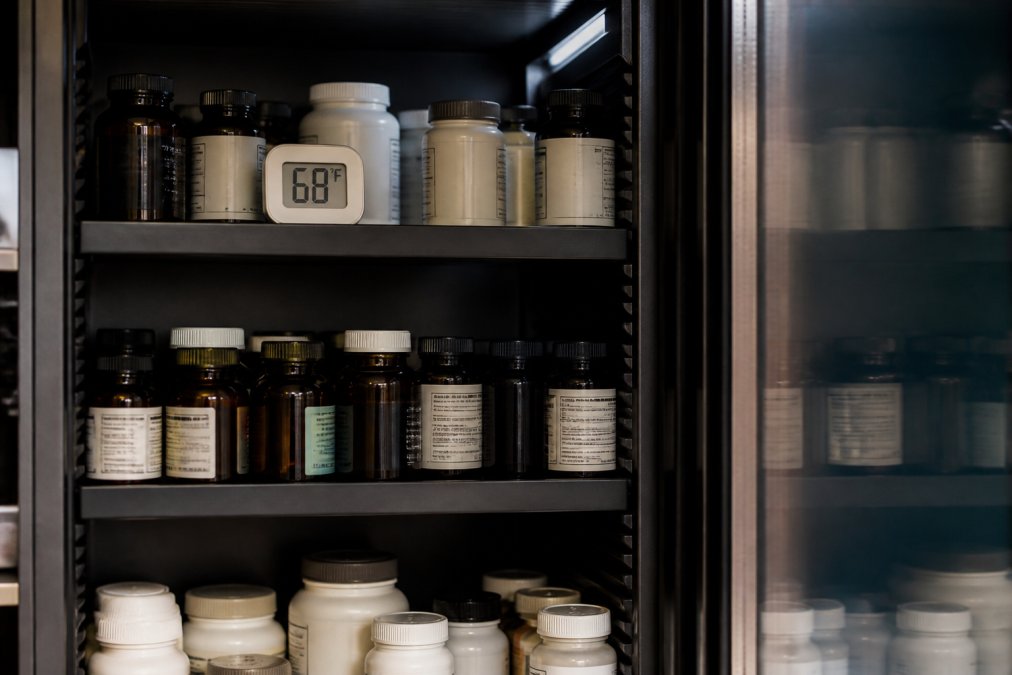
Ideal storage conditions are 60-75°F with humidity below 50%. Many supplements require refrigeration or cool storage, especially omega-3s, probiotics, and certain herbal extracts.
Product-Specific Degradation Timelines
- Probiotics: Lose viability fastest. A probiotic stored at room temperature (72°F) loses approximately 5-10% of live cultures per month (peer-reviewed research). At 85°F, losses reach 15-25% monthly. After six months in a warm warehouse, a product labeled "50 billion CFU" might deliver only 20-30 billion.
- Omega-3 Fatty Acids: Oxidize and become rancid when exposed to heat and light. Fish oil stored above 75°F develops a fishy smell and bitter taste, signs of oxidation. Oxidized omega-3s lose their anti-inflammatory benefits.
- Herbal Extracts (Standardized): Lose potency gradually. A standardized turmeric extract labeled "95% curcuminoids" may drop to 70-80% potency within 12 months under poor storage.
- Vitamin C: Highly unstable. Ascorbic acid degrades 5-15% per month in non-ideal conditions.
- B-Complex Vitamins: More stable than vitamin C but still vulnerable. Expect 3-8% annual potency loss under proper storage; 15-25% loss under poor conditions.
The Warehouse Shelf-Life Problem
Marketplace warehouses often lack climate control, with temperatures fluctuating seasonally between 50°F in winter and 95°F+ in summer. Products may sit on shelves for 6-18 months before being ordered. Expiration dates assume proper storage conditions, so a product manufactured in January 2024 with a January 2027 expiration date assumes controlled temperatures. If that product spent 8 months in a hot warehouse, the effective shelf-life is already reduced by 25-30%.
Some marketplace sellers intentionally source overstock or near-expiration inventory at steep discounts, then resell it at a markup. By the time you use it, you're consuming a product that's lost significant efficacy.
How Dedicated Retailers Protect Potency
Dedicated wellness retailers invest in temperature-controlled storage and shipping. Products are stored in climate-controlled facilities and shipped in insulated packaging with temperature monitoring. They rotate inventory using FIFO (First In, First Out) principles, ensuring older stock ships before newer stock.
When purchasing supplements, ask the retailer: (1) How long has this product been in inventory? (2) Is it stored in climate-controlled conditions? (3) What is the manufacturing date? Products manufactured more than 12-18 months ago have already lost some potency, even under ideal conditions.
Direct-to-Consumer vs. Third-Party Sellers: What the Data Shows
Direct-to-consumer brands sell directly to customers through their own websites or authorized retailers. Third-party sellers on marketplaces operate independently, often buying inventory from distributors and reselling it.
Direct-to-consumer models offer several advantages. Manufacturers control the entire supply chain from production through delivery and can verify that storage conditions meet specifications at every step. They have direct accountability to customers and stronger incentives to maintain brand reputation.
Third-party marketplace sellers face different incentives. They're optimizing for fast inventory turnover and competitive pricing. They often buy from wholesalers or liquidators, which means they might not know the full history of the products they're selling.
The transparency difference is stark. When you buy from a manufacturer or authorized retailer, you can typically contact them directly with questions about sourcing, testing, or storage. Try that with an anonymous marketplace seller and you'll quickly hit a wall.
JordanWellnessCo operates as a curated direct retailer, which means we control sourcing decisions and can stand behind every product we sell.
Conclusion
The choice between a holistic wellness shop and general marketplace shopping comes down to control and accountability. A curated wellness retailer maintains direct relationships with manufacturers, verifies product authenticity through batch testing, enforces temperature-controlled storage, and takes responsibility for every product sold. A marketplace offers convenience and price competition, but at the cost of visibility into supply chain integrity and product handling.
If you're serious about wellness, the sourcing decision matters as much as the supplement itself. A high-quality formula stored improperly is no better than a cheap product. A counterfeit supplement is worse than useless, it's a waste of money and a risk to your health.
=== FAQ ANSWERS (audit these too, same rules) ===
[1] Q: Where is the safest place to buy vitamins online? A: The safest approach combines three factors: direct-to-consumer purchasing from established brands, verification of third-party certifications (like NSF or USP), and checking for Certificate of Analysis (COA) documentation. Curated holistic wellness shops that vet their supply chain offer better traceability than general marketplaces. Always verify the seller is authorized by the manufacturer, not a third-party reseller, to reduce counterfeit risks and ensure proper storage conditions were maintained throughout distribution.
[2] Q: How do I know if a product is authentic on Amazon? A: Check three things: the seller's name matches the brand's official store, the product has a valid UPC code that matches the manufacturer's records, and the packaging matches official product images from the brand's website. Look for FBA (Fulfilled by Amazon) badges, though these don't guarantee authenticity. Request a Certificate of Analysis if available. Be cautious of significantly discounted prices, as this can indicate gray-market or counterfeit stock. Contact the manufacturer directly if you're unsure about a seller's legitimacy.
[3] Q: What are the risks of third-party sellers in the wellness industry? A: Third-party marketplace sellers create several risks: commingled inventory (where counterfeit products mix with authentic ones in Amazon warehouses), unclear storage conditions that degrade potency, lack of traceability if quality issues arise, and higher exposure to adulteration. Sellers may not maintain proper temperature-controlled storage, affecting bioavailability and efficacy. Without direct supply chain transparency, you cannot verify batch testing or expiration date integrity. Direct-from-manufacturer or authorized retailers provide documented supply chain integrity and accountability.
[4] Q: Is it safe to buy probiotics from Amazon? A: Probiotics are particularly sensitive to storage conditions and require temperature-controlled environments to maintain potency. Amazon's warehouse system doesn't guarantee these conditions, and third-party sellers often lack proper refrigeration during shipping and storage. Look for probiotics from curated wellness sources that document cold-chain management and provide COA verification. Check the expiration date closely and confirm the product was stored below 77°F. Probiotics from direct-to-consumer brands with documented storage protocols are safer than marketplace purchases.
Frequently Asked Questions
Where is the safest place to buy vitamins online?
The safest approach combines three factors: direct-to-consumer purchasing from established brands, verification of third-party certifications (like NSF or USP), and checking for Certificate of Analysis (COA) documentation. Curated holistic wellness shops that vet their supply chain offer better traceability than general marketplaces. Always verify the seller is authorized by the manufacturer, not a third-party reseller, to reduce counterfeit risks and ensure proper storage conditions were maintained throughout distribution.
How do I know if a product is authentic on Amazon?
Check three things: the seller's name matches the brand's official store, the product has a valid UPC code that matches the manufacturer's records, and the packaging matches official product images from the brand's website. Look for FBA (Fulfilled by Amazon) badges, though these don't guarantee authenticity. Request a Certificate of Analysis if available. Be cautious of significantly discounted prices, as this can indicate gray-market or counterfeit stock. Contact the manufacturer directly if you're unsure about a seller's legitimacy.
What are the risks of third-party sellers in the wellness industry?
Third-party marketplace sellers create several risks: commingled inventory (where counterfeit products mix with authentic ones in Amazon warehouses), unclear storage conditions that degrade potency, lack of traceability if quality issues arise, and higher exposure to adulteration. Sellers may not maintain proper temperature-controlled storage, affecting bioavailability and efficacy. Without direct supply chain transparency, you cannot verify batch testing or expiration date integrity. Direct-from-manufacturer or authorized retailers provide documented supply chain integrity and accountability.
Is it safe to buy probiotics from Amazon?
Probiotics are particularly sensitive to storage conditions and require temperature-controlled environments to maintain potency. Amazon's warehouse system doesn't guarantee these conditions, and third-party sellers often lack proper refrigeration during shipping and storage. Look for probiotics from curated wellness sources that document cold-chain management and provide COA verification. Check the expiration date closely and confirm the product was stored below 77°F. Probiotics from direct-to-consumer brands with documented storage protocols are safer than marketplace purchases.
JordanWellnessCo brings together everything that matters: a curated selection of professional-grade supplements, fitness gear, and wellness essentials sourced directly from trusted manufacturers. We maintain temperature-controlled storage, provide certificates of analysis for verification, and stand behind every product we sell. Start your wellness journey with products you can trust. Shop now.
This article was written using GrandRanker