Last Updated: October 24, 2026
Quick Summary
To choose organic personal care products, read the first five ingredients, confirm which certifier issued the seal and what it covers, and match the formula to your skin type. Patch test on your inner forearm for 24 to 48 hours, then compare price per ounce and concentration rather than bottle price.
- Ingredient labels list components by weight, so the first five ingredients show real concentration.
- The USDA Organic seal requires at least 95 percent certified organic content, excluding water and salt.
- NSF/ANSI 305 requires at least 70 percent organic content in personal care products.
- Apply a small amount to your inner forearm and wait 24 to 48 hours before full use.
- Check the period-after-opening symbol, since water-based products with natural preservatives expire sooner.
Table of Contents
- What Organic Personal Care Products Actually Are
- How to Read Skincare Ingredient Labels Without Getting Fooled
- Natural vs. Organic Skincare: What the Difference Means for Your Purchase
- Organic Personal Care Product Certification and the Seals That Matter
- How to Choose Skincare Products for Your Skin Type
- Spotting Greenwashing and Misleading Claims Before You Buy
- Patch Testing and Ingredient Safety for Sensitive Skin
- A Step-by-Step Shopping Checklist for Your Next Purchase
- Frequently Asked Questions
What Organic Personal Care Products Actually Are
Organic personal care products are items you use on your body every day, like cleansers, lotions, and hair care, made with ingredients grown and processed under strict organic standards. At JordanWellnessCo, we field questions about this constantly, and the confusion is real. Many shoppers assume "organic" and "natural" mean the same thing. They don't. The difference shapes what you pay, what you get, and how well the product works. Below, we'll show you exactly how to choose organic personal care products without wasting money on vague labels.
How to Read Skincare Ingredient Labels Without Getting Fooled
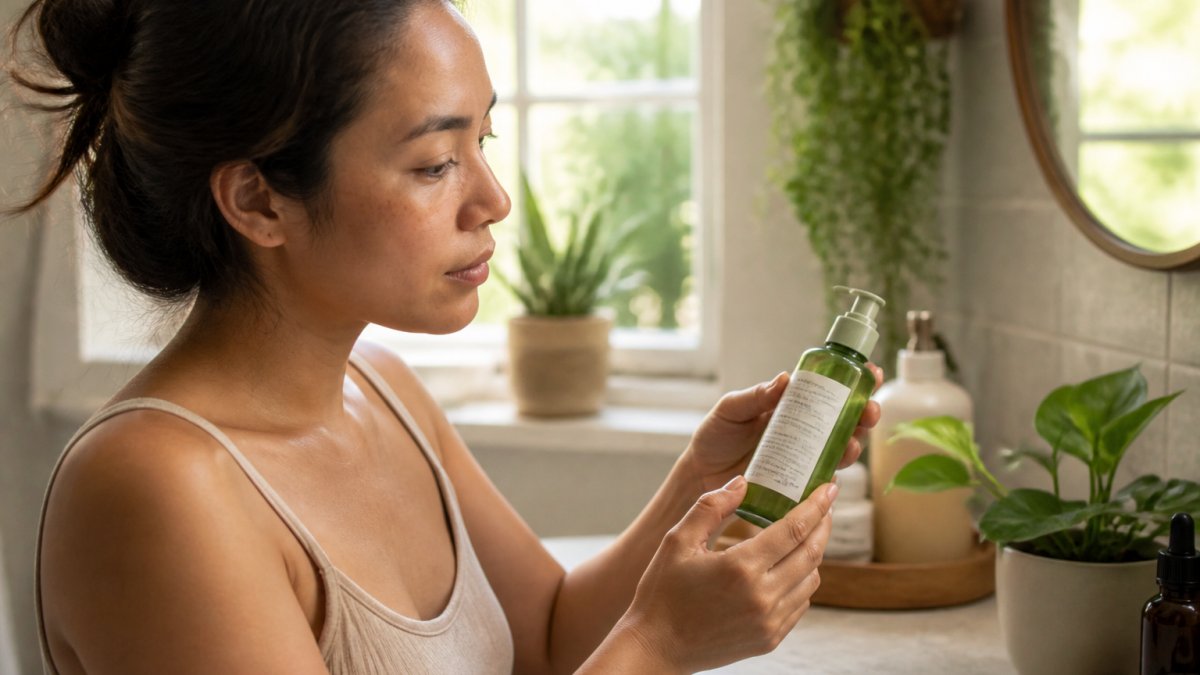
Ingredient labels list components in descending order by weight, so the first five ingredients tell you most of what you need to know. If the organic oil you bought sits at the bottom of the list, it's a token amount.
Where to Look on the Label and What to Skip
Start with the first five ingredients. Then scan for fragrance, which can hide dozens of undisclosed compounds. A common mistake is trusting a "made with organic ingredients" claim on the front while the back lists synthetic preservatives first.
- Check the order: top ingredients = highest concentration
- Look for the word "fragrance" or "parfum" and treat it as a question mark
- Skip products where water or alcohol leads and the plant extracts trail
- Note the INCI names, the standard naming system for cosmetics
Natural vs. Organic Skincare: What the Difference Means for Your Purchase
Natural means ingredients come from nature. Organic means they were grown under certified farming rules, without certain synthetic pesticides. A plant can be natural and still grown with heavy chemical inputs. That's the gap most shoppers miss.
So when a label says "natural," it's a marketing word with loose rules. When it says "certified organic," someone verified the supply chain. That verification is what you're paying for.
Organic Personal Care Product Certification and the Seals That Matter
Certification seals are third-party stamps that confirm a product meets a defined organic standard. The seal is only as strong as the body behind it, so know which ones count, and know that they do not all verify the same thing.
What the Major Seals Actually Verify
The USDA National Organic Program sets the federal baseline for what "organic" can legally mean on a label. For personal care, the rules get complicated because cosmetics are not food. A product can carry the USDA Organic seal only if its agricultural ingredients meet the program's standards and it contains at least 95 percent certified organic content (excluding water and salt). Products between 70 and 95 percent organic can say "made with organic ingredients" but cannot use the seal.
Other certifiers operate on their own standards, and the differences matter:
- NSF/ANSI 305, a U.S. standard specifically for personal care products containing organic ingredients. It requires at least 70 percent organic content and sets rules for the remaining formulation, including allowed preservatives and processing methods.
- ECOCERT and COSMOS, European standards with tiered labels (COSMOS Organic and COSMOS Natural). They cap petrochemical ingredients, restrict certain preservatives, and require a minimum share of organic content in the finished product, not just in the plant-derived portion.
- Whole Foods Premium Body Care, a retailer standard rather than a certifier, but it screens for prohibited ingredients and is often cited as a stricter shelf benchmark.
How Rules Differ by Market
A "certified organic" claim that is legal in one market may not be legal in another. The USDA seal is a U.S. agricultural standard; ECOCERT and COSMOS are European; and neither automatically satisfies the other's rules. If you buy imported products, check which standard the seal references. A European COSMOS Organic seal, for example, verifies a different threshold and a different list of allowed ingredients than the USDA seal does.
A Quick Way to Evaluate Any Seal
When you see a seal you do not recognize, ask three questions:
- Who issued it? A government program, an independent certifier, or the brand itself?
- What does it cover? The whole product, the agricultural ingredients only, or a single ingredient?
- What is the threshold? Look for a stated percentage or a standard number you can look up.
If you cannot answer all three from the label or the certifier's website, treat the seal as a marketing signal rather than a verification. If you want to see which brands actually carry these seals, our guide to the best natural personal care brands breaks them down side by side.
How to Choose Skincare Products for Your Skin Type
Match the product to your skin first, then check the organic claims. A certified organic cleanser built for oily skin will still clog dry, reactive skin.
Organic Sensitive Skin Cleanser – Gentle AHA Face Wash →
- Sensitive or reactive skin: look for fragrance-free, short ingredient lists
- Dry skin: richer butters and oils, fewer drying alcohols
- Oily or acne-prone skin: lightweight, non-comedogenic formulas
- Combination skin: gentle cleansers plus targeted moisturizers
For sensitive skin, our organic sensitive skin cleanser pairs mild AHAs with soothing almond extract and algae, and it's fragrance-free and pH-balanced. That combination matters more than the word "organic" alone.

Spotting Greenwashing and Misleading Claims Before You Buy
Greenwashing is when a brand uses natural imagery and vague words to imply a product is cleaner than it is. The tell is almost always the gap between the front label and the ingredient list.
Look for these red flags:
- Earthy packaging with no certification seal anywhere
- "Chemical-free" claims, which are meaningless since everything is a chemical
- "Clean" or "pure" with no standard behind the word
- A single organic ingredient highlighted while the rest is synthetic
The Federal Trade Commission's Green Guides set the rules for environmental marketing claims. If a claim sounds too vague to verify, it probably is.
Patch Testing and Ingredient Safety for Sensitive Skin
Patch testing means applying a small amount of product to your inner forearm and waiting 24 to 48 hours before using it broadly. It's the simplest safety step you can take, and most people skip it.
Even plant-based ingredients can trigger reactions. Essential oils, botanicals, and preservatives are common culprits. If you're dealing with ongoing irritation, our guide to repairing your skin barrier naturally walks through the recovery process. And if breakouts keep returning, microbiome imbalance may be the underlying cause worth exploring.
A Step-by-Step Shopping Checklist for Your Next Purchase
Here's the checklist we'd use ourselves. Run through it before you check out, and note that it applies to hair care, deodorant, oral care, and body products, not just skincare.
- Flip the bottle. Read the first five ingredients. They tell you what the product mostly is.
- Find the seal. Confirm which certifier issued it and what it covers (see the certification section above).
- Scan for fragrance. "Fragrance" or "parfum" can hide dozens of undisclosed compounds. Decide if you're comfortable with that.
- Match the product to its use. A certified organic cleanser built for oily skin will still clog dry, reactive skin. Check the intended use, not just the organic claim.
- Patch test. Apply a small amount to your inner forearm and wait 24 to 48 hours before full use.
- Check shelf life. Look for the period-after-opening (PAO) symbol, the open-jar icon with a number and "M" for months. Water-based products with natural preservatives tend to have shorter windows than anhydrous oils and balms.
- Compare value. Calculate price per ounce, not price per bottle, and factor in concentration. A 2-ounce serum at a higher price per ounce can cost less per use than a 4-ounce lotion if you need less of it.
Applying the Checklist Beyond Skincare
The same steps work across categories, but the red flags shift:
- Hair care: silicones and sulfates often lead the list even in products marketed as natural. Check whether the organic oil is near the top or trailing.
- Deodorant: "aluminum-free" is a formulation claim, not an organic one. Look for the certifier separately.
- Oral care: fluoride and abrasives are functional ingredients; an organic claim does not tell you whether the product is effective or safe for enamel.
- Body products: preservatives matter most here because water-based lotions and washes are prone to microbial growth. A short shelf life is not automatically a bad sign, it can reflect a gentler preservation system.
Evaluating Value and Claims
An organic claim does not automatically justify a premium. Compare cost per use, concentration, and whether the certified ingredient is the one doing the work. A product can be certified organic and still be mostly water. If the premium comes from a certification that covers only a small share of the formula, you are paying for a label, not a formulation.
| Step | What to Check | Why It Matters |
|---|---|---|
| 1 | First five ingredients | Shows real concentration |
| 2 | Certification seal and scope | Confirms what was actually verified |
| 3 | Fragrance listing | Flags hidden compounds |
| 4 | Intended use match | Prevents irritation |
| 5 | Patch test | Catches reactions early |
| 6 | Period-after-opening symbol | Avoids expired product |
| 7 | Price per ounce and concentration | Reveals true value |
Once you've picked your products, our how-to guide for building a safe daily natural skincare routine shows you how to layer them in the right order.
Frequently Asked Questions
What does it mean when skincare products are organic?
Organic skincare means the ingredients were grown and processed under defined farming standards that limit synthetic pesticides and fertilizers. In the US, products carrying the USDA Organic seal must meet specific thresholds for organic content. A product labeled organic should have a certification seal or a clear statement of which ingredients are organic. Without one, the word organic is largely a marketing term, so check the ingredient list and the seal before you trust the claim.
What is the difference between natural and organic skincare?
Natural means ingredients come from plants, minerals, or other natural sources, but there are no legal standards for the term in personal care. Organic is a stricter claim tied to farming and processing standards, usually backed by a certification. A product can be natural without being organic, and a product can contain one organic ingredient while the rest is synthetic. When you compare natural vs. organic skincare, treat organic as the more verifiable label and natural as a broader, looser description.
How can I tell whether a personal care product is certified organic?
Look for a recognized certification seal on the packaging, such as USDA Organic or ECOCERT, and check that the certifying body is named. Then scan the ingredient list for the organic percentage or the specific ingredients covered. A genuine certification includes a traceable standard and an auditing process. If a label says organic but shows no seal, no certifier, and no percentage, treat the claim as unverified and look for a product with documented certification instead.
Are organic personal care products better for sensitive skin?
Organic products can suit sensitive skin because they often skip synthetic fragrances and harsh sulfates, but organic does not automatically mean gentle. Essential oils and botanical extracts can still trigger irritation or allergic reactions in some people. Patch test any new product on a small area of skin for 24 to 48 hours before full use. If you have reactive or rosacea-prone skin, start with fragrance-free formulas and introduce one new product at a time so you can identify what causes a reaction.


