

Table of Contents
- Signs of a Damaged Skin Barrier You Shouldn't Ignore
- 1. Switch to a Gentle Cleanser and Stop Stripping Your Skin
- 2. Apply Moisturizer to Damp Skin to Slow Transepidermal Water Loss
- 3. Choose Ceramides, Cholesterol, and Fatty Acids Over Harsh Actives
- 4. Wear Sunscreen Every Day to Protect a Compromised Barrier
- 5. Pause Exfoliation and Retinoids While Your Barrier Recovers
- 6. Support Barrier Repair From the Inside With Collagen and Omega-Rich Foods
- 7. Build a Skin Barrier Repair Routine That Fits Real Life
- Frequently Asked Questions
Last Updated: September 18, 2026
Signs of a Damaged Skin Barrier You Shouldn't Ignore
The signs of a damaged skin barrier are usually obvious once you know what to look for: persistent redness, stinging when you apply products that never used to sting, tightness after cleansing, flaking, and a dull, reactive complexion that seems to break out at the slightest change. A damaged skin barrier is the outermost layer of skin losing its ability to hold water in and keep irritants out. When that layer weakens, everything you apply starts to feel like too much.
Most people assume they have "sensitive skin" when the real issue is a compromised barrier. That distinction matters, because sensitive skin is a tendency and a damaged barrier is a condition you can actually fix. This guide from JordanWellnessCo walks through seven ways to repair skin barrier naturally, in the order that produces results fastest. Below, we'll show you exactly what to change first, what to pause, and how long recovery typically takes.
The barrier itself is worth understanding before you touch a single product.
The stratum corneum is the outermost layer of skin, built from flattened skin cells surrounded by a lipid matrix of ceramides, cholesterol, and fatty acids. That lipid matrix is the mortar between the bricks. When ceramides and fatty acids drop, water escapes through the skin in a process called transepidermal water loss, and irritants move in.
1. Switch to a Gentle Cleanser and Stop Stripping Your Skin
The fastest way to repair a damaged skin barrier is to stop damaging it further, and harsh cleansing is the most common culprit. A gentle cleanser removes dirt and excess oil without pulling the lipids that hold your barrier together.
Look for a low-foaming, fragrance-free formula with a pH close to skin's natural range. A common mistake is equating "squeaky clean" with "clean." That tight, stripped feeling after washing is your lipid barrier leaving the building.
What to avoid in a cleanser:
- Sulfates that produce heavy lather
- Added fragrance and essential oils
- Physical scrubs with beads or rough grains
- Cleansing brushes used daily
- Hot water, which strips oil faster than warm water
Wash with lukewarm water, use your fingertips instead of a cloth, and limit cleansing to twice a day. If your skin feels tight within a minute of patting dry, the cleanser is too strong.
2. Apply Moisturizer to Damp Skin to Slow Transepidermal Water Loss
Moisturizing damp skin within about a minute of cleansing traps far more water than applying to dry skin. The moisture already sitting on your skin gets sealed in rather than evaporating.
This is where the humectant and occlusive distinction matters. Humectants like hyaluronic acid pull water into the skin. Occlusives form a seal on top to slow transepidermal water loss. You want both, layered in that order.
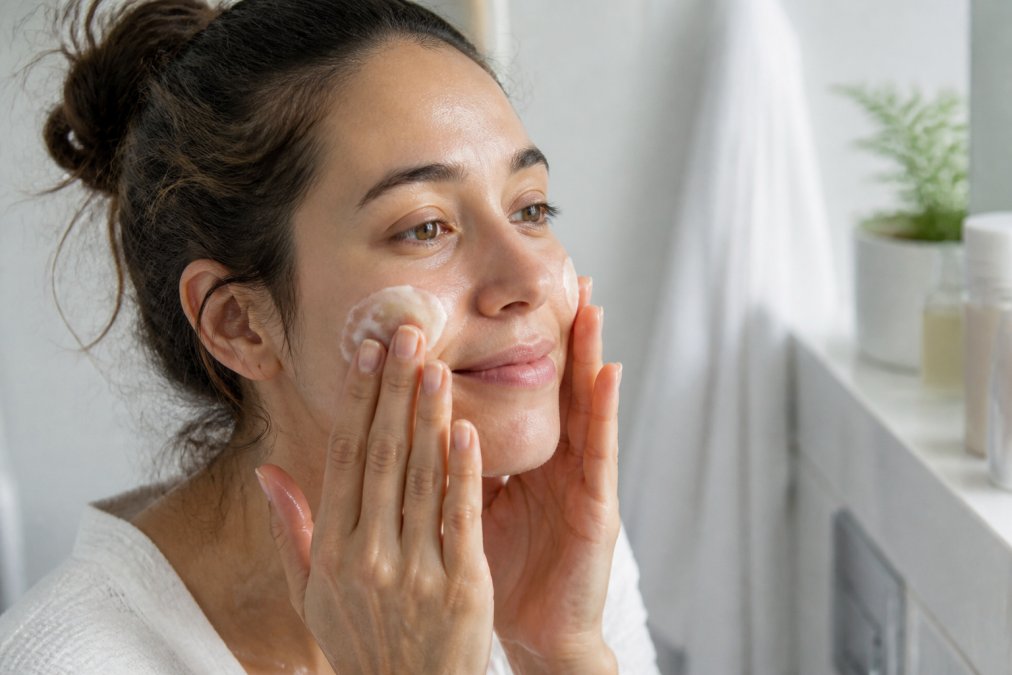
A practical sequence that works for most people:
- Cleanse gently
- Pat dry for a few seconds, leaving skin slightly damp
- Apply a hydrating serum or essence
- Seal with a barrier-supporting moisturizer
- Finish with sunscreen in the morning
The American Academy of Dermatology guidance on moisturizing recommends applying moisturizer immediately after bathing to lock in hydration, which is the same principle at a smaller scale.
For barrier support specifically, a cream built around a lipid complex does more than a basic lotion. PEP TALK™ Bio-Peptide Barrier Repair Cream with Triple Lipid Complex combines ceramides, cholesterol, and fatty acids with hyaluronic acid and Vegan Bio-Placenta® peptides. It is formulated for sensitive, reactive, and redness-prone skin, absorbs without a heavy feel, and layers well under sunscreen.

3. Choose Ceramides, Cholesterol, and Fatty Acids Over Harsh Actives
Barrier repair comes down to replacing what the lipid matrix has lost. Ceramides, cholesterol, and fatty acids are the three components that make up that matrix, and a moisturizer containing all three supports the barrier more directly than one containing ceramides alone.

Ceramides are the most familiar of the three, but they work best alongside cholesterol and fatty acids in roughly the right ratio. Products that list all three are doing the more complete job.
PEP TALK™ Bio-Peptide Barrier Repair →
Ingredients worth looking for:
- Ceramides, ideally several types
- Cholesterol
- Fatty acids such as stearic or linoleic acid
- Niacinamide, which supports the barrier and helps calm visible redness
- Hyaluronic acid for hydration
- Panthenol and madecassoside for soothing
If your skin is reactive and you prefer a short ingredient list, Fragrance Free Tallow + Honey Cream takes a different route: premium beef tallow and natural honey, no added fragrance, and a texture that absorbs without greasiness.
4. Wear Sunscreen Every Day to Protect a Compromised Barrier
A weakened barrier is more vulnerable to ultraviolet damage, which slows repair and worsens redness. Daily sunscreen is not optional during recovery, even on cloudy days and even indoors near windows.
Application habits that matter:
- Use roughly a nickel-sized amount for the face and neck
- Reapply every two hours outdoors
- Do not skip the ears, hairline, or eyelids
- Pair with a hat and shade during flare-ups
5. Pause Exfoliation and Retinoids While Your Barrier Recovers
Exfoliating acids and retinoids are the two categories most likely to keep a barrier damaged. Pause both until your skin stops stinging and the flaking settles, typically one to two weeks.
What to pause:
- Glycolic, lactic, and salicylic acid exfoliants
- Retinol, retinal, and prescription retinoids
- Benzoyl peroxide at high concentrations
- Clay masks and charcoal masks
- At-home chemical peels
6. Support Barrier Repair From the Inside With Collagen and Omega-Rich Foods
Skin repair is not only topical. Protein, healthy fats, and micronutrients give your body the raw material to rebuild the lipid matrix and skin structure.
Foods and nutrients that support the barrier:
- Fatty fish, walnuts, and flaxseed for omega-3 fats
- Eggs, bone broth, and poultry for protein and collagen
- Avocado and olive oil for healthy fats
- Citrus, bell peppers, and berries for vitamin C
- Nuts and seeds for zinc and vitamin E
- Plenty of water throughout the day
7. Build a Skin Barrier Repair Routine That Fits Real Life
A simple daily structure:
| Time | Step | Purpose |
|---|---|---|
| Morning | Gentle cleanse or water rinse | Remove overnight buildup without stripping |
| Morning | Hydrating serum on damp skin | Draw water into the skin |
| Morning | Barrier moisturizer | Seal in moisture, replace lipids |
| Morning | Broad-spectrum SPF 30+ | Protect the repairing barrier |
| Evening | Gentle cleanse | Remove sunscreen and grime |
| Evening | Barrier moisturizer on damp skin | Support overnight repair |
| Weekly | Reassess, reintroduce one active at most | Avoid overloading recovering skin |
One angle most guides skip entirely: barrier damage carries a real psychological weight. Persistent redness and stinging affect how people feel about being seen, and that stress feeds back into the skin through elevated cortisol. Treating the routine as a calm, low-stakes habit rather than an emergency helps break that loop.
Frequently Asked Questions
What heals the skin barrier the fastest?
The fastest results come from removing the irritant first, then simplifying your routine to three steps: a gentle cleanser, a moisturizer applied to damp skin, and sunscreen. Products built around ceramides, cholesterol, and fatty acids support moisture retention while the barrier rebuilds. Most people notice less stinging and redness within 7 to 10 days, though full recovery of the lipid barrier can take several weeks. Skip exfoliants and retinoids during this window so your skin is not fighting new irritation while it heals.
Which natural oil can repair a damaged skin barrier?
Oils rich in linoleic and oleic fatty acids, such as sweet almond oil, help condition skin and reduce moisture loss when layered over a moisturizer. Look for cold-pressed, fragrance-free options if your skin is reactive. Oils work best as a sealant on top of a humectant, not as a replacement for a ceramide-based cream. Patch test on your inner forearm for three days before applying to your face, especially if you have a history of eczema or contact dermatitis.
What are the primary signs of a damaged skin barrier?
The most common signs include stinging or burning when you apply products that used to feel fine, persistent redness, tightness after cleansing, flaking, and breakouts that appear in new areas. Some people notice increased sensitivity to temperature changes or a shiny, waxy texture from over-moisturizing. If your skin reacts to water alone, that is a strong signal the barrier is compromised. Track your symptoms for a week so you can tell whether your routine is helping or making things worse.
How long does it typically take to repair a skin barrier?
Mild damage from over-exfoliation or a new product often settles in 7 to 14 days once you stop the irritant. More significant impairment, such as from a chemical peel or prescription retinoid, can take 4 to 6 weeks for the lipid barrier to fully recover. Skin cell turnover slows with age, so adults over 40 may need closer to 8 weeks. Consistency matters more than speed: gentle cleansing, daily moisturizer, and sunscreen every morning do more than any single product.
Can over-exfoliation lead to a compromised skin barrier?
Yes. Exfoliating acids and scrubs remove dead cells along with part of the lipid barrier that holds moisture in. Using them more than two or three times a week, or combining them with retinoids, strips the stratum corneum faster than it can rebuild. Signs include stinging, redness, and a tight feeling after washing. Stop all exfoliants for at least two weeks and focus on ceramide-rich moisturizer and sunscreen. Reintroduce one active at a time, once or twice weekly, and watch for irritation.


