

Last Updated: November 19, 2026
Quick Summary
Ashwagandha side effects in women most commonly start in the gut, with nausea, stomach upset, and loose stools often appearing within the first week of daily use. Drowsiness, headache, and blood sugar shifts are also reported. Starting with a lower dose and taking it with food may reduce stomach upset for some people.
- Digestive upset may clear within a few days to two weeks for some people.
- Ashwagandha may raise thyroid hormone levels, so ask your doctor before combining it with levothyroxine.
- Stop taking ashwagandha and seek medical advice right away if jaundice, dark urine, or pale stools appear.
- Avoid ashwagandha during pregnancy and breastfeeding, as safety has not been established.
- Start with one product at a low dose for two weeks, then adjust.
Table of Contents
- Common Ashwagandha Side Effects Women Notice First
- How Ashwagandha Affects Women's Hormones and Menstrual Cycles
- Ashwagandha Neurological Side Effects and Thyroid Interactions
- What Not to Mix With Ashwagandha
- How Long Do Ashwagandha Side Effects Last?
- Liver Injury, Pregnancy, and Who Should Avoid Ashwagandha
- Choosing a Quality Ashwagandha Product at JordanWellnessCo
- Frequently Asked Questions
Common Ashwagandha Side Effects Women Notice First
Ashwagandha side effects in women usually start in the gut. The most common complaints are nausea, stomach upset, and loose stools, and they often show up within the first week of daily use.
The herb, known botanically as Withania somnifera, is a popular dietary supplement for stress. But it is not a gentle pill for every stomach. Many people tolerate it well, while others may not. Dose and timing may make a difference.

Digestive Symptoms: Nausea, Bloating, and Loose Stools
Stomach trouble is among the most commonly reported reasons people stop taking ashwagandha. Common complaints include:

- Nausea, especially on an empty stomach
- Bloating and gas
- Loose stools or diarrhea
- Stomach pain or cramping
Starting with a lower dose and taking it with food may reduce stomach upset for some people.
Drowsiness, Headache, and Blood Sugar Shifts
Ashwagandha can make you sleepy. Some women feel calm within an hour. Others feel foggy or groggy, especially with morning doses.
Headaches also happen, usually mild and short-lived. And because the herb may affect blood sugar, women who take diabetes medication should watch for shakiness or dizziness.
How Ashwagandha Affects Women's Hormones and Menstrual Cycles
Ashwagandha is sometimes described as a hormone balancer, but evidence for cycle-level effects in women is limited. What is known is that the herb contains withanolides, compounds that can influence the hypothalamic-pituitary-adrenal axis and, in some study settings, shift cortisol and thyroid hormone levels. Those pathways sit upstream of reproductive hormones, which is why researchers have asked whether ashwagandha can affect menstruation. The honest answer is that most human studies were not designed to answer that question, were small, and often did not report cycle outcomes at all.
Some people report changes in cycle timing or flow after starting ashwagandha. These reports are not proof of cause, since stress, sleep changes, weight shifts, and thyroid changes can all affect a cycle.
What the research does suggest, cautiously:
- Cortisol and stress signaling: Some small trials in stressed adults found lower cortisol with ashwagandha, but these studies generally did not analyze menstrual outcomes by sex.
- Thyroid hormone shifts: Ashwagandha may raise thyroid hormone levels in some people, and thyroid changes can affect cycle regularity. This is a plausible indirect route, not a demonstrated direct effect on the uterus or ovaries.
- Reproductive hormone studies: Most clinical work on ashwagandha and sex hormones has been done in men, not women, so findings do not transfer cleanly.
If your cycle changes after you start the herb, the practical move is to stop and track for one to two cycles. Note the date, flow, and any accompanying symptoms. Most reported changes settle after stopping. If they do not, or if you have a history of irregular cycles, PCOS, endometriosis, or thyroid disease, talk to a clinician before restarting. A supplement is only one possible cause, and cycle changes deserve a proper workup rather than a guess.
Women trying to conceive or managing a hormonal condition deserve extra caution because the safety data in those groups is limited. For a deeper look at hormonal support, see our guide on how to support fertility naturally with supplements, and our roundup of the best natural supplements for hormonal balance covers broader options.
Watch out: Do not use ashwagandha to self-treat a suspected hormonal condition or to regulate a cycle without medical guidance.
Ashwagandha Neurological Side Effects and Thyroid Interactions
Neurological reactions to ashwagandha are uncommon but real. The main ones are drowsiness, dizziness, and headache. A smaller group reports vivid dreams or mild restlessness. These effects usually fade as your body adjusts.
The bigger concern is the thyroid. Ashwagandha may raise thyroid hormone levels, according to NIH Office of Dietary Supplements herbal information. If you take thyroid medication such as levothyroxine, this matters. Combining the two can push your levels too high. Symptoms to watch for include a racing heart, jitteriness, sweating, and trouble sleeping.
Anyone with a thyroid condition should ask their doctor before starting ashwagandha. This is not a case for guesswork.
What Not to Mix With Ashwagandha
Some combinations may raise the risk of side effects. Discuss these with a doctor before combining:
- Sedatives and sleep aids: ashwagandha adds to the drowsiness.
- Thyroid medication: risk of pushing hormone levels too high.
- Blood sugar medication: risk of blood sugar dropping too low.
- Blood pressure medication: possible additive drop in pressure.
- Immunosuppressants: the herb may stimulate the immune system.
Alcohol may also add to drowsiness, so check with a doctor before combining the two.
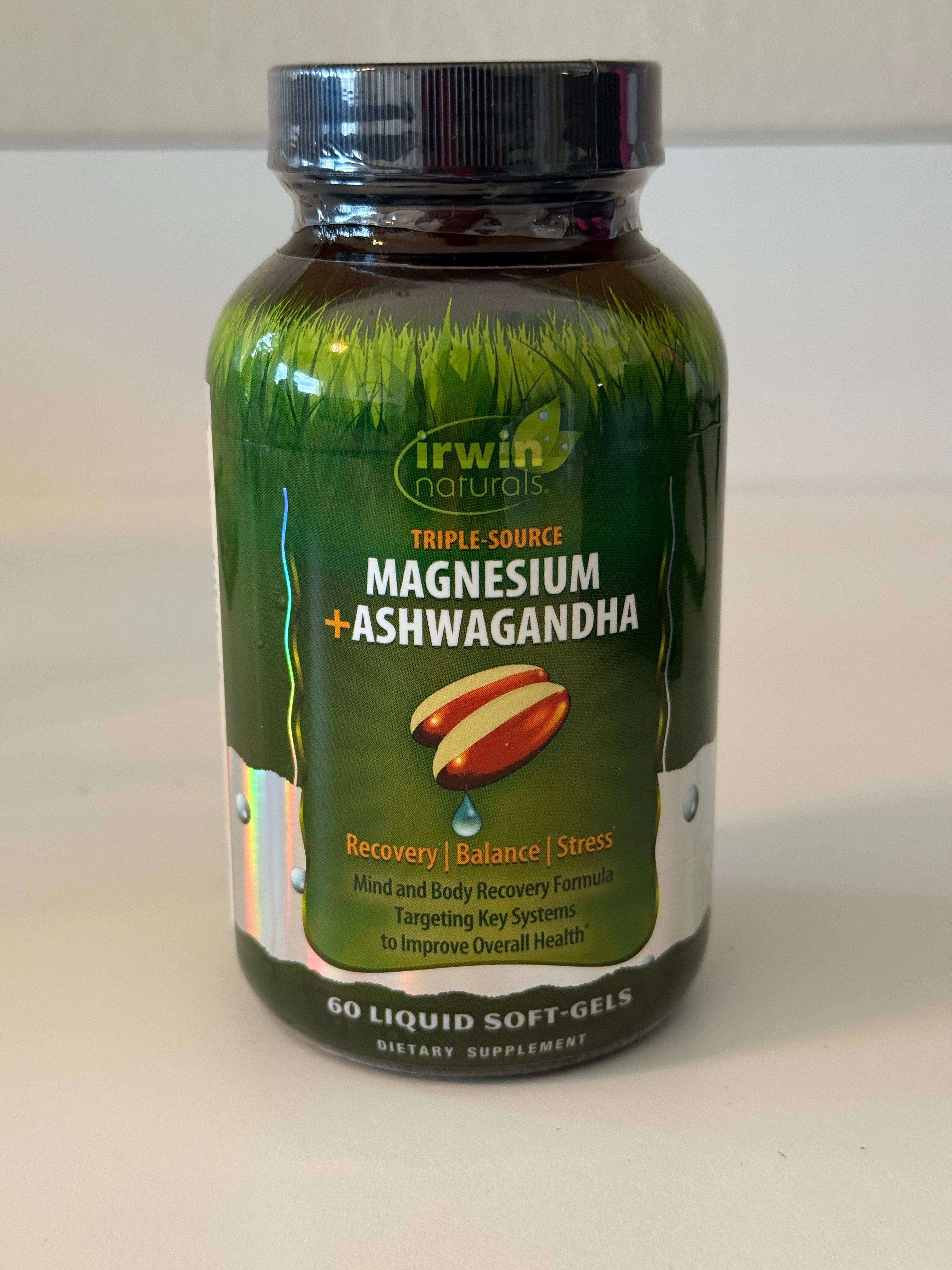
Magnesium is a different story. It pairs well with ashwagandha for stress and sleep support, and many women combine them without issue. Our Magnesium + Ashwagandha Liquid Softgels are built for exactly that pairing.
How Long Do Ashwagandha Side Effects Last?
Some ashwagandha side effects may be short-lived. Digestive upset may clear within a few days to two weeks for some people.
Longer use raises a separate question. The long-term safety data is limited, so many practitioners suggest cycling the herb rather than taking it nonstop for years. If a symptom persists past two weeks, stop and check in with your doctor. For a fuller picture of timing, read how long ashwagandha takes to work for stress.
Here is a quick look at how long the most commonly reported effects tend to last.
| Side effect | Typical duration | What to do |
|---|---|---|
| Digestive upset | May clear within a few days to two weeks | Stop and check with a doctor if it persists past two weeks |
| Drowsiness | Usually fades as your body adjusts | Take with food or adjust timing |
| Headaches | Usually mild and short-lived | Monitor and stop if persistent |
| Neurological effects | Usually fade as your body adjusts | Stop if symptoms persist past two weeks |
Liver Injury, Pregnancy, and Who Should Avoid Ashwagandha
Rare cases of liver injury have been reported with ashwagandha. Symptoms that may signal liver trouble include jaundice (yellowing of the skin or eyes), dark urine, pale stools, itching, nausea, loss of appetite, and pain in the upper right abdomen. If any of these appear, stop taking the herb and seek medical advice right away. Do not wait to see if it resolves on its own.
Safety in pregnancy and breastfeeding has not been established, so it is best to avoid ashwagandha during these times unless a clinician advises otherwise. The same caution applies to children under 18, where safety data are lacking.
Skip ashwagandha, or ask your clinician first, if you:
- Are pregnant, trying to conceive, or breastfeeding
- Have a liver condition or a history of liver injury
- Take thyroid medication such as levothyroxine
- Take sedatives, sleep aids, or immunosuppressants
- Have an autoimmune condition
- Have low blood sugar or take diabetes medication
- Are scheduled for surgery (stop at least two weeks before, if your surgeon advises)
If you suspect a side effect, consider pausing the supplement, noting the product name, dose, and start date, and contacting a clinician. Seek care immediately for urgent warning signs such as jaundice, dark urine, severe abdominal pain, fainting, or a racing heart.
Product quality matters too. Extracts can vary, so choosing a product with a clear ingredient list is a sensible step.
Choosing a Quality Ashwagandha Product at JordanWellnessCo
Product quality changes your side effect risk more than most women realize. A standardized extract lists its withanolide content on the label. A vague powder may not. That variability is exactly why two women can react differently to the same dose.
Our Organic Ashwagandha capsules use organic root with black pepper for absorption, at $19.99. If you want a gentler entry point, our Relax & Let Go stress patches with ashwagandha, L-theanine, and GABA offer a lower-dose option at $42.97.
Start with one product, at a low dose, for two weeks. Then adjust.
The real challenge is not finding ashwagandha. It is finding a version you can trust, at a dose your body tolerates. JordanWellnessCo curates supplements with clear labeling and honest guidance, so you can start low and adjust with confidence. Our catalog includes organic ashwagandha capsules, magnesium and ashwagandha softgels, and lower-dose stress patches, all in one place. Get started with JordanWellnessCo and build a routine that fits your body.
Frequently Asked Questions
What are the most common ashwagandha side effects in women?
Ashwagandha side effects in women can include digestive symptoms such as nausea, stomach pain, bloating, loose stools, and vomiting, especially when the herb is taken on an empty stomach. Drowsiness and headache may also occur, particularly at higher doses. Taking ashwagandha with food and starting at a lower dose can reduce stomach upset. If digestive symptoms persist beyond two weeks or become severe, stop taking it and speak with a healthcare professional.
Can ashwagandha affect hormones or the menstrual cycle?
Ashwagandha may influence hormone levels, and some people report changes to their menstrual cycle after starting it. Research on this is limited, so the evidence is not conclusive. Women with hormone-sensitive conditions should talk to their doctor before using ashwagandha. Track your cycle for the first two to three months so you can spot any pattern and raise it with a clinician.
How long do ashwagandha side effects last?
Most mild ashwagandha side effects, like stomach upset or drowsiness, ease within a few days to two weeks of consistent use as the body adjusts. Side effects that appear after weeks of use, or that get worse rather than better, are a signal to stop. If symptoms persist after you stop, or you notice jaundice, dark urine, or severe fatigue, seek medical advice promptly.
What should you not mix with ashwagandha?
Check with a doctor or pharmacist before combining ashwagandha with sedatives, sleep aids, anti-anxiety medications, thyroid hormone replacement, immunosuppressants, or blood sugar or blood pressure medications. Ashwagandha may add to drowsiness and may affect thyroid hormone and blood glucose levels. Bring a full list of your prescriptions and supplements to your pharmacist before adding ashwagandha to your routine.


