

Table of Contents
- Start With a Preconception Foundation: Nutrition Before Supplements
- Which Fertility Supplements Have Real Evidence Behind Them
- CoQ10 for Fertility: Egg Quality, Sperm Health, and Dosage
- Prenatal Vitamins and Fertility: What to Take Before Conception
- Fertility Supplement Safety: Interactions, Upper Limits, and Contraindications
- How Long to Take Fertility Supplements Before Trying to Conceive
- Reading Labels and Choosing Quality Fertility Supplements
- Conclusion: A Practical Path Forward
- Frequently Asked Questions
Last Updated: October 12, 2026
Start With a Preconception Foundation: Nutrition Before Supplements
Learning how to support fertility naturally with supplements starts with food, not pills. Supplements fill gaps in a diet already doing most of the work, they cannot replace one.
Preconception nutrition is the food pattern you follow in the months before trying to conceive. It shapes egg quality, sperm health, and hormone balance long before a positive test.
What a solid foundation looks like:
- Leafy greens, beans, and fortified grains for folate
- Fatty fish, walnuts, and flaxseed for omega-3 fatty acids
- Eggs, dairy, and sunlight for vitamin D
Fixing the plate first simplifies the supplement decision: you fill real gaps instead of guessing.
Which Fertility Supplements Have Real Evidence Behind Them
A short list of nutrients has strong backing for conception support. The rest range from promising to unproven. Knowing the difference saves money and avoids false hope.
The nutrients with the clearest evidence:
- Folate and folic acid
- Vitamin D
- Coenzyme Q10 (CoQ10)
Nutrients with weaker or mixed evidence include vitex, maca, and ashwagandha, popular, but with thinner research.

The Office of Dietary Supplements at the National Institutes of Health is a good place to check what each nutrient actually does.
Grade the Evidence Before You Buy
Most supplement roundups flatten every nutrient into the same 'may support fertility' language, hiding the key distinction: correcting a deficiency is not the same as improving pregnancy or live-birth rates.
A practical way to sort any claim:
- Tier 1, Deficiency correction with a clear public-health mandate. Folic acid is the standout: evidence that periconceptional folic acid reduces neural tube defects drives fortification policy and clinical guidance.
- Tier 2, Correcting a measured deficiency that affects reproductive function. Vitamin D and B12 fit here. If a lab test shows you are low, repletion is reasonable; whether repletion above low-normal improves conception is a separate, weaker question.
- Tier 3, Plausible mechanism, mixed or small trials. CoQ10, omega-3s, and inositol sit here. Trials are often small, short, or use surrogate markers like egg or sperm parameters rather than live birth.
What 'Evidence' Actually Means in These Studies
When a headline says a supplement 'boosted fertility,' check what was measured:
- Surrogate markers, sperm count, motility, morphology, antral follicle count, or egg yield at retrieval. These move more easily than pregnancy outcomes and do not always translate.
- Intermediate outcomes, ovulation rate, cycle regularity, or embryo grade. Useful, but one step removed from a baby.
- Hard outcomes, clinical pregnancy and live birth. Fewer supplements have strong data here, and trials are harder to run.
A common pattern: a small trial shows improved sperm motility or egg maturation, then marketing implies a live-birth benefit the study never measured. That gap is where most supplement hype lives.
Separate Deficiency From Dosing for a Goal
Two questions get tangled together:
- Do I have a deficiency? A testing question. Vitamin D, B12, iron, and thyroid-related nutrients are most often worth checking with a clinician.
- Would taking more than the RDA help me conceive? A research question, and for most nutrients the honest answer is 'not clearly established.'
Folate is the exception: public-health evidence is strong enough to recommend it broadly, which is why it anchors every prenatal. For everything else: test if you can, correct what is low, and treat the rest as supportive, not curative.
Folate and Folic Acid for Neural Tube Defect Prevention
Folate is a B vitamin that helps prevent neural tube defects, serious birth defects of the brain and spine, the best-supported reason to take a supplement before conception.
Neural tube defects develop in the first weeks of pregnancy, often before a person knows they are pregnant. That is why guidance from the U.S. Preventive Services Task Force points to starting folic acid before conception, not after.
Two practical notes:
- Check the label for methylfolate if you have trouble converting folic acid
- Pair folate with B12, since the two work together
Vitamin D, Omega-3 Fatty Acids, and Antioxidants
Vitamin D supports reproductive health in both partners. Low levels are common, so ask your clinician to test rather than guess at a dose.
Omega-3 fatty acids supply EPA and DHA, fats the body cannot make on its own. They play a role in hormone balance and overall wellness.
A simple way to cover these three: a quality fish oil plus a multivitamin built for preconception.
CoQ10 for Fertility: Egg Quality, Sperm Health, and Dosage
CoQ10 for fertility is one of the most talked-about nutrients, and the interest is reasonable. Coenzyme Q10 is a compound your body makes and uses for energy.
As people age, natural CoQ10 levels drop. Some research links CoQ10 supplements to better egg quality and sperm health, though results are mixed and more study is needed.
On dosage and safety:
- Common research doses range from 100 mg to 600 mg daily
- Many clinicians suggest 200 mg to 400 mg
- It can take several months to matter, since egg and sperm development take time
Talk with your clinician before starting, especially if you take blood thinners.
Prenatal Vitamins and Fertility: What to Take Before Conception
Prenatal vitamins and fertility belong together, and the timing surprises people: most clinicians suggest starting a prenatal at least one month before trying, ideally three.
A prenatal covers the basics in one pill, folate, iron, vitamin D, iodine, choline, and B12, beating five separate bottles.
Growing Together Bundle - The Hydrating Multivitamin - For Future Mom & Dad →
Here is how the main options compare:
| Option | What It Covers | Best For | Watch Out For |
|---|---|---|---|
| Standard prenatal | Folate, iron, D, B12 | Most women | May lack choline |
| Prenatal + CoQ10 | Adds egg-quality support | Women over 35 | Higher cost |
| Men's preconception formula | Zinc, selenium, C, CoQ10 | Partners trying together | Easy to overlook |
| Single-nutrient pills | One nutrient only | Filling a known gap | Adds up fast |
For couples who want one simple answer, the Growing Together Bundle - The Hydrating Multivitamin - For Future Mom & Dad pairs a prenatal with a men's formula. The prenatal includes folate as methylfolate, iron, choline, vitamin D3, iodine, and B12. The men's side brings zinc, selenium, vitamin C, and CoQ10. Both are electrolyte-infused daily drinks with no artificial colors or sweeteners. These statements have not been evaluated by the Food and Drug Administration. This product is not intended to diagnose, treat, cure, or prevent any disease.

Fertility Supplement Safety: Interactions, Upper Limits, and Contraindications
Fertility supplement safety comes down to three things: interactions, upper limits, and your health history.
Watch for these interactions:
- Vitamin K can work against blood thinners
- High-dose vitamin A can be harmful in pregnancy
- St. John's wort can reduce the effect of many medications
Upper limits matter too. More is not better. Fat-soluble vitamins like A, D, E, and K build up in the body, and too much can cause real harm. The Food and Drug Administration notes that supplements are regulated as food, not drugs, so no one checks them before they reach the shelf.
Talk to your clinician first if you:
- Take prescription medication
- Have a thyroid, liver, or kidney condition
- Have a history of hormone-sensitive cancer
Why 'Safe for Most People' Is Not the Same as 'Safe for You'
Most supplement articles stop at a generic interaction list, a starting point, not a plan. The same nutrient can be reasonable for one person and a poor choice for another, depending on diagnosis, medications, and life stage.
A few examples of how context changes the answer:
- PCOS. Inositol is often discussed here, and it can interact with blood-sugar-lowering medications. If you take metformin or insulin, dosing needs supervision.
- Endometriosis. Anti-inflammatory nutrients like omega-3s are commonly used, but anyone on anticoagulants or with a bleeding disorder needs to check before adding high-dose fish oil.
- Diminished ovarian reserve. CoQ10 is frequently suggested, but it can interact with warfarin and other blood thinners. It is not a substitute for a fertility evaluation.
When to Stop, Pause, or Reassess
Supplements are not 'set and forget.' Stop and check in when:
- A positive pregnancy test. Some products marketed for fertility are not formulated for pregnancy. Switch to a prenatal your clinician approves.
- Starting a new prescription. Any new medication is a reason to re-check your supplement list for interactions.
- New symptoms. Stomach upset, headaches, changes in bleeding, or mood shifts can be supplement-related.
A Clinician-Led Decision Pathway
Before adding anything, run through these questions, ideally with a clinician:
- What is my actual goal? General preconception nutrition, correcting a known deficiency, or supporting a diagnosed condition are three different goals with three different answers.
- Do I have a diagnosis that changes the recommendation? PCOS, endometriosis, diminished ovarian reserve, male-factor infertility, and thyroid disease all shift the calculus.
- Have I been tested for the nutrients in question? Vitamin D, B12, iron, and thyroid markers are the ones most worth measuring before supplementing.
- What am I already taking? Prescriptions, over-the-counter medications, and other supplements all count.
- What is the evidence tier for this nutrient for my goal? See the evidence section above.
- What is the dose, form, and duration, and who is supervising it? High-dose CoQ10, inositol, and any fat-soluble vitamin belong under supervision.
- When will we reassess? Set a date, typically 8 to 12 weeks for a lab-based nutrient, longer for egg or sperm quality.
When Supplements Are the Wrong Tool
Supplements support natural fertility; they do not treat a diagnosed condition or replace a fertility evaluation. With irregular cycles, known endometriosis, recurrent loss, or a partner with an abnormal semen analysis, the higher-value next step is a workup, not another supplement.
How Long to Take Fertility Supplements Before Trying to Conceive
How long to take fertility supplements depends on the nutrient and on biology, but there is a sensible timeline.
Eggs take about 90 days to mature; sperm take roughly 70 to 90 days, which is why most clinicians suggest starting three months before trying.
A rough guide:
- Folate and prenatal: start at least 1 month before, ideally 3
- CoQ10: 2 to 3 months to build up
- Vitamin D: test first, then recheck after 8 to 12 weeks
Set a review date: if nothing changes after six months of trying under 35, or six months over 35, see a clinician.
Reading Labels and Choosing Quality Fertility Supplements
Label quality separates a useful supplement from an expensive placebo. A few checks take under a minute.
- Look for third-party testing on the label or website
- Check for GMP-certified manufacturing
- Match the form to the dose, such as methylfolate or CoQ10
A common mistake is buying by price alone: cheap capsules often use poorly absorbed forms, so you take more for less benefit.
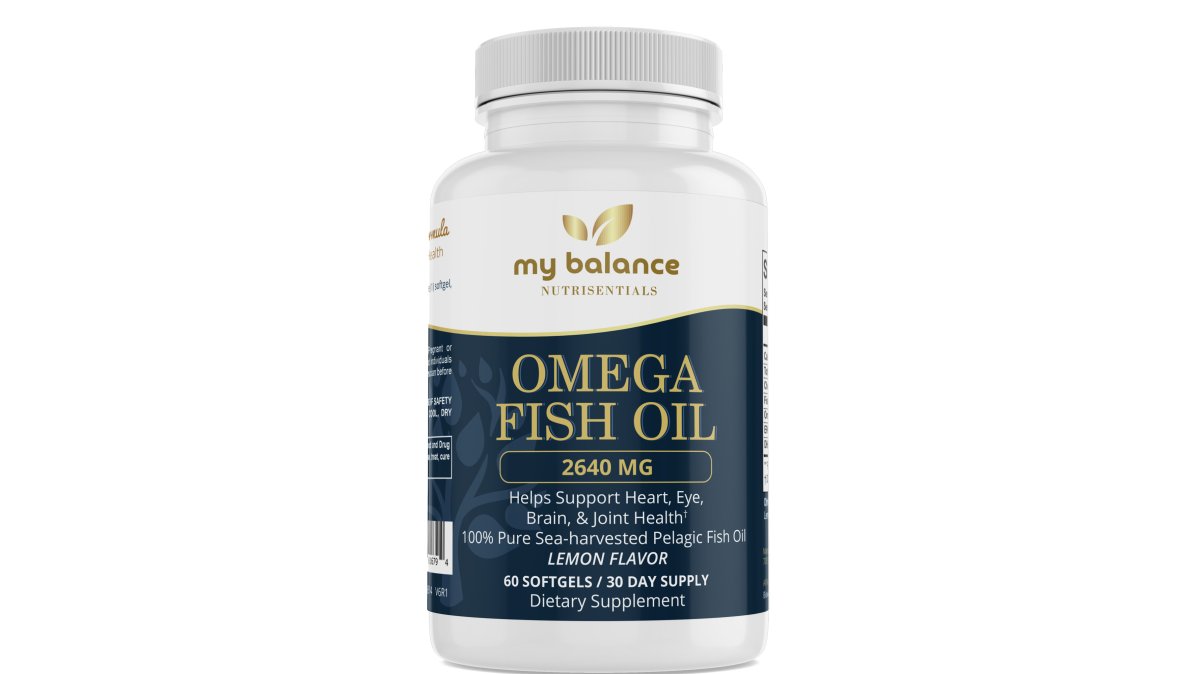
At JordanWellnessCo, we stock options like the Myo & D-Chiro Inositol Plus - Women's Hormonal Support, the CoQ10, and the Omega Fish Oil - Omega-3 Fatty Acids so you can build a routine in one place.

Conclusion: A Practical Path Forward
Fertility support is a long game, and the waiting is the hard part. Start with food, add the nutrients with real evidence, give them three months, then review with your clinician and adjust.
That is the approach at JordanWellnessCo. Our one-stop shop carries the supplements, fitness gear, and self-care essentials that fit a preconception routine, a curated range, clear labels, and products chosen to work together.
Shop now and build a routine you can actually keep.
Frequently Asked Questions
How long should you take fertility supplements before trying to conceive?
Give most fertility supplements at least three months before trying to conceive. Egg and sperm development cycles run roughly 90 days, so nutrients like CoQ10, folate, and omega-3s need that window to reach steady levels in reproductive tissue. Some nutrients, such as vitamin D, may take longer if you start with a deficiency. A healthcare provider can check your levels and adjust the timeline based on your situation.
Are fertility supplements safe to take with prenatal vitamins?
Often yes, but overlap matters. Prenatal vitamins already contain folate, vitamin D, iron, and iodine, so adding a separate fertility supplement can push you past safe upper limits for some nutrients. Check total amounts across every product before combining them. Bring your full supplement list to a healthcare provider or pharmacist, especially if you take thyroid medication, blood thinners, or fertility prescriptions.
Will CoQ10 help me get pregnant?
CoQ10 shows promise for supporting egg and sperm quality because it works as an antioxidant in cells that divide rapidly. Research points to possible improvements in sperm motility and ovarian response, but results vary and it is not a guaranteed path to pregnancy. Typical studied doses range from 100 to 600 mg daily. Talk to your provider about whether CoQ10 fits your plan and what dose makes sense for you.
Should both partners consider supplements when trying to conceive?
Yes. Sperm health contributes to roughly half of conception outcomes, and nutrients like zinc, selenium, vitamin C, and CoQ10 support sperm count, motility, and morphology. A men's formula paired with a prenatal for her covers both sides of the equation.
These statements have not been evaluated by the Food and Drug Administration. This product is not intended to diagnose, treat, cure, or prevent any disease. Consult your healthcare provider before use, especially during pregnancy.


