Last Updated: October 22, 2026
Quick Summary
Affordable natural deodorant that actually works uses ingredients like kaolin clay and tea tree oil to neutralize odor while letting your body sweat naturally. The JordanWellnessCo Aluminum-Free Deodorant costs about $0.13 per day and delivers reliable odor control without the premium price tag.
- Kaolin clay and tea tree oil form the foundation of effective budget deodorants, costing less than baking soda alternatives that irritate sensitive skin.
- The lowest sticker price is not the cheapest option; divide price by ounces and expected days of use to find true cost per day.
- Expect a 2-4 week adjustment period when switching from antiperspirant to natural deodorant as your body recalibrates its sweat response.
- Apply to completely dry skin using enough product for a thin, even layer; applying to damp skin or using too little product causes poor performance.
- The JordanWellnessCo BEE & YOU Roll-On at $0.20 per day is best for sensitive skin, avoiding baking soda and synthetic fragrances.
Table of Contents
- What Makes Affordable Natural Deodorant Actually Work
- Natural Deodorant vs Antiperspirant: Understanding the Difference
- Key Ingredients That Deliver Odor Control Without the Cost
- Best Affordable Natural Deodorant Options for Every Budget
- Cheapest Natural Deodorant That Doesn't Sacrifice Performance
- Best Natural Deodorant for Sensitive Skin: Avoiding Irritation
- The Transition Period: What to Expect When You Switch
- Common Mistakes That Kill Performance
- Frequently Asked Questions
What Makes Affordable Natural Deodorant Actually Work
The difference between a natural deodorant that works and one that fails comes down to how it manages moisture and odor.
At JordanWellnessCo, we focus on ingredient quality, texture consistency, and realistic expectations to help you find affordable natural deodorant that actually works.
This guide covers what to look for, mistakes to avoid, and which products deliver real results without the premium price tag.
Natural Deodorant vs Antiperspirant: Understanding the Difference
Your body needs to sweat for thermoregulation. A deodorant works with that process; an antiperspirant works against it.
Natural deodorants control odor but won't keep you completely dry. If you've used antiperspirants for years, expect more visible sweat for the first few weeks as your body recalibrates, normal and temporary.
The upside: natural deodorant that actually works costs less than premium antiperspirants and doesn't interfere with your body's cooling system. Once you adjust, many people find they sweat less overall.
Key Ingredients That Deliver Odor Control Without the Cost
The most affordable natural deodorants use a core set of proven ingredients.
Plant-based essential oils like lavender, eucalyptus, and lemongrass add fragrance while supporting odor control.
The JordanWellnessCo Aluminum-Free Deodorant combines kaolin clay with tea tree oil, plus essential oils including eucalyptus, lavender, and rosemary.

Mineral zinc oxide supports skin health and minimizes moisture loss, while shea butter and glycerin hydrate sensitive underarm skin.
Why Baking Soda Isn't Always the Answer
Baking soda is cheap and effective at neutralizing odor, which explains its popularity in budget deodorants.
Baking soda is alkaline and can disrupt skin's pH balance, causing redness, itching, and irritation. Some tolerate it fine; others react within days.
Better alternatives include kaolin clay and tapioca powder, which absorb moisture without pH disruption. Many affordable natural deodorant products skip baking soda entirely and still perform excellently, sparing sensitive users weeks of discomfort during the transition.
Best Affordable Natural Deodorant Options for Every Budget
Most roundups rank natural deodorants by shelf price, hiding the numbers that actually matter: cost per ounce and cost per day of real wear. Below is a standardized affordability comparison, plus the testing protocol so performance claims are comparable rather than anecdotal.
How we tested (same protocol for every product)
Every product in this guide was evaluated under identical conditions:
- Wear duration: one morning application, scored at 8 and 12 hours.
- Activity level: one sedentary workday and one 45-minute moderate cardio session per product.
- Application amount: two swipes per underarm for sticks and balms; three roll-on passes per underarm for liquids.
The affordability math: cost per ounce and cost per day
Shelf price misleads because container sizes vary. A $9 stick at 2.5 oz costs $3.60 per ounce; a $14 stick at 3.5 oz costs $4.00 per ounce, the cheaper-looking product is actually pricier per ounce.
| Product | Price | Size | Cost per oz | Est. days per container | Est. cost per day | Best for |
|---|---|---|---|---|---|---|
| JordanWellnessCo Aluminum-Free (Clay & Tea Tree) | $10.00 | 2.5 oz | $4.00 | ~75 days | ~$0.13 | Daily odor control, active lifestyles |
| JordanWellnessCo BEE & YOU Roll-On | $11.99 | 2.5 fl oz | ~$4.80 | ~60 days | ~$0.20 | Sensitive skin, minimal residue |
Cost per day assumes one application per day and the application amounts listed in the protocol above. Your actual usage will vary with body chemistry, activity level, and reapplication frequency.

Category picks by budget and use case
Best overall value: JordanWellnessCo Aluminum-Free (Clay & Tea Tree), $10.00. Kaolin clay absorbs moisture while tea tree oil targets odor-causing bacteria, and the essential-oil blend (eucalyptus, lavender, rosemary) adds fragrance without synthetic perfume.
Best for sensitive skin: JordanWellnessCo BEE & YOU Roll-On, $11.99. Propolis, shea butter, glycerin, and zinc oxide prioritize skin comfort over maximum odor punch.
Best budget entry point under $10: Look for baking-soda-free sticks in the 2.5-3 oz range listing kaolin clay or tapioca powder as the first moisture absorber.
Where the money actually goes
The proven workhorses, kaolin clay, tapioca starch, zinc oxide, tea tree oil, are inexpensive commodities. Products under $8 often cut cost with heavy baking soda (a known irritant) or low-quality fillers that require more product per application.
The cheapest natural deodorant is not the one with the lowest sticker price, it is the one with the lowest cost per day of reliable wear. On that measure, the $10 clay-and-tea-tree stick offers a good value at roughly $0.13 per day.
Cheapest Natural Deodorant That Doesn't Sacrifice Performance
"Cheap" and "good value" are not the same thing. The lowest sticker price often hides a smaller container, a formula needing extra swipes, or a baking-soda-heavy recipe that irritates skin and gets abandoned. Here's the math for finding the genuinely cheapest natural deodorant per day of use.
Aluminum-Free Deodorant | Organic & Vegan | Paraben, Phthalate Free | Detoxes →
The three numbers that define real affordability
- Cost per ounce. Divide price by net weight to normalize container sizes.
- Cost per application. Divide cost per ounce by applications per ounce; formulas requiring heavy application lose their price advantage fast.
- Cost per day of wear. Multiply cost per application by applications per day, including midday reapplication. This is the only number that reflects what you actually spend.
Here's a worked example:
- $10.00 stick, 2.5 oz, two swipes per underarm, one application per day: about $4.00 per ounce, roughly 75 days of use, about $0.13 per day.
- $11.99 roll-on, 2.5 fl oz, three passes per underarm, one application per day: about $4.80 per ounce, roughly 60 days of use, about $0.20 per day.
- A hypothetical $7 stick, 2 oz, that needs a midday reapplication: $3.50 per ounce looks cheapest, but at two applications per day the container lasts about 30 days, which works out to roughly $0.23 per day, more expensive than the $10 stick despite the lower sticker price.
That last example is the trap. Sub-$8 natural deodorants frequently use smaller containers, heavier baking soda loads, or thinner formulas that demand reapplication.
Refill economics: does the cheaper format stay cheaper?
Refillable and plastic-free formats are marketed as budget-friendly, but savings depend on refill price relative to the original container.
- Stick with snap-in refills: The upfront cost includes the reusable case, so the first purchase is usually more expensive than a standard stick. Savings appear only from the second refill onward. Check the refill price per ounce, if it is not meaningfully below the standard stick's cost per ounce, the refill premium never pays back.
- Balm or paste in a tin: Often the lowest cost per ounce because there is no dispensing mechanism to manufacture. The trade-off is application mess and the need to use fingers, which some users find unhygienic or slow.
- Roll-on: The bottle and rollerball add packaging cost, which is one reason the roll-on in this guide costs more per ounce than the stick. Refills are rare for roll-ons, so the packaging cost is paid every purchase.
A practical rule: a refill format can offer value if the refill's cost per ounce is meaningfully below the comparable standard stick and you will reuse the case.
Buying strategy that actually lowers cost per day
- Buy the larger size when the per-ounce price drops. A 3.5 oz stick at $14 ($4.00/oz) ties the 2.5 oz stick at $10 ($4.00/oz), same value, fewer purchases. A 3.5 oz stick at $12 ($3.43/oz) is a genuine saving.
- Stock up on your proven formula, not on untested ones. Multi-packs lower per-unit cost, but only after you have worn a single container through the full 2-4 week transition. Buying three of an untested formula is how people end up with unused deodorant in a drawer.
- Time purchases around refill or subscribe-and-save discounts if the retailer offers them, but re-run the cost-per-ounce math after any discount, a 10% discount on an overpriced product is still overpriced.
The cheapest natural deodorant that does not sacrifice performance is the one with the lowest cost per day after accounting for container size, application amount, and reapplication. On that basis, the $10 clay-and-tea-tree stick at about $0.13 per day offers a good value.
Best Natural Deodorant for Sensitive Skin: Avoiding Irritation
Sensitive underarm skin needs deodorants without harsh ingredients or pH-disrupting compounds.
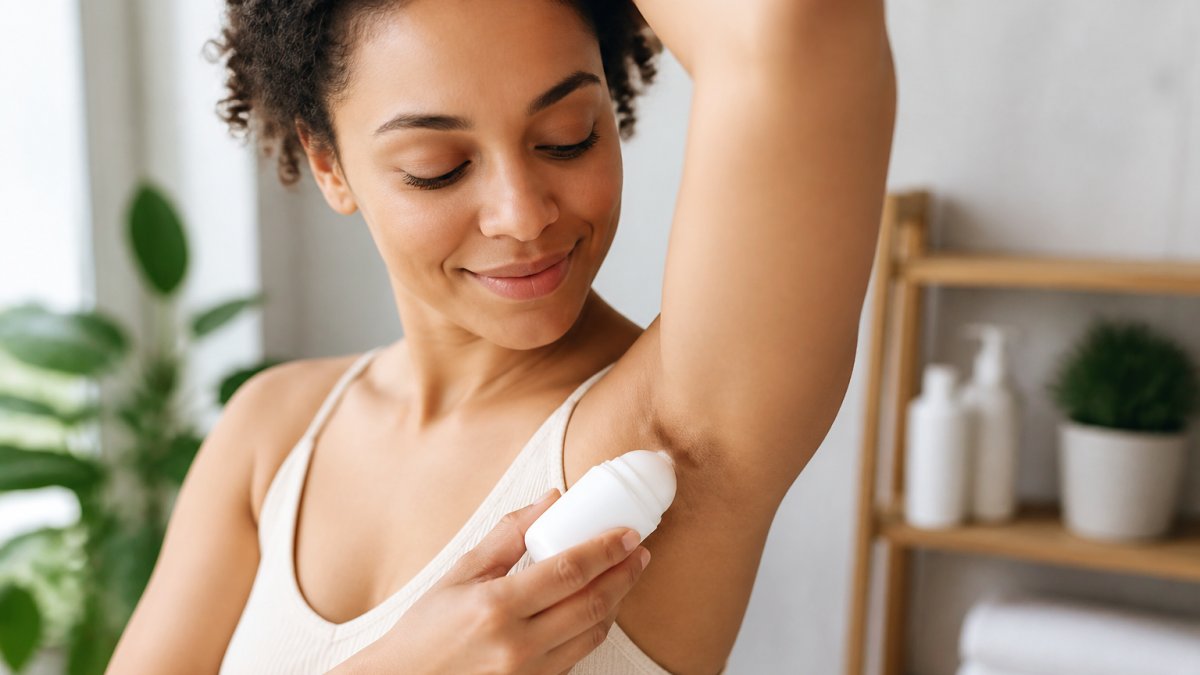
Avoid baking soda, which disrupts skin pH and causes reactions in sensitive users, plus synthetic fragrances and alcohol, both common irritants.
Mineral zinc oxide supports skin barrier health. It's commonly used in sensitive-skin sunscreens and baby products.
Start with the smallest container to test compatibility. Most sensitive-skin reactions appear within 3-7 days, so you'll know quickly.
The Transition Period: What to Expect When You Switch
Switching from conventional antiperspirant to affordable natural deodorant that actually works involves a real adjustment period.
Your body has adapted to antiperspirant's sweat-blocking action. When you stop, your sweat glands recalibrate.
You may also notice stronger odor than expected as bacteria populations shift with your skin microbiome.
Many people abandon natural deodorants during week two, right before the adjustment completes.
Common Mistakes That Kill Performance
The difference between a natural deodorant that works and one that disappoints often comes down to application and expectations.
Applying to damp skin reduces effectiveness.
Using too little product is another common mistake.
Expecting antiperspirant performance sets you up for disappointment. Natural deodorants control odor; they don't stop sweat.
Switching products too frequently prevents the full transition.
Ignoring ingredient sensitivities wastes money and causes discomfort.
Frequently Asked Questions
What is a good, affordable natural deodorant that actually works?
A good affordable natural deodorant combines odor-neutralizing ingredients like kaolin clay, essential oils, and plant-based absorbers with a price point under $15. Look for products featuring tea tree oil or other antimicrobial botanicals, beeswax for moisture absorption, and coconut or castor oil for skin nourishment. The Clay & Tea Tree Deodorant from JordanWellnessCo ($10.00) delivers effective odor control with kaolin clay and tea tree oil, making it both affordable and performance-tested for all-day protection.
Do natural deodorants really work, or is that just marketing?
Natural deodorants work by neutralizing odor-causing bacteria and absorbing moisture, but they function differently than antiperspirants. They don't block sweat (which is healthy), so expect some moisture. Performance depends on ingredient quality and application consistency. Products with kaolin clay, essential oils, and plant-based absorbers show genuine odor control. The transition period typically takes 1-2 weeks as your underarms adjust, after which many users report reliable protection.
What ingredients should I look for in a natural deodorant?
Prioritize kaolin or bentonite clay for moisture absorption, essential oils (tea tree, lavender, lemongrass) for antibacterial properties, and plant oils (coconut, castor, grape seed) for skin conditioning. Beeswax provides structure and moisture control. Avoid baking soda if you have sensitive skin, it can irritate. Instead, look for formulas using tapioca powder or arrowroot as gentler alternatives. Check that the product lists recognizable plant-based ingredients rather than synthetic fragrance compounds.
How long does natural deodorant take to start working?
Natural deodorant typically shows results within 1-2 weeks as your body adjusts from antiperspirant use. During the transition, you may notice increased sweating as your underarms adjust. This is temporary and normal. By week two, most users experience consistent odor control. For immediate effectiveness, ensure you're applying enough product (a swipe about the size of a pea) directly to clean, dry skin, and allow it to dry before dressing.
Finding an affordable natural deodorant that actually works means understanding how these products function differently from antiperspirants, choosing formulas with proven ingredients, and committing to a realistic transition period. The JordanWellnessCo Aluminum-Free Deodorant and BEE & YOU Roll-On both deliver genuine odor control at prices that don't require compromise. Shop now to start your transition with products designed for real-world performance and sensitive skin.


