Table of Contents
- What Makes a Clean Skincare Brand Worth Buying?
- Quick Comparison: Best Clean Skincare Brands at a Glance
- 1. Organic Sensitive Skin Cleanser - Gentle AHA Face Wash
- 2. SkinSanity® Detoxifying Facial Morning Cleanser
- 3. Organic Pumpkin Enzyme Serum - Exfoliating Glow Treatment
- 4. SkinSanity® Le Creme de Terre Night Cream
- 5. Organic Copper Peptide Moisturizer - Firming & Smoothing
- 6. Complete Organic Anti-Wrinkle 5-Step Kit with Vitamin C & SPF 30
- How to Verify a Clean Skincare Claim Before You Buy
- Frequently Asked Questions
Last Updated: October 19, 2026
What Makes a Clean Skincare Brand Worth Buying?
Clean skincare is a formulation standard, not a marketing label: products built around ingredient screening, transparency, and a short list of deliberately excluded ingredients.
The term has no legal definition in the United States, and no federal agency certifies a product as "clean", which is exactly why the label gets stretched.
So what separates a real standard from a sticker? Three things.
First, excluded ingredients. Most clean brands publish a "free from" list: parabens, phthalates, sulfates, and often synthetic fragrance.
Second, ingredient screening and disclosure. Full ingredient lists, INCI names, and a stated position on preservatives all matter.
Third, third-party verification. Programs like EWG Verified review ingredient disclosures against published health and transparency criteria. Certification is not the only signal, but it is one you can check rather than take on faith.
Quick Comparison: Best Clean Skincare Brands at a Glance
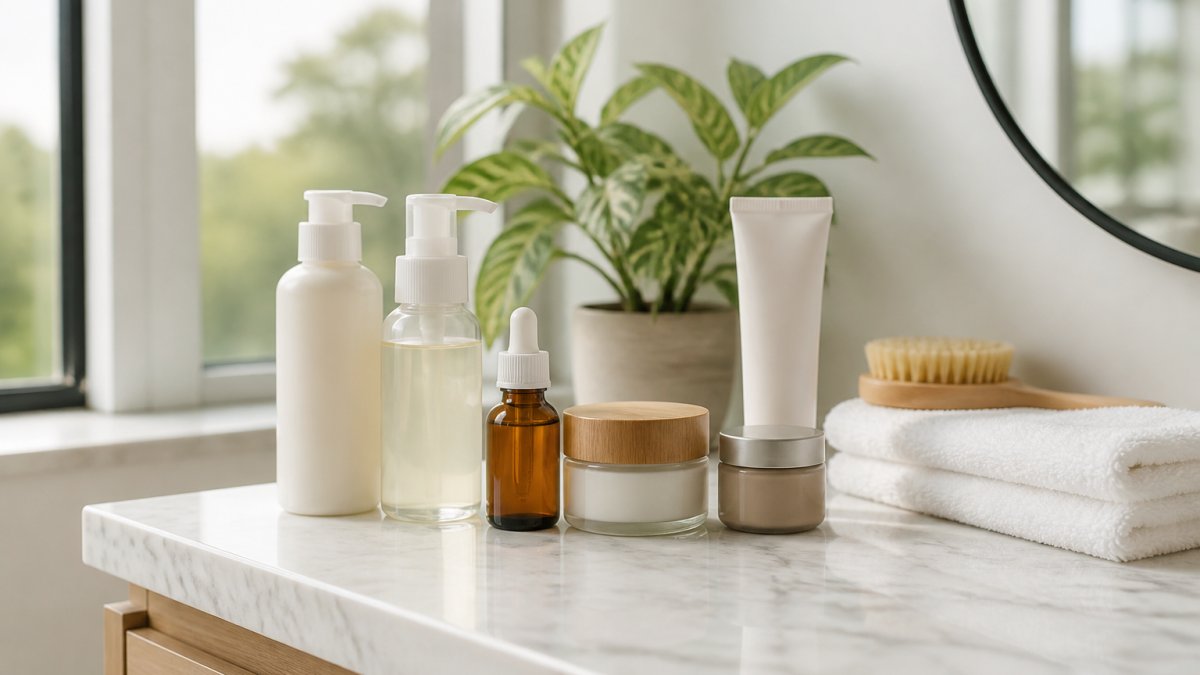
The table below sorts the lineup by what each product solves, and the guide underneath routes you by skin type and concern. Every pick comes from our own shelf, so the comparison is like for like.
| Product | Price | Best For | Key Actives | Format |
|---|---|---|---|---|
| Organic Sensitive Skin Cleanser | $24.95 | Sensitive, reactive skin | Mild AHAs, almond extract, algae | Cleanser |
| SkinSanity Detoxifying Morning Cleanser | $11.95 | Daily prep, oily skin | Prebiotics, gluconolactone | Gel cleanser |
| Organic Pumpkin Enzyme Serum | $24.95 | Dullness, texture | Pumpkin enzymes, vitamin E, zinc | Serum |
| SkinSanity Le Creme de Terre Night Cream | $19.95 | Dryness, tone | Niacinamide, algae, natural retinol | Night cream |
| Organic Copper Peptide Moisturizer | $44.95 | Firmness, fine lines | GHK-Cu peptides | Moisturizer |
| Complete Anti-Wrinkle 5-Step Kit | $91.96 | Full routine, anti-aging | Vitamin C, hyaluronic acid, SPF 30 | Kit |
Price and value, in plain terms. Price does not track quality as closely as ingredient disclosure does.

Route by skin type.
- Sensitive or reactive skin: start with the Organic Sensitive Skin Cleanser ($24.95) and the fragrance-free night cream ($19.95). Add the enzyme serum once or twice a week only after your barrier settles.
- Oily or combination skin: the $11.95 gel cleanser in the morning, the pumpkin enzyme serum ($24.95) two or three nights a week, and the copper peptide moisturizer ($44.95) as a light anti-aging layer under sunscreen.
- Dry or very dry skin: the night cream ($19.95) on damp skin is the anchor, paired with the sensitive-skin cleanser to avoid stripping.
- Mature skin or early fine lines: the copper peptide moisturizer ($44.95) for firmness, the night cream for tone, or the five-step kit ($91.96) for vitamin C and SPF 30 in one compatible system.
- Acne-prone skin: the gel cleanser and the enzyme serum are the gentler entry points; introduce one active at a time and do not stack the enzyme serum with a retinol on the same night.
Route by concern. Dullness and texture point to the enzyme serum; firmness to the copper peptides; dryness and uneven tone to the niacinamide night cream; a full routine from zero to the kit.
1. Organic Sensitive Skin Cleanser - Gentle AHA Face Wash
Start here if your skin reacts to everything. This is the gentlest cleanser in the lineup and our most-recommended pick for reactive skin.
The formula pairs mild alpha hydroxy acids with almond extract and algae: the AHAs exfoliate without scrubbing, the almond extract calms, and the algae supports the barrier. It is fragrance-free and sulfate-free, fragrance is a leading trigger for contact reactions in sensitive skin.
Best for: sensitive skin, rosacea-prone skin, anyone who has quit a cleanser because it stung.
The honest limitation: mild AHAs still exfoliate, so if your barrier is compromised, use it once daily rather than twice until your skin settles.
At $24.95, it is an entry point for reactive skin types.
2. SkinSanity® Detoxifying Facial Morning Cleanser
At $11.95 for 2 fl oz, this budget gel cleanser is built on prebiotics and gluconolactone, a polyhydroxy acid gentler than a standard AHA.
Use it on makeup-free skin. Massage a coin-sized amount for 15 to 30 seconds, rinse, and move on. It is designed for morning cleansing, when your skin does not need heavy lifting, just a reset.
Where it fits: oily and combination skin, or anyone who wants a light second cleanse after an oil-based first step.
Where it falls short: it does not remove makeup. If you wear foundation, you need a separate first cleanse.
3. Organic Pumpkin Enzyme Serum - Exfoliating Glow Treatment
Enzyme exfoliation is the underrated middle ground between doing nothing and over-exfoliating with acids. This serum uses pumpkin fruit enzymes plus vitamin E and naturally occurring zinc to smooth texture and cut oil.
Results show up fast. The brand describes visible glow within minutes.
Best for: dull skin, rough texture, oily and combination types, and sensitive skin that cannot tolerate strong acids.
Watch for: if you are already using a retinol or a strong acid at night, do not stack this on the same evening. Alternate.
4. SkinSanity® Le Creme de Terre Night Cream
Dry skin needs a night cream that actually seals, and this one does it at $19.95. The formula leans on niacinamide, algae extract, and plant-based retinol-like actives, with mango seed butter and camellia oil doing the heavy moisturizing. Niacinamide is an ingredient that supports both barrier function and tone.
Organic Sensitive Skin Cleanser – Gentle AHA Face Wash →

Best for: dry and very dry skin, dullness, early fine lines.
The trade-off: it is rich. Oily skin should test it on a small area first, or save it for winter.
5. Organic Copper Peptide Moisturizer - Firming & Smoothing
The formula centers on GHK-Cu, studied for its role in collagen support and skin repair.
What makes this one different is texture. This one is fast-absorbing, non-comedogenic, and layers cleanly under sunscreen or makeup, which makes it usable for oily and combination skin.
Best for: firmness, elasticity, fine lines, and anyone who wants retinol-like results without the peeling.
The honest limitation: peptides need consistency. Give it eight weeks before judging results, and do not expect the dramatic turnaround a prescription retinoid delivers.
6. Complete Organic Anti-Wrinkle 5-Step Kit with Vitamin C & SPF 30
If you would rather buy a system than assemble one, this is the answer. At $91.96, the five-step kit covers cleanse, tone, brighten, protect, and renew, with hyaluronic acid, vitamin C, and SPF 30 built in.
The logic behind a kit is layered compatibility. Each step is formulated to sit under the next.
Best for: a complete anti-aging routine, gifting, and anyone starting from zero.
What to know: the brand ships face creams in airless pump bottles from May through October to prevent heat damage in transit. The formula is the same; the packaging changes.
Vitamin C and daily SPF are the two most defensible anti-aging steps you can take. The American Academy of Dermatology's sun protection guidance is clear that daily sunscreen is the single most effective way to slow visible aging.
How to Verify a Clean Skincare Claim Before You Buy
Claims are cheap; verification is not.
Layer 1: The ingredient list itself. A full INCI list is the only claim every brand can be held to.
Layer 2: Named exclusions. "Free from harsh chemicals" is not a standard. "Free from parabens, phthalates, and synthetic fragrance" is a list you can check against the ingredient panel.
Layer 3: Third-party seals, and what each one actually covers. This is where most shoppers over-credit a logo.
- Ingredient-screening seals (for example, EWG Verified) review ingredient disclosures against published health and transparency criteria. The useful part is that you can look the product up in the program's public database rather than take the brand's word for it. The limit is that verification confirms disclosure and screening, not efficacy, and not that the product will not irritate reactive skin.
- Organic seals certify agricultural sourcing and the percentage of organic content in a product, not the safety of the finished formula. A product can carry an organic seal and still contain an essential oil or preservative that triggers a reaction. Read the percentage, not just the logo.
- "Natural" and "toxin-free" have no regulated meaning in cosmetics and no independent verifier. Treat both as marketing language until the ingredient list backs them up.
Layer 4: The preservative question. A brand that explains which preservatives it uses and why is more trustworthy than one that claims to use none.
Layer 5: Claim discipline. Specific, bounded claims ("visibly reduces the look of fine lines over eight weeks") are a better signal than cure language.
A five-minute verification routine. Pull the full INCI list and scan for fragrance and drying alcohols if you are reactive. Check whether the brand names specific exclusions. Look up any seal in the certifier's public database. Read the preservative explanation. Then check whether each claim is specific and bounded. If a brand passes all five, its "clean" label has earned some weight; if it fails two or more, the label is decoration.
Frequently Asked Questions
What should I look for when choosing a clean skincare brand?
Start with a short ingredient list you can read. Look for brands that disclose full ingredient lists, avoid parabens, phthalates, and sulfates, and use third-party certifications like EWG Verified when possible. Check whether the brand states its formulation standards and whether products are tested for sensitive skin. Price is not a reliable signal of safety, so compare the actual ingredients and certifications rather than marketing claims.
Are clean skincare products better for sensitive skin?
Clean skincare for sensitive skin often means fragrance-free, sulfate-free formulas with fewer potential irritants. Products like the Organic Sensitive Skin Cleanser use mild AHAs and soothing almond extract, which may suit reactive skin. However, natural ingredients can still trigger reactions, so patch-test new products and introduce one at a time. Look for labels that say fragrance-free and avoid known triggers like essential oils if your skin is highly reactive.
How can I tell whether a skincare brand has clean ingredients?
Read the full ingredient list, not just the front label. A clean brand typically avoids parabens, phthalates, sulfates, and synthetic fragrances, and it discloses every ingredient. Look for third-party certifications such as EWG Verified, which screens against a published database. Be wary of vague terms like 'natural' without a list, and check whether the brand explains its formulation standards. If a brand will not show you the full list, treat the claim as unverified.
Is affordable clean skincare as effective as expensive brands?
Price does not determine efficacy. Many affordable clean skincare products use the same active ingredients, such as hyaluronic acid, niacinamide, or vitamin C, at effective concentrations. What matters is the formulation, the ingredient list, and whether the product suits your skin type. A routine built around a $14.95 cleanser and a $19.95 night cream can work as well as a luxury set if the ingredients match your needs. Compare labels, not price tags.
What does EWG Verified skincare mean?
EWG Verified is a certification from the Environmental Working Group. Products carrying the mark must meet strict criteria: they avoid ingredients on EWG's prohibited list, disclose full ingredients, and follow good manufacturing practices. The verification is independent, so it helps confirm a brand's clean claims. Not every clean brand applies for it, so absence of the mark does not automatically mean a product is unsafe, but it is a useful shortcut when comparing options.


