

Table of Contents
- What You Need Before You Start: Spotting Your Stress Triggers
- Step 1: Breathing Exercises for Immediate Stress Relief
- Step 2: How to Manage Stress Naturally Through Physical Activity
- Step 3: Stress Management Lifestyle Changes That Actually Stick
- Step 4: Mindfulness, Meditation, and Grounding Techniques
- Step 5: Best Herbs for Stress and Anxiety Worth Knowing
- Step 6: Digital Stress Management and Workplace-Specific Relief
- How to Manage Stress Naturally in 2026: Common Mistakes to Avoid
Last Updated: August 4, 2026
Chronic stress is one of the most pervasive health challenges facing Americans today, and the demand for drug-free solutions has never been higher. This guide from JordanWellnessCo covers nine evidence-informed methods that go well beyond the usual "take a walk and breathe deeply" advice. Below, we'll show you exactly how to read your body's early warning signals, activate your nervous system's built-in calm mechanisms, and build lifestyle habits that actually hold up under real-world pressure. The key insight: stress management is a layered system, not a single technique.
Stress management is the practice of identifying physiological and psychological stress triggers and applying targeted interventions to restore the body's autonomic balance. The goal isn't to eliminate stress entirely; it's to shorten recovery time and prevent chronic activation of the body's threat response.
What You Need Before You Start: Spotting Your Stress Triggers
Before any technique works reliably, you need to know what's actually setting off your stress response. Stress triggers fall into three categories: environmental (noise, clutter, social conflict), cognitive (rumination, perfectionism, catastrophizing), and physiological (poor sleep, blood sugar swings, dehydration). Identifying which dominates your experience tells you where to focus first.
Keep a simple log for one week. Note the time, situation, and your physical sensation at each stress spike. Patterns emerge faster than most people expect.
Reading Your Body's Physiological Stress Markers
Physiological stress markers include elevated resting heart rate, shallow chest breathing, jaw tension, cold hands, and disrupted sleep. More subtle signs include increased irritability after meals, afternoon concentration difficulties, and persistent low-grade headaches.
Heart rate variability, measurable through many wearable devices, is one of the most reliable indicators of autonomic nervous system balance. A declining trend over several days signals that your body's stress load is accumulating faster than it's recovering.
According to the National Institute of Mental Health's overview of stress and the body, prolonged activation of the stress response system can affect nearly every organ system, making early detection genuinely important.
Step 1: Breathing Exercises for Immediate Stress Relief
Breathing exercises work because respiration is the only autonomic function you can consciously control, making it the fastest route to calming the nervous system. Slow, diaphragmatic breathing signals safety to the brain's threat-detection center, reducing cortisol output within minutes.
Box breathing is the most reliable technique: inhale for four counts, hold for four, exhale for four, hold for four. Repeat four to six cycles. This pattern is used by military personnel and emergency responders because it works under extreme pressure.
The Dive Reflex: Your Built-In Calm Switch
The dive reflex is a hard-wired physiological response that slows heart rate when the face contacts cold water. Splashing cold water on your face or submerging it briefly in a bowl of cold water activates the vagus nerve via the trigeminal nerve, producing a measurable heart rate drop within seconds.
The vagus nerve is the primary highway of the parasympathetic nervous system, and cold facial immersion is one of the fastest ways to activate it without equipment, cost, or a quiet room. Use it as your emergency reset when breathing exercises aren't enough.
Step 2: How to Manage Stress Naturally Through Physical Activity
Physical activity is arguably the most evidence-supported natural stress reliever available. Aerobic exercise metabolizes excess adrenaline and cortisol, releases endorphins, and improves the brain's sensitivity to serotonin and dopamine.
A 20-minute brisk walk produces meaningful cortisol reduction. Resistance training, swimming, cycling, and vigorous housework all qualify. Consistency matters more than intensity: three to five sessions per week of moderate activity outperforms two punishing workouts followed by inactivity.
Step 3: Stress Management Lifestyle Changes That Actually Stick
Technique-based approaches only work when the underlying lifestyle supports them. Three foundational areas determine whether your stress management efforts compound or reset to zero.
Sleep Hygiene as a Non-Negotiable Foundation
Sleep hygiene is the set of behavioral and environmental practices that protect sleep quality and duration. Poor sleep elevates cortisol, impairs emotional regulation, and reduces the effectiveness of every other stress management technique. There is no breathing exercise or supplement that compensates for chronic sleep debt.
Practical sleep hygiene steps:
- Set a consistent wake time, seven days a week.
- Keep the bedroom below 68°F; core body temperature must drop to initiate deep sleep.
- Eliminate screens for 45 minutes before bed or use blue-light-blocking glasses.
- Avoid caffeine after 1:00 PM if you're sensitive to its half-life.
- Use the bedroom only for sleep and intimacy.
Journaling and Self-Reflection to Process Daily Pressure
Journaling works because it converts diffuse, looping anxiety into concrete, bounded problems. Expressive writing, describing the stressor plainly, then writing what you'd tell a close friend facing the same situation, activates the prefrontal cortex and dampens emotional reactivity.
Five minutes per day is sufficient. The goal is discharge, not analysis.
Setting Boundaries and Reclaiming Work-Life Balance
Work-life balance is a boundary problem, not a scheduling problem. Before accepting any new demand on your time, ask whether it would still seem like a good idea if you had to do it this Saturday morning. If the answer is no, decline.
Turning off work notifications after a set hour is a prerequisite for the nervous system to complete its daily recovery cycle.
Step 4: Mindfulness, Meditation, and Grounding Techniques
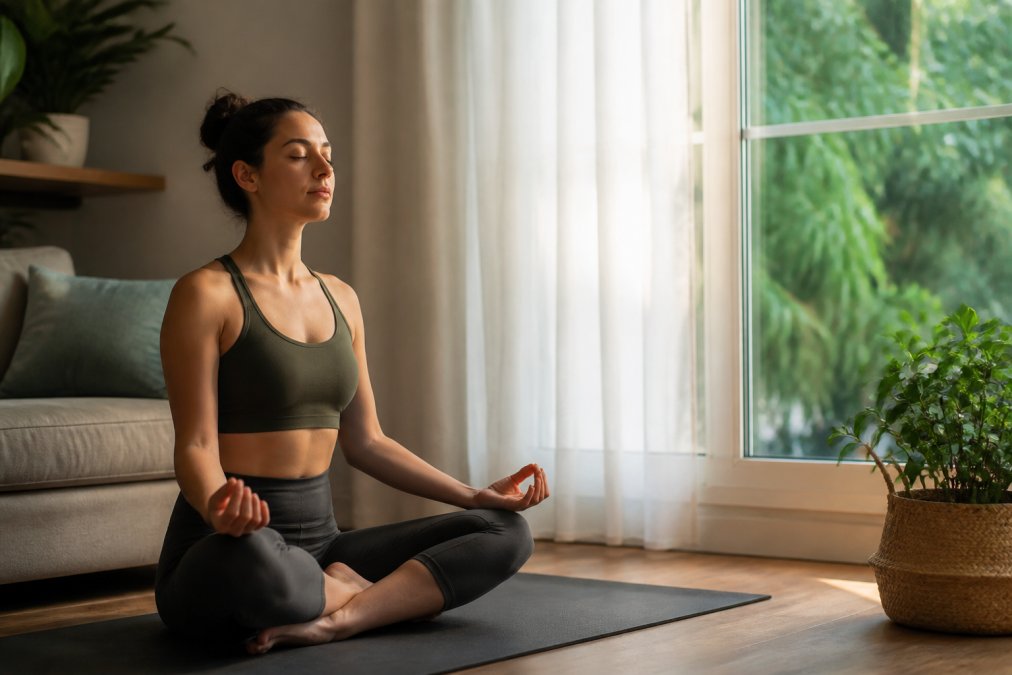
Mindfulness is the deliberate practice of attending to present-moment experience without judgment. You cannot simultaneously ruminate about the future and attend fully to what is happening right now.
Formal meditation, even five to ten minutes daily, trains attentional control. Informal mindfulness, eating without screens, walking without headphones, doing one task at a time, produces cumulative benefits without dedicated sessions.
The 5-4-3-2-1 grounding technique is particularly useful for acute stress spikes: name five things you can see, four you can touch, three you can hear, two you can smell, and one you can taste. This interrupts dissociative anxiety by anchoring attention to sensory reality.
According to the American Psychological Association's review of mindfulness-based stress reduction, mindfulness practices show consistent benefits for emotional regulation and perceived stress across many populations.
Step 5: Best Herbs for Stress and Anxiety Worth Knowing
The best herbs for stress and anxiety are those with the most consistent track record in traditional use and the clearest proposed mechanisms.
Ashwagandha is an adaptogenic herb used in Ayurvedic practice for centuries. Adaptogens help the body maintain equilibrium under physical and psychological stress. Ashwagandha is available in capsule and powder form and is one of the most studied botanicals in this category.
L-theanine, found naturally in green tea, promotes a calm, focused mental state without sedation. Many find it useful during high-demand work periods when they need mental clarity without caffeine's edge.
Rhodiola is another adaptogen with a long history of use in Eastern European and Scandinavian traditional medicine, often paired with ashwagandha in formulations targeting cortisol regulation.
Quality and sourcing matter significantly with botanical supplements. JordanWellnessCo curates a selection of supplements with transparent ingredient sourcing. Always consult a healthcare provider before starting any new supplement, particularly if you take prescription medications.
| Herb | Primary Use | Common Form | Key Consideration |
|---|---|---|---|
| Ashwagandha | Cortisol support, resilience | Capsule, powder | Avoid if pregnant; consult MD |
| L-Theanine | Calm focus without sedation | Capsule, tea | Generally well-tolerated |
| Rhodiola | Energy, stress adaptation | Capsule, extract | May interact with stimulants |
| Lavender | Relaxation, sleep support | Essential oil, capsule | Topical use only for oil |
| Valerian Root | Sleep onset support | Capsule, tea | Not for long-term daily use without guidance |
Step 6: Digital Stress Management and Workplace-Specific Relief
Digital stress management is one of the fastest-growing sources of chronic stress in 2026. Constant connectivity, notification overload, and blurred work-personal boundaries create a low-grade threat state that never fully resolves.
The problem isn't the devices themselves; it's the absence of deliberate off-ramps. The autonomic nervous system cannot distinguish between a work emergency and a social media alert. Both trigger a mild threat response. Multiply that by dozens of alerts per hour and the system never returns to baseline.
Practical digital stress reduction steps:
- Batch notifications: check email and messages at three set times per day.
- Use grayscale mode on your phone during evenings.
- Create a "shutdown ritual" at day's end: close all tabs, write tomorrow's top three priorities, physically close the laptop.
- Designate phone-free zones: the bedroom, dinner table, and first 30 minutes after waking.
- Use website blockers during deep work periods.

For workplace-specific relief, use micro-recovery. Research shows brief, deliberate breaks every 90 minutes improve sustained output more than pushing through. A two-minute breathing exercise, short walk, or progressive muscle relaxation between tasks prevents cumulative stress buildup.
Budget-Friendly Holistic Tools You Already Have Access To
Managing stress naturally does not require expensive equipment or subscriptions:
- Cold water facial immersion: Activates the dive reflex and vagus nerve. Requires only a sink.
- Sunlight exposure in the morning: Regulates circadian rhythm and supports serotonin production.
- Breath counting before sleep: Counting breaths backward from 300 reduces cognitive arousal more reliably than scrolling.
- Social connection: Talking to a trusted person activates the vagal brake and reduces perceived threat. According to Harvard's Study of Adult Development findings on social connection and wellbeing, strong social relationships are among the most consistent predictors of long-term mental health and resilience.
- Nature exposure: Even 20 minutes in a park or green space measurably reduces cortisol levels compared to equivalent time indoors.
How to Manage Stress Naturally in 2026: Common Mistakes to Avoid
The single most common mistake is treating stress management as something you do after you're already overwhelmed. By that point, cortisol is high, decision-making is impaired, and techniques feel impossible to execute. The system works better as prevention than rescue.
Mistake 1: Trying too many techniques at once. Picking five new habits simultaneously guarantees failure for all of them. Choose one anchor habit, build it for two weeks, then add the next.
Mistake 2: Skipping the trigger identification step. Applying relaxation techniques without knowing your triggers is like treating symptoms without addressing the cause.
Mistake 3: Treating sleep as negotiable. No stress management protocol compensates for sleeping less than seven hours consistently.
Mistake 4: Expecting linear progress. Stress resilience builds in cycles, not straight lines. A bad week after several good ones is not failure; it's a data point.
Mistake 5: Ignoring social connection. Human connection is a direct physiological intervention on the nervous system, not just emotional support.
The core insight: learning how to manage stress naturally in 2026 is less about finding the perfect technique and more about building a system of overlapping habits that support each other. Breathing helps sleep. Sleep improves emotional regulation. Better emotional regulation makes boundaries easier to set. The methods compound.
Stress accumulates faster than most people realize, and a piecemeal approach rarely produces lasting change. JordanWellnessCo is built for exactly this: a curated, one-stop destination where you can find quality supplements including adaptogens, fitness gear to support consistent physical activity, and self-care essentials that reinforce the daily habits covered in this guide. Every product is chosen to work together. Shop now at JordanWellnessCo and build the layered stress management system your wellbeing actually needs.
Frequently Asked Questions
What are the most effective natural ways to reduce stress in 2026?
The most consistently effective methods to manage stress naturally combine physical activity, controlled breathing, and consistent sleep hygiene. Techniques like diaphragmatic breathing activate the vagus nerve and lower cortisol levels within minutes. Pairing these with daily movement, journaling, and social connection addresses both the immediate physical response and the underlying emotional regulation patterns that drive chronic stress. No single method works for everyone, so rotating through a few until you find your best fit is the practical approach.
How does the 3-3-3 rule help with anxiety and stress?
The 3-3-3 rule is a grounding technique: name 3 things you see, 3 sounds you hear, and move 3 parts of your body. This pulls attention away from anxious thought loops and back into the present moment, engaging the autonomic nervous system's calming pathways. It requires no equipment, costs nothing, and can be done discreetly at a desk or in a meeting. It works best as a first-response tool rather than a long-term stress management strategy on its own.
What are the best herbs for stress and anxiety that have real evidence behind them?
Ashwagandha, rhodiola rosea, and lemon balm are among the most studied herbs for stress and anxiety. Ashwagandha has been examined for its effect on cortisol levels in multiple clinical trials. Rhodiola is often associated with reducing mental fatigue under pressure. Lemon balm is linked to calming the nervous system. Always check with a healthcare provider before adding any herbal supplement to your routine, especially if you take prescription medications, since interactions are possible.
Can lifestyle changes alone manage chronic stress without medication?
For mild to moderate stress, lifestyle changes, including regular physical activity, improved sleep hygiene, mindfulness practice, and stronger social connection, can meaningfully reduce symptoms and improve mental health over time. However, chronic or severe stress that interferes with daily functioning warrants a conversation with a licensed healthcare professional. Natural stress management strategies work best as a consistent, layered routine rather than occasional interventions, and they complement professional support rather than replace it when stress is severe.
How do I identify the root cause of my stress?
Start by tracking stress episodes in a journal for one to two weeks. Note the time, situation, physical sensations, and thoughts that accompanied each episode. Patterns usually emerge quickly: recurring work deadlines, specific relationships, financial pressure, or digital overload. Identifying your personal stress triggers is the prerequisite step before any relief technique can be fully effective. Once you know what activates your stress response, you can match the right coping mechanism to the specific trigger rather than applying generic advice.
When should I seek professional help for stress management?
Seek professional support if stress is disrupting your sleep consistently for more than two to three weeks, affecting your ability to work or maintain relationships, or if you notice signs of anxiety or depression. In the US, the Substance Abuse and Mental Health Services Administration (SAMHSA) helpline at 1-800-662-4357 connects you to local mental health resources. Natural methods are valuable tools, but a licensed therapist or physician can identify whether an underlying condition needs clinical attention alongside lifestyle changes.
This article was written using GrandRanker


