

Table of Contents
- What Ashwagandha Actually Does for Daily Stress
- Ashwagandha Dosage for Stress: What the Guidelines Say
- How Long to Take Ashwagandha for Anxiety Before You Feel a Difference
- Ashwagandha Side Effects and Safety: Who Should Be Careful
- FDA Regulation of Herbal Supplements: What It Means for Quality
- Cycling Ashwagandha and Long-Term Use: What to Know
- Is Ashwagandha Worth It for Daily Stress Relief?
- Frequently Asked Questions
Last Updated: September 10, 2026
What Ashwagandha Actually Does for Daily Stress
If you're wondering is ashwagandha worth it for daily stress relief, the honest answer is: it depends on what you're expecting. Ashwagandha is an adaptogen, a class of herbal compounds traditionally used to help the body manage stress. Ashwagandha is an adaptogen, a class of herbal compounds traditionally used to help the body manage stress.
Here's the short version. Ashwagandha shows real promise for mild anxiety and chronic stress, but it's not a sedative and it won't erase a stressful week. It works gradually, on the nervous system, not on your mood in the moment.
How It Affects the Stress Response
Ashwagandha is a plant root used in herbal medicine that appears to influence the hypothalamic-pituitary-adrenal axis, the system that governs your stress response. By modulating cortisol levels, it may help the body return to baseline after a stressor rather than staying stuck in a heightened state.
Many practitioners describe it as a nervous system regulator rather than a calming agent. That distinction matters. You won't feel it the way you feel a sedative. You'll notice, over weeks, that you're less reactive.
What the Clinical Research Shows
Clinical efficacy research on ashwagandha has grown steadily, though study quality varies. Several placebo-controlled trials have used subjective rating scales to measure changes in stress and anxiety, and results are generally favorable for standardized extracts.
The National Center for Complementary and Integrative Health overview of ashwagandha notes that evidence is promising but not definitive, and that more rigorous research is needed. That's the honest framing most marketing skips.
Ashwagandha Dosage for Stress: What the Guidelines Say
Most dosage guidelines for stress support land between 300 mg and 600 mg of a standardized extract per day, taken consistently. The therapeutic dose depends on the withanolide content, not just the total milligrams on the label. That single sentence is where most articles stop, and it's why so many people end up taking the wrong product at the wrong dose.
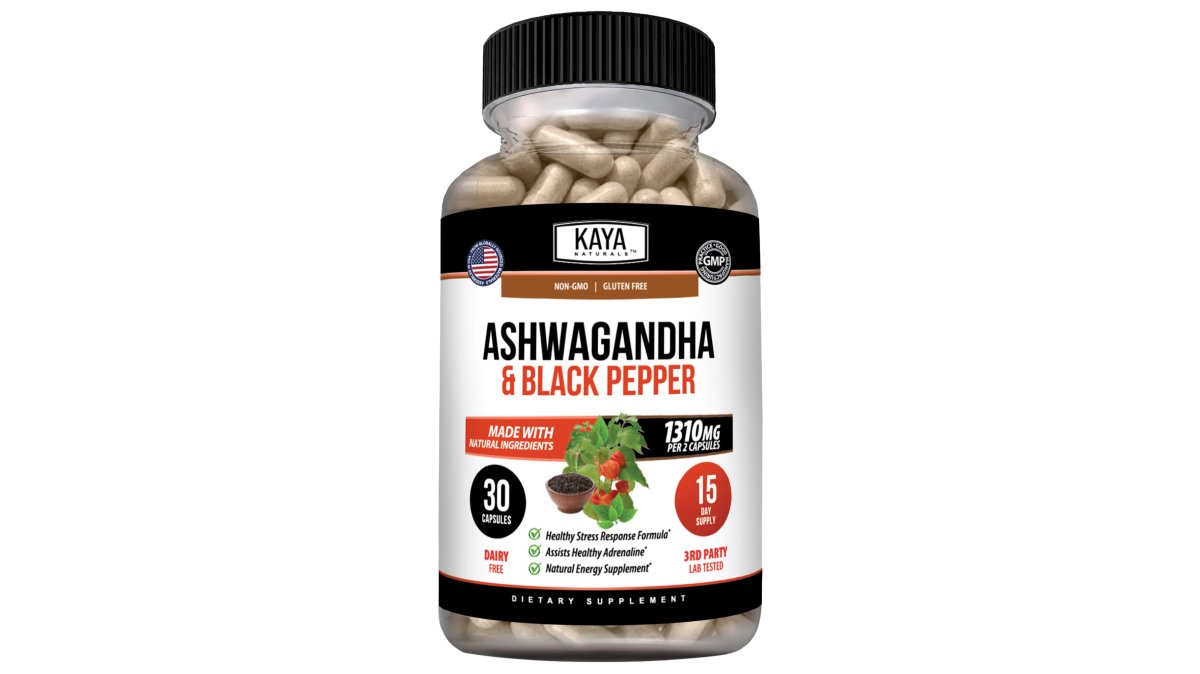
Standardized Extracts and Withanolides
Withanolides are the active compounds in ashwagandha. A standardized extract lists a specific withanolide percentage, which is how you compare products meaningfully. But the percentage alone doesn't tell you the whole story, the plant part it came from and the extraction method matter just as much.
| Product Type | Typical Daily Amount | Withanolide Content | Best For |
|---|---|---|---|
| Standardized root extract | 300-600 mg | 5% or higher | Daily stress support |
| Raw root powder | 1-2 g | Variable | Traditional use |
| Combination formulas | Varies | Varies | Stacking with L-theanine |
Root Extract vs. Leaf Extract: Why It Changes the Dose
Ashwagandha supplements are made from either the root, the leaf, or a blend of both, and the two plant parts behave differently. Root extract is the form used in the majority of clinical trials on stress and cortisol, and it's the form most practitioners reach for when the goal is daily stress support. Leaf extract tends to be cheaper to produce and is often used to stretch a formula, but it has a different withanolide profile and far less human trial data behind it.

If a label says only "ashwagandha extract" without specifying root, leaf, or a ratio, treat that as a yellow flag. The most transparent brands name the plant part and the extraction ratio (for example, a 10:1 root extract) right on the front of the bottle.
Branded Extracts: KSM-66 vs. Sensoril
Two branded extracts show up again and again in the research literature and on store shelves, and they are not interchangeable:
- KSM-66 is a full-spectrum root extract standardized to roughly 5% withanolides. It's the extract used in a large share of the modern placebo-controlled trials on stress, cortisol, and sleep quality, and it's the one most often dosed at 600 mg per day in those studies.
- Sensoril is a root-and-leaf extract standardized to a higher withanolide percentage (commonly around 10%). Because the concentration is higher, the typical daily amount is lower, often in the 125-250 mg range. Some users report it feels more sedating, which makes it a common choice for evening use rather than a morning capsule.
Neither is "better" in the abstract. The practical takeaway is that you should match the dose to the extract. Taking 600 mg of a 10% extract is not the same as taking 600 mg of a 5% extract, and taking 125 mg of a 5% extract may simply be too little to notice.
A Simple Way to Pick a Dose
- Decide whether you want a root-only extract (best-supported for stress) or a root-and-leaf blend.
- Note the withanolide percentage on the label.
- Aim for a daily withanolide intake in the range the trials used, commonly around 30 mg of withanolides per day for a 5% root extract dosed at 600 mg.
- Start at the lower end for the first week, then move up if you tolerate it well.
Timing and Consistency
Most people take ashwagandha once daily with a meal, since the fat in food can support absorption of fat-soluble withanolides. Some split the dose morning and evening. The timing matters far less than the consistency, a moderate dose taken every day for a month will tell you more than a large dose taken whenever you remember.
How Long to Take Ashwagandha for Anxiety Before You Feel a Difference
Expect four to eight weeks of consistent daily use before judging whether it's working. Some people notice subtle changes in sleep latency and mental fatigue sooner, often within two weeks. Others feel nothing until week six.
The subjective feeling is where clinical data and lived experience diverge. A trial might report a modest average improvement across a group, but your individual response can be stronger or weaker. Track your own stress levels weekly rather than relying on how you feel on any single day.
Ashwagandha Side Effects and Safety: Who Should Be Careful
Most people tolerate ashwagandha well, but it isn't risk-free. Reported adverse reactions include digestive upset, drowsiness, and headache. Rare cases of liver concerns have been documented, which is why supplement safety deserves real attention.
Thyroid Function and Medication Interactions
Ashwagandha may affect thyroid function by increasing certain hormone levels, so anyone with a thyroid condition should talk to their doctor first. Drug interactions matter too. It can interact with thyroid medications, sedatives, and medications affecting serotonin receptors.
People who are pregnant, breastfeeding, or taking immunosuppressants should avoid it unless a qualified professional says otherwise. This is general information, not medical advice. Your situation is specific.
FDA Regulation of Herbal Supplements: What It Means for Quality
The FDA regulates herbal supplements as dietary supplements, not as drugs. That means products don't need pre-market approval for effectiveness before they're sold. Quality control falls largely on the manufacturer.
This is why third-party testing matters. A reputable brand tests for heavy metal contamination, verifies the withanolide content, and confirms the plant species. The FDA's consumer guidance on dietary supplements explains how the agency oversees this category and what it does and doesn't guarantee.
Cycling Ashwagandha and Long-Term Use: What to Know
Long-term safety data on ashwagandha is limited, which surprises most people. Most trials run eight to twelve weeks. We simply don't have decades of controlled data on daily use, and that gap is the single most under-discussed issue in the entire ashwagandha conversation. Nearly every article you'll read cites the same handful of short-term studies and then quietly implies the results extend indefinitely. They don't.
What We Actually Know About Long-Term Use
Here's the honest state of the evidence:
- The bulk of human trials last 8 to 12 weeks. A smaller number run up to 3 months.
- There is very little published controlled data on continuous daily use beyond 6 to 12 months.
- The rare liver-related case reports that exist tend to involve higher doses, combination products, or pre-existing conditions, but they're a reminder that "natural" and "risk-free" are not synonyms.
- Because ashwagandha can influence thyroid hormone levels, the longer you take it, the more reason there is to have a clinician check in on your labs if you have any thyroid history.
None of this means ashwagandha is unsafe for long-term use. It means the confidence we have in short-term use doesn't automatically transfer to year three. Treat that as information, not a scare.
Does Ashwagandha Cause Tolerance?
This is the question almost no one answers directly. There is no strong published evidence that ashwagandha produces classic pharmacological tolerance the way a sedative or stimulant would, meaning there's no well-documented pattern of needing steadily higher doses to get the same effect.
What people do report is a subtler pattern: the initial sense of calm becomes less noticeable over time, not because the effect has vanished, but because it has become your new baseline. That's a perception issue as much as a physiological one, and it's the main reason cycling appeals to people.
A Practical Cycling Protocol
Cycling is a reasonable precaution, not a proven requirement. If you want to try it, a common approach looks like this:
- Use phase: Take your chosen dose daily for 8 to 12 weeks, the same window most trials cover.
- Break phase: Stop for 2 to 4 weeks. This is long enough to notice whether the supplement was actually doing something, because you'll feel the difference when it's gone.
- Reassess: Before restarting, ask whether the first cycle genuinely improved your stress, sleep, or reactivity. If you can't point to a change, a second cycle probably won't reveal one either.
- Repeat or stop: If it helped, restart and repeat the pattern. If it didn't, you've saved yourself the ongoing cost.
Some people never cycle and take it continuously for months without issue. Others prefer a 5-days-on, 2-days-off rhythm. There's no single correct schedule because there's no trial comparing them.
How to Monitor Yourself Over the Long Term
If you plan to take ashwagandha for more than a few months, a few simple habits make the decision easier:
- Track one or two concrete markers, sleep latency, how often you snap under pressure, resting heart rate, rather than a vague sense of "feeling calmer."
- Re-read the label every few months. Formulations change, and a product you trusted a year ago may have been reformulated.
- Tell your clinician what you're taking, especially before any bloodwork, surgery, or new prescription.
- Stop and get medical advice if you notice yellowing of the eyes or skin, unusual fatigue, or right-side abdominal discomfort. These are the symptoms tied to the rare liver reports, and they warrant a real conversation, not a Google search.
If you're looking for a simpler daily routine, JordanWellnessCo carries an Ashwagandha supplement formulated with organic black pepper extract to support absorption, or a magnesium and ashwagandha blend with L-theanine if you'd rather combine calming ingredients in one capsule.

Is Ashwagandha Worth It for Daily Stress Relief?
For many people dealing with chronic stress or mild anxiety, ashwagandha is worth trying, provided you set realistic expectations and buy a quality product. It won't replace sleep, exercise, or addressing the source of your stress. It can support the nervous system while you do that work.
Skip it if you have a thyroid condition, take interacting medications, or want an immediate effect. It is not a fast fix.
If you decide to try it, consistency beats intensity. A moderate daily dose of a standardized extract, taken for at least a month, tells you far more than a high dose taken sporadically.
Daily stress is stubborn, and no single supplement solves it alone. JordanWellnessCo curates supplements, fitness gear, and self-care essentials so you can build a routine that supports your whole system, not just one symptom. Explore our ashwagandha capsules or our stress support patches to find what fits your day. Shop now and start building a calmer baseline.

Frequently Asked Questions
Is it good to take ashwagandha every day?
Daily use is how most clinical studies measured results, typically over 8 to 12 weeks. Taking it consistently matters more than taking it occasionally, since adaptogens work by supporting your stress response over time rather than delivering an immediate effect. That said, some people prefer to cycle it, using it for several weeks and then taking a break. Talk to your doctor about what fits your health history before committing to daily use.
How long does it take for ashwagandha to work for stress?
Most placebo-controlled trials report noticeable changes in stress scores after 4 to 8 weeks of consistent daily use. Some people feel calmer within the first two weeks, but that early shift is often subtle and easy to miss. Because stress relief is partly subjective, tracking your sleep, mood, and energy in a simple journal can help you judge whether it is working for you before you decide to continue.
Can ashwagandha help with cortisol-related weight gain?
Chronic stress raises cortisol levels, and elevated cortisol is linked to belly fat storage and appetite changes. Ashwagandha has been studied for its effect on cortisol, and some trials show reduced levels in stressed adults. That does not make it a weight loss supplement. It may support the stress side of the equation, but diet, sleep, and activity still drive most of the outcome. Ask your doctor if it fits your situation.
What is better for anxiety, magnesium or ashwagandha?
They work differently, so the answer depends on what is driving your symptoms. Magnesium supports nervous system regulation and muscle relaxation, and it is often used for sleep and physical tension. Ashwagandha targets the hypothalamic-pituitary-adrenal axis and the stress response itself. Some formulas combine both, which is a practical option if you want mineral support and adaptogen support in one daily capsule.


