
Natural Fiber Activewear: Non-Toxic Alternatives to Synthetic Gym Gear
Table of Contents
- Why Natural Fiber Activewear Matters for Your Health
- Non-Toxic Workout Clothes: What Makes Them Different
- Best Natural Fabrics for Exercise
- How to Choose Eco-Friendly Gym Gear
- Natural Fiber Activewear vs. Synthetic: Performance Testing
- Holistic Recovery: Integrating Gear with Your Wellness Routine
- Conclusion
Last Updated: August 11, 2026
Why Natural Fiber Activewear Matters for Your Health
Synthetic gym gear exposes your skin to microplastics, chemical dyes, and petroleum-derived materials during intense workouts. Natural fiber activewear eliminates these stressors, supporting both performance and long-term skin health. Your activewear sits directly against your skin for extended periods, absorbing sweat and creating friction that triggers irritation. Natural fibers breathe differently than synthetics, they regulate moisture and temperature naturally, reducing sweat buildup and skin sensitivity.
The performance difference is measurable. Natural fiber activewear offers genuine thermoregulation without relying on chemical treatments or synthetic materials engineered to mimic what nature already does. Your body doesn't have to work as hard to regulate itself, which means better endurance and faster recovery. Beyond personal health, choosing natural fiber activewear supports a shift away from synthetic-heavy manufacturing. Microplastics from synthetic fabrics accumulate in landfills and water systems. Natural fibers biodegrade and require fewer toxic inputs during production.
Non-Toxic Workout Clothes: What Makes Them Different
Non-toxic workout clothes prioritize materials and processes that won't compromise your health or the environment. Instead of synthetic polymers, chemical finishes, and heavy dyes, they use natural fibers and minimal chemical processing. The difference shows up in how your skin feels during and after workouts, how long garments last, and what happens when they wear out.
Microplastic Shedding and Skin Health
Every time you wash synthetic activewear, it sheds microplastics, tiny fragments that enter waterways and accumulate in your body. When synthetic fabrics rub against your skin during workouts, friction accelerates shedding. Natural fiber activewear eliminates this exposure entirely. Merino wool, organic cotton, and alpaca fiber break down naturally without leaving synthetic residue. This is especially important if you have sensitive skin, eczema, or conditions that make your skin barrier vulnerable.
The skin microbiome functions better when not constantly exposed to synthetic materials and chemical finishes. Natural fibers allow your skin's natural microbiome to thrive, reducing inflammation and improving resilience. Over months of regular workouts, this compounds into noticeably healthier skin.
Chemical-Free Dyes and Manufacturing
Conventional activewear uses synthetic dyes requiring heavy metal fixatives and chemical processes. These chemicals don't rinse out completely and transfer to your skin through sweat. Non-toxic activewear uses plant-based dyes or low-impact synthetic dyes requiring minimal chemical processing. Facilities producing non-toxic activewear typically use closed-loop water systems, recycling and treating water rather than dumping it.
Organic cotton is grown without synthetic pesticides or fertilizers and processed with fewer chemicals than conventional cotton. Merino wool from certified ethical sources is cleaned with minimal chemical intervention. These choices reduce toxic exposures by the time garments reach your skin.
Best Natural Fabrics for Exercise
Not all natural fibers perform equally during workouts. The best choice depends on your climate, activity type, and skin sensitivity.
Merino Wool: Thermoregulation and Performance
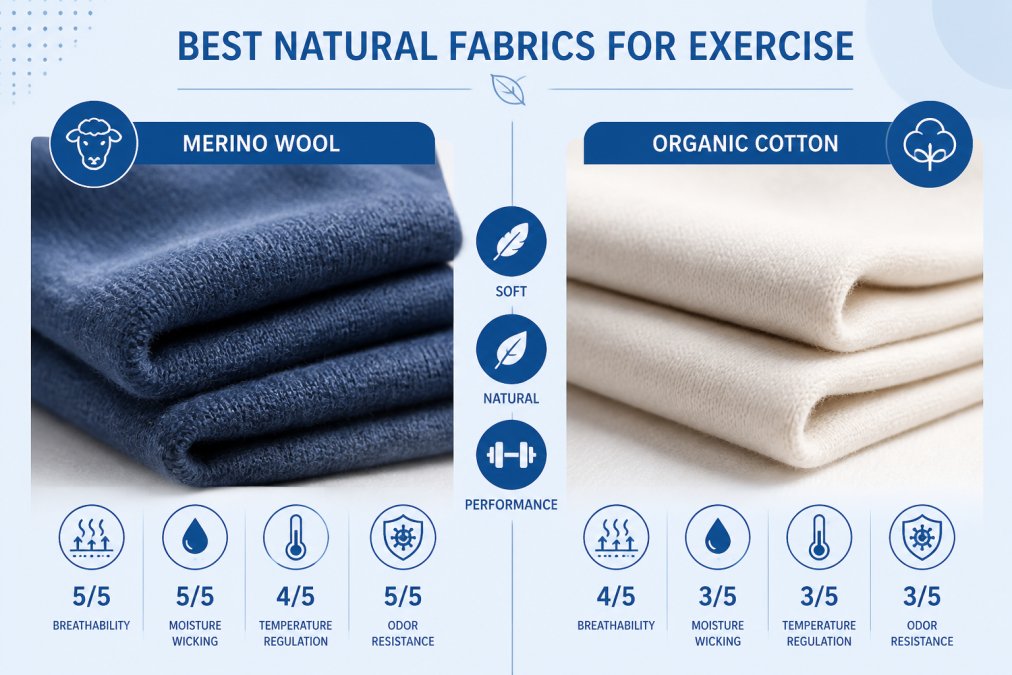
Merino wool is the gold standard for natural fiber activewear because it excels at thermoregulation and moisture-wicking simultaneously. Unlike coarse wool, merino is soft and non-itchy. The fiber naturally regulates body temperature by absorbing moisture without feeling wet, then releasing it as you cool down.
Merino wool performs across temperature ranges, insulating in cold weather without overheating, wicking sweat in warm conditions. It naturally resists odors, so you can wear pieces multiple times between washes, extending garment life and reducing water consumption. Recovery times are often faster because merino's moisture management reduces the cooling shock after intense exercise.
Organic Cotton: Breathability and Comfort
Organic cotton delivers superior breathability and comfort for moderate-intensity workouts and everyday wear. It's softer than merino wool and doesn't require specialized care. Organic cotton is hypoallergenic, making it ideal for sensitive skin or allergies to synthetics.
The main limitation is moisture management, it absorbs sweat rather than wicking it away. This works fine for yoga, strength training, or casual gym sessions. For high-intensity cardio or outdoor running, merino wool often outperforms organic cotton. Organic cotton activewear is typically more affordable than merino wool, making it accessible for building a natural fiber wardrobe. Pieces last years with proper care, and the environmental footprint is significantly lower than conventional cotton.
Alpaca Fiber and Other Natural Options
Alpaca fiber combines merino wool's thermoregulation with exceptional softness. It's warmer than merino without being heavier, ideal for cold-weather training. The fiber is naturally hypoallergenic and moisture-wicking.
Other natural fibers include hemp (extremely durable and breathable but can be stiffer initially), linen (excellent for hot climates), and blended options like merino-alpaca or cotton-hemp combinations. Blends optimize performance by combining fiber strengths. Match the fiber to your climate, activity, and skin type.
How to Choose Eco-Friendly Gym Gear
Selecting sustainable activewear requires evaluating certifications, manufacturing transparency, and performance features matching your workout style.
Look for GOTS Certification and Sustainable Manufacturing
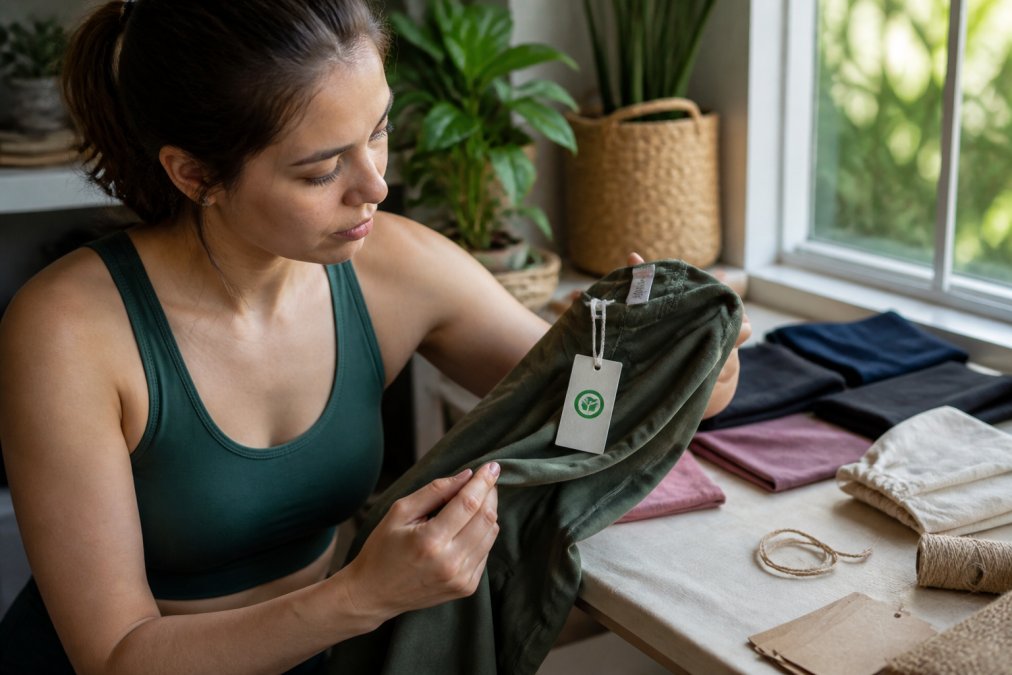
GOTS (Global Organic Textile Standard) certification indicates organic cotton activewear has been produced according to strict environmental and social standards. GOTS-certified garments are made from organic cotton grown without synthetic pesticides, processed without toxic chemicals, and manufactured in facilities with fair labor practices.
For wool products, look for Responsible Wool Standard (RWS) certifications, verifying wool comes from farms with animal welfare standards and sustainable grazing practices. Investigate brand manufacturing transparency, reputable sustainable brands publish information about factories, water usage, chemical inputs, and waste management. Transparency indicates confidence in practices.
Sustainable manufacturing means durability. A garment lasting five years instead of one has a lower environmental footprint per wear. Natural fiber activewear typically lasts longer than synthetic because fibers maintain integrity through repeated washing. Merino wool especially improves with age, becoming softer and more comfortable.
Evaluate Performance Features for Your Workout Style
Match fabric and construction to your actual training. High-intensity cardio demands superior moisture-wicking and breathability, merino wool excels here. Strength training and yoga prioritize comfort and range of motion, organic cotton or alpaca blends work well. Cold-weather outdoor training needs insulation and wind resistance, merino wool or alpaca outperforms lighter options.
Check garment construction details. Four-way stretch indicates fabric moves with your body in all directions. Flatlock seams prevent chafing. A gusseted crotch in leggings improves comfort during high-impact activities. Consider fabric weight and thickness. Lightweight merino works for layering and moderate activity. Midweight merino suits most training. Heavyweight merino is ideal for cold-weather sports.
Natural fiber activewear often fits differently than synthetic because fabrics move and stretch differently. Read reviews from users with your body type to understand how specific brands fit.
Natural Fiber Activewear vs. Synthetic: Performance Testing
Natural fibers don't sacrifice performance, they deliver it differently. Merino wool activewear shows equivalent or superior moisture management compared to synthetic performance fabrics. The fiber absorbs moisture without feeling wet, then releases it gradually as your body cools. For endurance activities, merino's gradual moisture release reduces temperature shock that triggers muscle tightness and soreness.
Durability testing shows natural fiber activewear can hold up as well as synthetic alternatives when properly cared for. Merino wool resists pilling and maintains elasticity through hundreds of washes. Organic cotton strengthens when wet, making it more durable than many synthetics. Natural fibers require specific care, cold water washing, gentle drying, while synthetics tolerate aggressive laundering.
Breathability measurements consistently show natural fibers outperform synthetics. Your skin regulates temperature more effectively because natural fibers allow air circulation. This matters during recovery, your body needs to cool efficiently after intense exercise. Natural fiber activewear facilitates this better than synthetic materials.
Holistic Recovery: Integrating Gear with Your Wellness Routine
Your activewear is one component of comprehensive recovery. Natural fiber activewear supports recovery by reducing skin irritation, eliminating microplastic exposure, and allowing better thermoregulation. Recovery starts during your workout. Natural fiber activewear's superior moisture management means your body doesn't work as hard to regulate temperature, reducing physiological stress and preserving energy for training.
Post-workout recovery improves when you remove sweaty clothes immediately and transition to dry, breathable alternatives. Natural fiber loungewear continues thermoregulation benefits established during your workout. Your body focuses on muscle repair rather than managing temperature fluctuations.
Hydration, sleep, and nutrition remain recovery foundations, but gear worn during and after training influences how effectively your body executes recovery processes. When your skin isn't irritated by synthetic materials, your nervous system shifts into parasympathetic (recovery) mode more easily. When your body isn't managing microplastic exposure or chemical residue, it allocates resources to muscle repair and adaptation.
JordanWellnessCo offers a curated selection of natural fiber activewear and recovery essentials designed to support this integrated approach. Whether building a complete natural fiber wardrobe or supplementing existing gear, choosing materials that support your body's natural processes creates a foundation for sustainable training and genuine wellness.
| Natural Fiber | Best For | Key Benefit | Care Requirement |
|---|---|---|---|
| Merino Wool | High-intensity training, temperature variability | Superior thermoregulation and moisture-wicking | Cold water wash, gentle drying |
| Organic Cotton | Everyday wear, moderate activity, sensitive skin | Breathability and hypoallergenic properties | Standard washing, can air dry |
| Alpaca Fiber | Cold-weather training, premium comfort | Warmth without weight, exceptional softness | Similar to merino, requires gentle handling |
| Cotton-Hemp Blend | Durability-focused training, hot climates | Extreme durability and breathability | Standard washing, durable through many cycles |
Choosing natural fiber activewear is an investment in both immediate performance and long-term health. Your body deserves gear that supports recovery instead of creating additional stress. Start with one piece, a merino base layer or organic cotton top, and build from there. You'll notice the difference in how your skin feels, how your body regulates temperature, and how quickly you recover. Natural fiber activewear works with your body, not against it.
Frequently Asked Questions
What makes athletic gear 'non-toxic'?
Non-toxic athletic gear is manufactured without harmful synthetic chemicals, pesticides, or heavy metals. Natural fiber activewear avoids microplastic shedding and relies on organic dyes and chemical-free processing. Look for GOTS (Global Organic Textile Standard) certification, which verifies that fabrics meet strict environmental and health standards. Non-toxic gear prioritizes your skin health and the environment, reducing exposure to substances that accumulate in your body and waterways during washing.
Are there natural alternatives to synthetic workout fabrics?
Yes. Merino wool excels at thermoregulation and moisture-wicking without synthetic treatments. Organic cotton offers breathability and comfort for moderate-intensity workouts. Alpaca fiber provides warmth and softness for cooler-weather training. Recycled natural fibers and plant-based materials like hemp and linen are also emerging alternatives. These natural options perform well for most activities while eliminating microplastics and synthetic chemicals from your routine.
Why should I choose natural fiber activewear over synthetic options?
Natural fiber activewear supports both your health and holistic wellness. Unlike synthetic fabrics that shed microplastics during wear and washing, natural fibers are biodegradable and don't accumulate in your skin or environment. They offer superior breathability, thermoregulation, and moisture control without chemical finishes. Natural fibers reduce skin irritation, support your lymphatic health, and align with sustainable manufacturing practices. For athletes prioritizing performance and long-term wellness, natural fiber activewear delivers durable, non-toxic performance.
How do I identify sustainable athletic clothing brands?
Look for third-party certifications like GOTS, OEKO-TEX, or B Corp status, which verify ethical sourcing and chemical-free manufacturing. Check if brands disclose their supply chain and use organic or recycled materials. Sustainable brands typically highlight their environmental impact and manufacturing transparency. Read product descriptions for terms like 'chemical-free dyes,' 'ethical sourcing,' and 'biodegradable materials.' JordanWellnessCo curates products meeting these standards, so you can shop with confidence knowing each item supports your health and holistic wellness goals.
This article was written using GrandRanker