

Table of Contents
- Define Your Wellness Goals and Assess Your Current Lifestyle
- Daily Wellness Routine Examples That Work
- Create a Balanced Nutrition Plan and Hydration Strategy
- Incorporate Physical Movement and Gentle Exercise
- Manage Stress, Sleep, and Mental Health
- How to Stay Consistent With Healthy Habits
- Wellness Routine Checklist and Habit Tracking
- Conclusion
Last Updated: August 12, 2026
Define Your Wellness Goals and Assess Your Current Lifestyle
Building a cohesive wellness routine starts with clarity about where you're going and where you stand now. Start by identifying what wellness means to you specifically, peak athletic performance, stress management, better sleep, or consistent movement. Write down 3-5 wellness goals that genuinely matter to you, not what you think should matter.
Next, assess your current lifestyle honestly. Track a typical week: sleep times, meals, water intake, movement, screen time before bed, and stress triggers. Don't judge it yet, just observe. Many people discover they're already doing some things right but didn't realize it, while others find glaring gaps to address.
The gap between where you are and where you want to be is your starting point. If you're sleeping five hours and your goal is eight, that's a bigger shift than if you're already at seven. Honest assessment prevents you from building a routine that's too aggressive to maintain or too gentle to create change.
Daily Wellness Routine Examples That Work
Real daily wellness routine examples show patterns that work across different lifestyles.
The Early Riser's Routine starts before most people wake. Water first, then movement: a 20-minute walk, light stretching, or yoga. Breakfast with protein and vegetables. By 7 a.m., you've already made intentional choices before work demands kick in.
The Busy Professional's Routine works within constraints. A 10-minute morning stretch while coffee brews. A lunch break that includes a 15-minute walk instead of eating at your desk. Water throughout the day with phone reminders if needed. Evening wind-down 30 minutes before bed: no screens, maybe journaling or light reading.
The Evening-Focused Routine suits night people. Morning: hydration and breakfast. Midday: a quick walk or movement break. Evening: a structured workout, yoga class, or training session. Dinner with intention. A calming practice before bed.
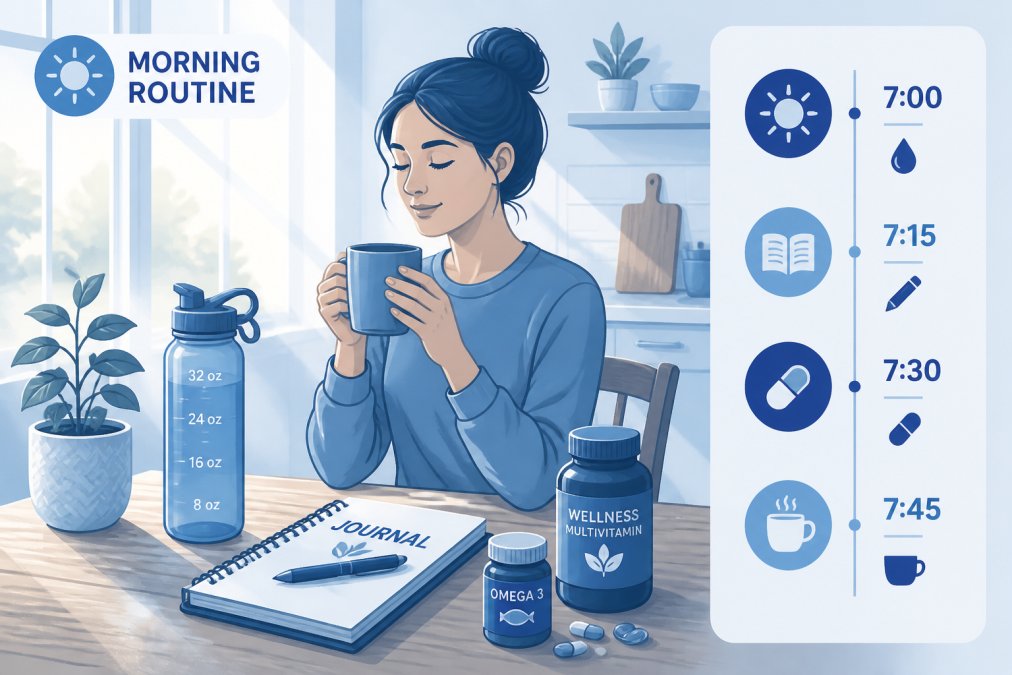
The common thread across all examples is consistency and intentionality. You're making deliberate choices throughout the day rather than defaulting to whatever happens. Pick one example closest to your actual life, then adjust. Don't adopt someone else's 5 a.m. routine if you're naturally wired for evenings. JordanWellnessCo offers supplements, fitness gear, and self-care essentials that fit into any of these routines.
Create a Balanced Nutrition Plan and Hydration Strategy
Nutrition and hydration form the foundation of any wellness routine. A balanced nutrition plan doesn't require perfection or restriction, it requires consistency. Aim for protein at each meal to stabilize energy and support recovery. Include vegetables with lunch and dinner. Whole grains instead of refined carbs most of the time. Healthy fats from olive oil, nuts, or fish.
Build a plan you can sustain 80% of the time, and you'll see results. The other 20% is flexibility for social meals, treats, and spontaneous choices. This balance makes a routine stick long-term.
Hydration is simpler than most people make it. Aim for half your body weight in ounces of water daily as a baseline, then adjust based on activity level and climate. A 160-pound person targets 80 ounces. The practical approach: drink water with meals, keep a water bottle visible, and drink when thirsty. Most people feel significantly better with proper hydration, clearer thinking, better energy, improved recovery.
Nutrition and hydration affect everything else: sleep quality, energy levels, mental clarity, workout performance, and stress resilience. Get these right and the rest becomes easier.
Incorporate Physical Movement and Gentle Exercise
Movement is non-negotiable in a cohesive wellness routine, but it doesn't mean intense daily workouts. It means consistent, varied physical activity that matches your current fitness level and builds from there.
Start with what you'll actually do. If you hate running, don't build a routine around running. If you love walking, start there. The best exercise is the one you'll repeat.
A practical structure includes three types of movement:
Gentle daily movement happens almost every day: walking, stretching, light yoga, or casual movement. Ten to thirty minutes maintains mobility and supports circulation.
Moderate exercise happens 3-4 times per week: cycling, swimming, dance classes, hiking, or recreational sports. Thirty to sixty minutes per session builds cardiovascular health.
Strength or intensity work happens 2-3 times per week: weight training, high-intensity intervals, or challenging fitness classes. Twenty to forty minutes builds muscle, bone density, and metabolic health.
This framework prevents doing too much too soon or too little to create change. It also prevents burnout by varying intensity throughout the week. Start with one type of movement you enjoy, establish consistency, then add others. JordanWellnessCo carries fitness gear and recovery essentials that support whatever movement you choose.
Manage Stress, Sleep, and Mental Health
Stress management, sleep quality, and mental health form the invisible foundation of wellness. You can nail nutrition and exercise, but poor sleep and chronic stress will undermine everything.
Most adults need 7-9 hours of sleep. This is where your body repairs itself, consolidates learning, and regulates hormones. When sleep is short, everything suffers: appetite control, immune function, mood, decision-making, and recovery from training.
Build sleep hygiene into your routine: consistent sleep and wake times, even on weekends; no screens 30-60 minutes before bed; a cool, dark room; and a wind-down practice like reading, journaling, gentle stretching, or meditation.

Chronic stress elevates cortisol, disrupts sleep, increases inflammation, and makes everything feel harder. Build stress management into your daily routine: a walk, meditation, journaling, time in nature, or time with people you enjoy. Even ten minutes matters.
Mindfulness practices, meditation, breathwork, or simple awareness, help regulate your nervous system. Five to ten minutes daily creates measurable shifts in stress resilience and emotional regulation. If you're struggling with anxiety, depression, or other mental health challenges, a wellness routine supports treatment but doesn't replace professional help.
How to Stay Consistent With Healthy Habits
Consistency is where most wellness routines fail. Understanding how habits actually work helps you build one that lasts.
Habits form through repetition and context. When you do something in the same place, at the same time, under similar conditions, it becomes automatic. "I'll work out whenever I have time" fails because there's no consistent trigger. But "I work out every Tuesday and Thursday at 6 a.m." works because the time and day are fixed.
Start small. Pick one habit, maybe a 15-minute morning walk or drinking more water. Do it consistently for 2-3 weeks until it feels automatic. Then add another. This approach actually gets you to your bigger goals faster because each habit sticks.
Stack habits together. If you already have a morning coffee ritual, add a glass of water and five minutes of stretching right after. Attaching new habits to existing ones makes them easier to remember and execute.
Remove friction. If your goal is to move more but your workout clothes are in the back of a closet, you've added friction. Put them somewhere visible. If you want to drink more water, keep a water bottle on your desk. Small environmental changes make habits easier to execute.
Track progress visually. This might be a calendar where you mark off days you followed your routine, a simple checklist, or a note app. Seeing the pattern of consistency is motivating and shows where you're struggling.
Expect setbacks. Life happens. You'll miss days. This doesn't mean failure, it means you're human. The skill is restarting quickly. Miss one day? Get back the next. The people who succeed at long-term wellness aren't the ones who never miss, they're the ones who keep coming back.
Wellness Routine Checklist and Habit Tracking
A wellness routine checklist helps you stay on track and see progress:
| Habit | Daily | 3-4x/Week | Notes |
|---|---|---|---|
| Hydration (target oz) | ✓ | Track water intake | |
| Movement/Exercise | ✓ | ✓ | Mix gentle and moderate |
| Nutrition (balanced meals) | ✓ | Protein, vegetables, whole grains | |
| Sleep (7-9 hours) | ✓ | Consistent bedtime | |
| Stress management practice | ✓ | Meditation, walk, journaling | |
| Strength or intensity work | ✓ | 2-3 sessions weekly | |
| Screen-free wind-down | ✓ | 30-60 min before bed | |
| Meal prep or planning | ✓ | Sunday or chosen day |
Use this checklist weekly. Mark off what you completed each morning or evening. At the end of the week, look at the pattern. Did you hit your water target most days? Did you move consistently? This visual tracking shows where you're strong and where you need adjustment.
Habit tracking can be as simple as a printed checklist, a note on your phone, or a dedicated app. What matters is that you're checking in with yourself regularly about whether your routine is actually happening. Tracking also reveals what works for you personally, maybe you sleep better when you exercise earlier, or journaling reduces your stress more than meditation. This personal data is more valuable than any generic advice.
JordanWellnessCo's curated selection of supplements, fitness gear, and self-care essentials supports each of these habit categories, from hydration bottles to recovery products to sleep-support items.
Building a cohesive wellness routine isn't about perfection. It's about creating a structure that supports your health within your actual life. Start by defining your goals and assessing where you are now. Establish daily practices that work for your schedule. Prioritize nutrition, hydration, movement, sleep, and stress management. Stay consistent through small steps, habit stacking, and visual tracking. Most importantly, adjust as you learn what works for you. Start this week with one habit. Make it automatic. Then build from there. With JordanWellnessCo's complete range of wellness products, from supplements to fitness gear to self-care essentials, you have everything you need to support your routine and maintain consistency toward better health.
Frequently Asked Questions
How do I create a realistic daily wellness routine that fits my busy schedule?
Start small with 3-5 core habits rather than overhauling everything at once. Identify your non-negotiables: maybe that's 20 minutes of movement, drinking water consistently, and 7 hours of sleep. Build your routine around these anchors, then layer in secondary habits like stretching or meditation. The key is choosing practices you can sustain even on hectic days. Most people find success when they tie new habits to existing daily triggers, like taking supplements with breakfast or doing breathing exercises after your commute.
What's the best way to stay consistent with healthy habits long-term?
Consistency comes from removing friction and tracking progress. Use a simple checklist or app to mark off completed habits daily, seeing the visual streak motivates continuation. Prepare your environment the night before: lay out workout clothes, prep meals, set out supplements. When habits feel automatic rather than forced, you're much more likely to stick with them. Also, expect setbacks without judgment. Missing one day doesn't mean failure; the goal is to return to your routine the next day.
How do I know which wellness products will actually work together in my routine?
Choose products that address your specific goals rather than buying randomly. If you're building a routine around energy and recovery, pair a quality supplement with proper hydration and sleep support. At JordanWellnessCo, our curated selection is designed to complement each other, supplements, fitness gear, and self-care essentials work as a system, not isolated purchases. Start with products that align with your top 2-3 wellness priorities, then expand intentionally. This approach prevents overwhelm and ensures every product serves your actual routine.
What are the most important elements of a cohesive wellness routine?
A cohesive routine balances five core pillars: nutrition (eating whole foods and staying hydrated), physical movement (exercise or gentle activity), sleep (7-9 hours nightly), stress management (meditation, breathwork, or mindfulness), and mental health practices (journaling or connection). When these elements work together, they create a sustainable lifestyle rather than a checklist of isolated tasks. Your routine doesn't need to be perfect, it needs to be consistent and aligned with your personal wellness goals.
This article was written using GrandRanker


