

Table of Contents
- Why Wellness Routines Matter When You're Busy
- 5-Minute Wellness Habits for Busy People
- How to Prioritize Self-Care With a Full-Time Job
- Best Wellness Apps for Busy Schedules
- Wellness Routine Checklist for Professionals
- Micro-Habit Stacking for Sustainable Wellness
- Digital Wellness and Screen Fatigue Management
- Conclusion
Last Updated: August 7, 2026
Why Wellness Routines Matter When You're Busy
The pressure to "do it all" is relentless. Work demands overflow into evenings. Family obligations pile up. Personal time gets squeezed into whatever gaps remain. Many busy professionals convince themselves that wellness routines are luxuries they cannot afford right now, they'll get to it later, after the deadline, after the promotion. But things never calm down on their own. You have to create the moment.
At JordanWellnessCo, we empower you to live healthier every day by offering a curated selection of supplements, fitness gear, personal care, skincare, and self-care essentials. The difference between those who succeed and those who fall back into old patterns isn't willpower. It's strategy. Effective wellness routines for busy people aren't about finding more time. They're about making the time you have count.
When you skip sleep, hydration, movement, and stress management, your body degrades. Your immune system weakens. Your mental clarity fades. Your energy crashes. Decision-making suffers. The counterintuitive truth: adding wellness practices to a packed schedule often creates space, not takes it. Better sleep means you need less sleep. Regular movement boosts energy and focus. Hydration improves cognitive function. Stress management prevents the cascading failures that steal weeks of productivity.
Below, we'll show you exactly how to build wellness routines that actually stick, even when your calendar is already full.
5-Minute Wellness Habits for Busy People
The biggest myth about wellness is that it requires big time commitments. Most busy professionals believe they need a full hour at the gym or elaborate meal prep to see results. That belief keeps them stuck. The reality is simpler: five-minute wellness habits for busy people compound into meaningful changes. A 5-minute stretching routine done consistently beats a 60-minute session you never actually do. The key is consistency over duration.
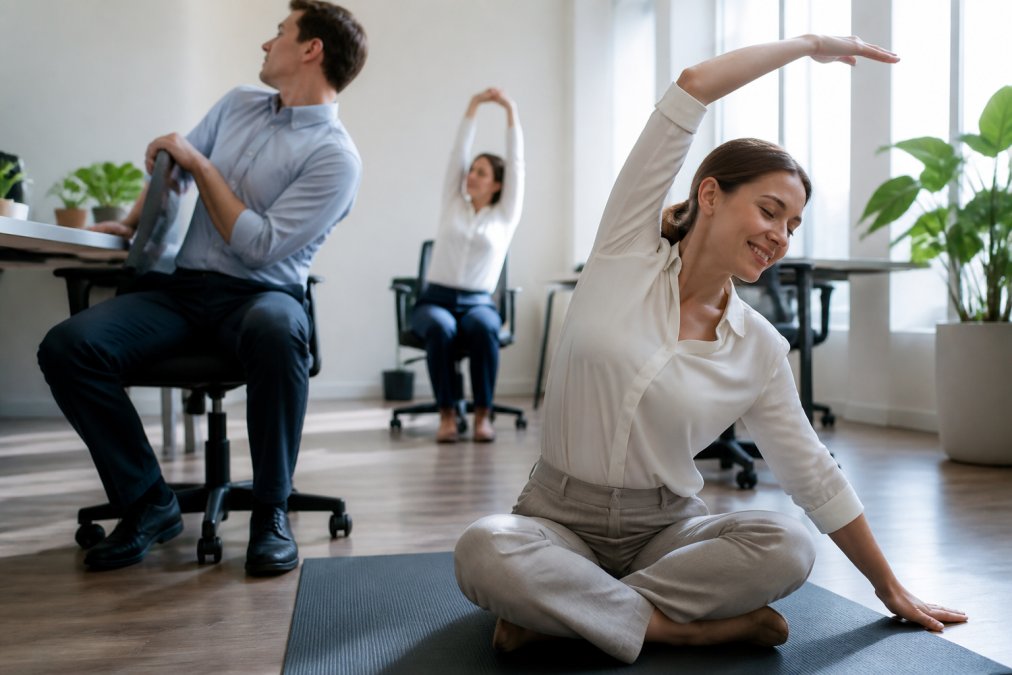
Morning Movement and Stretching
Start your day with intentional movement before your brain shifts into work mode. A simple 5-minute routine:
- Stand and reach toward the ceiling, holding for 5 seconds
- Fold forward and let your head hang, holding for 10 seconds
- Perform 10 bodyweight squats at a controlled pace
- Do 10 arm circles forward and 10 backward
- Finish with 30 seconds of gentle neck rolls in both directions
This activates your entire body and increases blood flow. The psychological benefit is bigger: you've already accomplished something intentional before checking email. Morning movement sets the tone for the entire day by interrupting the default pattern of waking up and immediately shifting into reactive mode.
Midday Breathing and Hydration Breaks
The afternoon slump hits around 2-3 PM for most people. Energy crashes. Focus fragments. A better strategy than caffeine is a 2-minute breathing and hydration break.
Step away from your desk. Drink 8-12 ounces of water. Then do this breathing exercise:
- Breathe in through your nose for a count of 4
- Hold for a count of 4
- Exhale through your mouth for a count of 6
- Repeat 5-10 times
The extended exhale activates your parasympathetic nervous system, which calms your body down. Your brain is 75% water, and even mild dehydration impairs cognitive function. A simple midday hydration habit prevents the energy crash that derails productivity.
Evening Wind-Down Rituals
Your evening routine determines your sleep quality, which determines everything else. Start 30-60 minutes before sleep:
- Dim your lights or switch to warm-toned lighting
- Set your phone across the room, out of reach
- Spend 5 minutes on light stretching or gentle yoga
- Spend 5 minutes journaling three things you're grateful for
This routine takes 10 minutes. The cumulative effect on sleep quality is dramatic. Sleep hygiene isn't a luxury, it's the foundation that every other wellness habit depends on.
How to Prioritize Self-Care With a Full-Time Job
Self-care is the practice of taking deliberate actions to maintain your physical, mental, and emotional health. For busy professionals, it means identifying the minimum viable set of practices that keep you functional and well, then protecting time for those practices the way you'd protect a client meeting.

Identify your non-negotiables. These are the 2-3 wellness practices that, when you do them consistently, make the biggest difference in how you feel and perform. For most busy professionals, these are: adequate sleep, regular movement, and some form of stress management.
Next, schedule them like business meetings. A 30-minute walk at 6 AM. A 10-minute meditation at lunch. A wind-down routine at 10 PM. These aren't nice-to-haves. They're the infrastructure that allows you to show up effectively at work and home.
The hardest part isn't knowing what to do. It's saying no to competing demands. Self-care with a full-time job requires boundary setting. It means declining some meetings, limiting after-hours email, and protecting your time off.
Best Wellness Apps for Busy Schedules
Apps can't replace the fundamentals, sleep, movement, hydration, stress management, but they can make those fundamentals easier to implement and track.
The best wellness apps for busy schedules are simple to use, don't require daily setup, send helpful reminders, and work offline. They support your routine rather than becoming another obligation.
For movement tracking, apps that integrate with your phone's built-in health data eliminate the need for separate wearables. For meditation and breathing, apps with short sessions (5-15 minutes) align with realistic time availability. For hydration reminders, simple notification-based apps work better than complex logging systems. For sleep, apps that track trends rather than demanding detailed input are more sustainable.
The trap most people fall into is downloading multiple apps and trying to use all of them. Start with one. Master it. Add another only if the first one is genuinely working. Most successful wellness routines use 2-3 apps maximum.
JordanWellnessCo encourages choosing apps that integrate with your existing devices and routines rather than requiring entirely new workflows. The best app is the one you'll actually use consistently.
Wellness Routine Checklist for Professionals
A wellness routine checklist clarifies what you're committing to and provides daily evidence of follow-through.
| Daily Practice | Time Required | Frequency | Why It Matters |
|---|---|---|---|
| Morning movement or stretching | 5 minutes | Daily | Activates body, sets intentional tone |
| Hydration (8+ glasses water) | Throughout day | Daily | Maintains cognitive function, energy |
| Midday breathing break | 2-3 minutes | Daily | Resets nervous system, prevents afternoon crash |
| Physical activity (walk, exercise) | 20-30 minutes | 4-5x weekly | Builds cardiovascular health, mental clarity |
| Evening wind-down routine | 10 minutes | Daily | Improves sleep quality, reduces stress |
| Sleep (7-9 hours) | 7-9 hours | Nightly | Foundation for recovery, immunity, focus |
| Stress management (meditation, journaling) | 5-10 minutes | Daily or 4x weekly | Manages cortisol, improves resilience |
| Healthy meals with protein and vegetables | 3 meals daily | Daily | Stabilizes energy, supports recovery |
The checklist isn't about perfection. It's about awareness. Checking off seven out of eight items is a success. It's a record of what you did, not a judgment of what you failed to do.
Micro-Habit Stacking for Sustainable Wellness
Most wellness routines fail because they require willpower. Each decision depletes your willpower reservoir. By afternoon, you're out of decisions and back to default behaviors.
Micro-habit stacking eliminates the decision-making component by attaching new wellness habits to existing routines. Attach a small wellness habit to something you already do without thinking. You already pour your morning coffee, attach a 2-minute stretching routine. You already take a lunch break, attach a 5-minute walk. You already brush your teeth before bed, attach a 2-minute journaling practice.
The power of stacking is that the existing habit becomes the trigger. You don't have to remember to stretch; you stretch because you're making coffee. The willpower requirement drops to nearly zero.
Here are practical stacking examples:
Morning stacks:
- After pouring coffee → 5-minute stretching routine
- After brushing teeth → hydration (drink 12 oz water)
- After getting dressed → 30-second posture check
Midday stacks:
- After opening laptop → 2-minute breathing break
- After lunch → 10-minute walk
- Before checking email → hydration break
Evening stacks:
- After dinner → 5-minute walk or light movement
- After changing into comfortable clothes → journaling or meditation
- After brushing teeth → no screens for 30 minutes
Start with one stack. Master it for two weeks. Then add another. This gradual approach prevents overwhelm and builds momentum.
Digital Wellness and Screen Fatigue Management
Screen time is the invisible drain on wellness for busy professionals. Most people spend 8+ hours daily in front of screens for work, then another 2-3 hours on personal devices. The cumulative impact on sleep quality, eye strain, posture, and mental fatigue is substantial.
Digital wellness isn't about eliminating screens. It's about managing your relationship with them so they support your work without sabotaging your health.
Screen fatigue manifests as eye strain, headaches, neck and shoulder tension, disrupted sleep, and mental exhaustion. Blue light suppresses melatonin production. Unbroken focus causes eye strain and poor posture. Constant notifications fragment attention.
Here are practical digital wellness strategies:
During work hours:
- Use the 20-20-20 rule: every 20 minutes, look at something 20 feet away for 20 seconds
- Adjust monitor height so the top of the screen is at or slightly below eye level
- Enable blue light filters on all devices after 2 PM
- Turn off non-essential notifications
- Take a 5-minute screen break every 90 minutes
Before bed:
- Stop using screens 30-60 minutes before sleep
- If you must use screens, enable night mode and reduce brightness
- Keep phones and tablets out of the bedroom
- Use a traditional alarm clock instead of your phone
Digital wellness is often overlooked because the harms are gradual. Prevention is far easier than correction.
JordanWellnessCo's curated selection of wellness products includes items specifically designed to support digital wellness, from ergonomic supports to blue light filtering options, that help professionals manage screen fatigue while maintaining productivity.
Conclusion
Building effective wellness routines for busy people isn't about finding more time or becoming a different person. It's about protecting the practices that keep you functional and well, then stacking smaller habits onto routines you already have.
Start with one non-negotiable practice: sleep, movement, or stress management. Master that for two weeks. Then add micro-habits through stacking. Track your progress with a simple checklist. Use apps and tools strategically, not as obligations.
The professionals who transform their health aren't the ones with the most time. They're the ones who decided their wellness was non-negotiable and built their schedules around it. JordanWellnessCo supports that commitment with a curated selection of supplements, fitness gear, and self-care essentials designed for professionals who refuse to compromise on their health. Shop now and start building routines that actually work for your life.
Frequently Asked Questions
How can I start a wellness routine if I'm busy?
Start with one small habit that takes 5 minutes or less. Choose something you can do without rearranging your schedule, like a morning stretch or a hydration reminder. Once that feels automatic, add another habit. This approach to habit formation prevents overwhelm and builds momentum. Most busy professionals see results when they stack wellness habits into existing routines, like deep breathing while your coffee brews or desk exercises during lunch.
What are realistic wellness routines for working professionals?
A realistic routine includes three elements: movement (even 5-10 minutes), stress management (breathing or mindfulness), and sleep hygiene. Professionals who succeed prioritize one small action in the morning, one at midday, and one before bed. Pair these with hydration throughout the day and boundary setting around work hours. The key is consistency over intensity, a 5-minute daily routine beats a 60-minute routine you abandon after two weeks.
How do I prevent burnout when I have a busy schedule?
Burnout prevention requires boundary setting between work and personal time, regular recovery periods, and stress management techniques. Schedule self-care like you schedule meetings. Use mindfulness or deep breathing during transitions between tasks. Monitor your energy levels and take action before exhaustion sets in. Digital wellness, limiting screen time after work, also plays a critical role in preventing mental and physical fatigue.
What products help support a busy wellness routine?
Supplements, fitness gear, and self-care essentials can support your routine when chosen strategically. Consider what gaps your current routine has: low energy might call for quality supplements, poor sleep might need aromatherapy or relaxation tools, or stiffness might require stretching equipment. JordanWellnessCo offers a curated selection of these products in one place, so you can build a complete routine without shopping across multiple sites.
This article was written using GrandRanker


