

Table of Contents
- Why the Organic Label Costs More
- Organic vs Synthetic Vitamins: What the Research Shows
- FDA Supplement Regulation Standards and What They Don't Cover
- Supplement Third-Party Testing: The Quality Signal That Matters
- Cost Per Nutrient: Which Supplements Justify the Premium
- How to Read a Supplement Label Like a Buyer, Not a Believer
- Who Actually Benefits From Organic Supplements
- Conclusion
- Frequently Asked Questions
Last Updated: October 1, 2026
Why the Organic Label Costs More
Organic supplements cost more because the certification behind that label is expensive to earn and maintain. USDA organic certification requires verified farming practices, documented supply chains, and annual inspections, and those costs get passed to the bottle on the shelf.
Organic vs Synthetic Vitamins: What the Research Shows
Organic and synthetic vitamins differ in origin, not in the vitamin itself. Your body uses the same ascorbic acid whether it came from a citrus peel or a lab. What differs is everything around that molecule: the co-factors, the carrier compounds, and the contaminants that may tag along.
Bioavailability and Absorption Rates
Bioavailability is the proportion of a nutrient your body actually absorbs and uses. This is where the organic-versus-synthetic debate gets real. Whole-food sources often arrive bundled with trace minerals and bioactive compounds that support uptake. Isolated synthetic forms can be absorbed efficiently too, but they lack that supporting cast.
Nutrient Density and Whole-Food Sources
Whole-food sources deliver a broader nutrient profile than isolated compounds. A food-based vitamin C supplement may also carry bioflavonoids and enzymes that isolated ascorbic acid doesn't. That broader profile is part of what you're paying for with organic, and it's a legitimate reason to choose it.
FDA Supplement Regulation Standards and What They Don't Cover
The FDA regulates dietary supplements as food, not as drugs. That means no pre-market approval for safety or effectiveness before a product hits shelves. Under FDA dietary supplement guidance, manufacturers are responsible for ensuring their products are safe and accurately labeled, but the agency doesn't verify those claims before sale.
Here's what that means in practice:
- No requirement to prove a supplement works before selling it
- No mandatory testing of every batch for purity
- Label claims must be truthful, but enforcement happens after the fact
- Structure-function claims need a disclaimer that the FDA hasn't evaluated them
Supplement Third-Party Testing: The Quality Signal That Matters
Third-party testing is the most reliable quality signal a supplement can carry. Independent labs verify that what's on the label matches what's in the bottle, and that contaminants stay within safe limits. Programs like NSF Certified for Sport and USP verification exist precisely because self-reported quality isn't enough.
What these programs check:
- Potency: does the product contain the amount stated?
- Purity: are heavy metals, solvents, or microbes present?
- Identity: is the ingredient what the label claims?
- Contamination: are banned substances absent?
Cost Per Nutrient: Which Supplements Justify the Premium
The organic premium is worth it for some nutrients and wasted on others. This is the cost-benefit analysis most guides skip, and it's where your money is actually won or lost.
Nutrients where the organic premium tends to earn its price
- Turmeric and adaptogens like ashwagandha, where whole-root sourcing preserves the full spectrum of compounds rather than a single isolated curcuminoid
- Botanical blends, where pesticide residue risk is genuinely higher in conventional farming because these crops are often grown and dried with less residue testing
- Fat-soluble vitamins like A, D, E, and K, where carrier oils and sourcing affect absorption and where conventional processing can introduce solvent residues
- Green powders and algae-based products, where the ingredient is the whole plant and there's no isolated molecule to substitute
Nutrients where the premium buys you little
- Ascorbic acid (vitamin C), where the synthetic form is chemically identical to the natural one and costs a fraction as much per gram
- Isolated B vitamins, where synthetic and natural forms perform comparably for most people at standard doses
- Basic minerals, where chelation matters far more than organic origin, a chelated mineral absorbs better than an oxide form regardless of how the raw material was grown
- Single-ingredient isolates generally, because once a molecule is purified, the farming method behind it stops mattering to your body
Where Organic Pays Off and Where It Doesn't
| Nutrient Type | Organic Worth It? | Why |
|---|---|---|
| Turmeric, ashwagandha | Yes | Whole-root sourcing preserves compounds |
| Botanical blends | Yes | Lower pesticide residue risk |
| Fat-soluble vitamins | Often | Carrier oils and sourcing affect absorption |
| Vitamin C | Rarely | Synthetic form is chemically identical |
| Isolated B vitamins | Rarely | Forms perform comparably |
| Chelated minerals | Depends | Chelation matters more than origin |
How to run your own cost-per-dose check
- Divide the bottle price by the number of servings, not the number of capsules.
- Divide that result by the number of servings you actually take per day.
- Compare that daily figure against the same nutrient in a conventional, third-party tested product.
- Ask whether the difference buys you a meaningful change in form, sourcing, or testing, or just a seal.
A practical way to shop: spend your organic budget on botanicals and whole-food formulas, and buy conventional for isolated vitamins where the molecule is the same either way. For a daily foundation, a product like the Complete Multivitamin covers essential vitamins, minerals, and plant-based ingredients in two capsules each morning, letting you put your organic spend where it counts.
A Woman's Guide to Vitamins, Herbs, and →

How to Read a Supplement Label Like a Buyer, Not a Believer
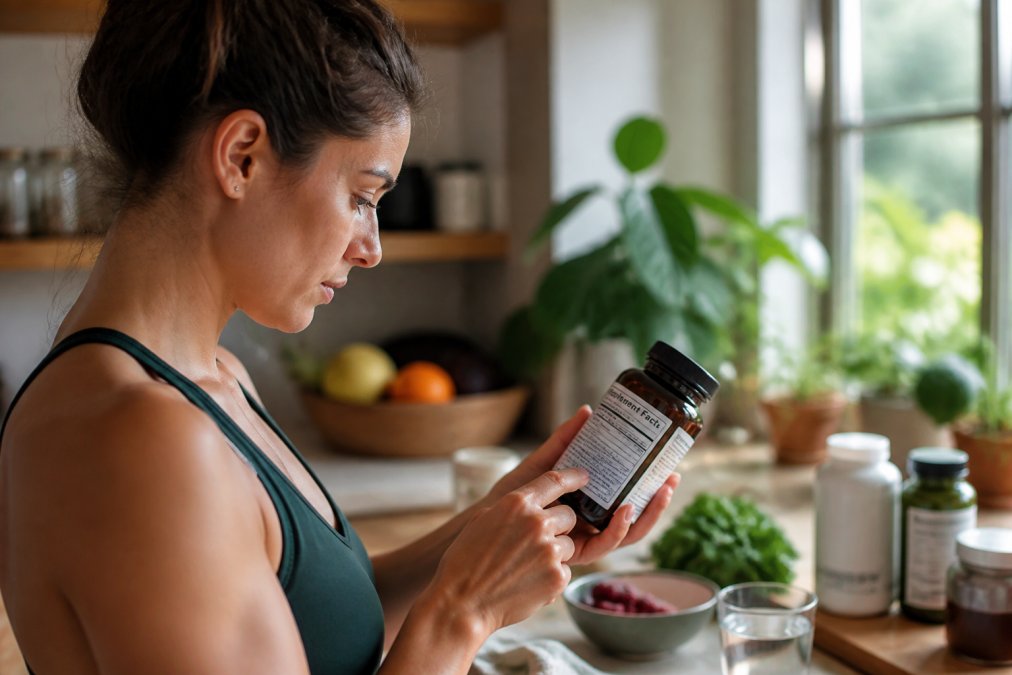
Reading a supplement label is a skill, and it starts with ignoring the front of the bottle. The marketing panel is designed to sell. The supplement facts panel and ingredient list are where the truth lives.
The organic claim hierarchy
The word "organic" on a supplement bottle means different things depending on which phrase appears, and the difference is not cosmetic.
- "100% Organic", every ingredient except water and salt is certified organic. This is the strongest claim.
- "Organic", at least 95% of ingredients by weight are certified organic, with strict limits on the remaining 5%.
- "Made with organic ingredients", at least 70% of ingredients are certified organic. The remaining 30% can be conventional, and the product cannot carry the USDA organic seal.
- "Contains organic ingredients", less than 70% organic. This phrase is essentially marketing and carries no certification weight.
What to check, in order
- Serving size and servings per container: a "60 capsule" bottle at 2 capsules daily is a 30-day supply, not 60
- Supplement facts panel: does the dose match what studies use, or is it a token sprinkle?
- Ingredient forms: look for chelates, food-based vitamins, and named extracts
- "Proprietary blend": if amounts aren't listed, you can't judge the dose
- Certifications: NSF, USP, or the USDA organic seal, and note which one, because they verify different things
- Manufacturer and country: a named, traceable source beats a mystery
Certifications are not interchangeable
For readers who want a deeper reference, a book like A Woman's Guide to Vitamins, Herbs, and Supplements offers an A-to-Z format covering natural supplements for common health concerns, which helps you match a nutrient to a need before you buy.

Who Actually Benefits From Organic Supplements
Organic supplements deliver the most value for specific groups, not everyone. If you fall into one of these categories, the premium is easier to justify.
- People with sensitivities: those who react to pesticide residue or synthetic additives often tolerate organic formulas better
- Daily, long-term users: the more often you take a supplement, the more cumulative exposure to trace contaminants matters
- Athletes and heavy trainers: serious training demands verified purity, which is why third-party tested organic options matter for performance supplements
- Anyone prioritizing whole-food sourcing: if your diet philosophy centers on whole-food sources, organic supplements align with that approach
Conclusion
The organic premium is worth it when the nutrient, the form, and your own use pattern line up, and wasted when you're paying extra for an isolated vitamin that's chemically identical to the cheap version. Spend your organic budget on botanicals and whole-food formulas, demand third-party testing on everything, and read the supplement facts panel before the marketing copy.
Frequently Asked Questions
What does the 'organic' label actually mean for dietary supplements?
The USDA organic certification for supplements means ingredients were grown without synthetic pesticides or fertilizers and processed without certain prohibited substances. However, the FDA does not approve supplements before they hit shelves, so the organic seal speaks to farming and processing methods, not to whether a product works or is safe for you. A certified organic supplement can still contain fillers or deliver a dose too low to matter.
Are organic vitamins more bioavailable than synthetic versions?
Not automatically. Bioavailability depends on the form of the nutrient and how it is delivered, not just whether it is labeled organic. Some synthetic forms, like certain B vitamins, absorb well and are backed by clinical trials. Some food-based vitamins include cofactors that may improve absorption. The label alone does not tell you which is which, so check for specific forms on the ingredient list and look for supplement third-party testing results.
How does the FDA regulate organic claims on supplement labels?
The FDA regulates supplement labeling and good manufacturing practices, but it does not certify organic claims. Organic certification falls under the USDA National Organic Program. A product can carry the USDA organic seal only if it meets that program's standards. The FDA can act after a product is on the market if it is adulterated or mislabeled, but there is no pre-market approval step for dietary supplements.
Is there a difference between 'natural' and 'organic' supplements?
'Natural' has no legal definition for supplements, so any brand can print it on a label. 'Organic' is a certified term tied to USDA standards and requires inspection. If a label says natural, treat it as marketing until you see third-party testing or a certification. If it says organic, verify the certifier. That distinction alone can tell you whether the premium price reflects a real production standard or just packaging.
Deciding what's actually worth the premium shouldn't require a chemistry degree. JordanWellnessCo curates supplements, fitness gear, and self-care essentials so you can build a routine that holds together, from the Complete Multivitamin to the Organic Herbal Wellness Formula and the Botanical Wellness Capsules. Everything you need to feel your best, in one supportive place. Shop now and build a routine you can trust.


