

Table of Contents
- Why Hexane Free Castor Oil Is Worth the Extra Care
- What Hexane in Personal Care Products Means for Your Skin
- Cold Pressed Castor Oil Benefits You Can Actually Feel
- Our Pick: Organic Hexane-Free Castor Oil by JordanWellnessCo
- How to Use Castor Oil for Hair, Lashes, and Skin
- Packs, Bundles, and Pairings: Building a Routine
- How to Spot a Genuinely Hexane Free Castor Oil
- Conclusion
- Frequently Asked Questions
Last Updated: September 20, 2026
Why Hexane Free Castor Oil Is Worth the Extra Care
Hexane free castor oil is castor oil extracted without hexane, a petroleum-based solvent that conventional processors use because it pulls more oil out of the bean at a lower cost. The difference matters because trace solvent residue is the one thing you cannot see, smell, or taste in a bottle of oil.

This guide from JordanWellnessCo covers what the label actually promises, how cold pressed castor oil benefits compare with solvent-extracted versions, and how to use castor oil for hair, lashes, and skin without wasting money on a bottle that only looks clean.
Most people buy castor oil for one job: thicker hair, longer lashes, or softer skin. They rarely ask how the oil was pulled from the bean. That is the part worth slowing down for.
Cold pressing skips the solvent entirely. The beans are cleaned, then pressed mechanically, and the oil that comes out is unrefined and darker than the clear, odorless version on most drugstore shelves. You trade shelf appeal for a shorter ingredient list.
The FDA guidance on cosmetic ingredient labeling is clear that cosmetic products must list ingredients, but "hexane free" is a marketing claim rather than a regulated certification. That means the burden of proof falls on you, the buyer, not on a government stamp.
Below, we break down the eight things that separate a genuinely clean bottle from one that just says so on the front.
What Hexane in Personal Care Products Means for Your Skin
Hexane in personal care products is a residual solvent, not an active ingredient. It is used during extraction and then removed, but "removed" is a spectrum, not a switch.
The concern is not that a finished bottle contains a dangerous dose. It is that residual solvent testing is largely voluntary for cosmetic-grade oils, so the amount left behind depends on the processor's equipment and how carefully they purge it.
Here is what actually happens during solvent extraction:
- Castor beans are crushed and washed with a hexane bath
- The solvent dissolves the oil, separating it from the meal
- The mixture is heated so the hexane evaporates off
- The remaining oil is refined, bleached, and deodorized
That last step is why conventional castor oil looks so uniform. Refining strips color and scent along with anything else the heat and chemicals pull out.
Cold pressed oil skips steps two through four. Nothing is added, so nothing has to be removed. The oil keeps its natural color and its slightly nutty scent, which is a useful signal: if a bottle labeled hexane free is perfectly clear and odorless, ask why.
For anyone with reactive or sensitive skin, fewer processing steps usually means fewer variables to react to. That is not a guarantee of safety, just a shorter list of unknowns.
Cold Pressed Castor Oil Benefits You Can Actually Feel
Cold pressed castor oil benefits start with what stays in the bottle. Because the oil is unrefined, it retains more of its natural fatty acid profile, particularly ricinoleic acid, the compound that gives castor oil its thick, almost syrupy texture.
That thickness is the whole point. Ricinoleic acid is what makes castor oil coat a hair strand or a patch of dry skin and stay there instead of running off.
Organic Hexane-Free Castor Oil →
Where people notice the difference first:
- Hair and scalp: a heavier oil that stays on the strand rather than soaking straight in
- Lashes and brows: a small amount goes a long way, so a bottle lasts months
- Dry skin: a rich occlusive layer that slows moisture loss on elbows, heels, and cuticles
- Castor oil packs: the traditional compress used over the abdomen, which needs an oil thick enough to saturate cloth without dripping
Our Pick: Organic Hexane-Free Castor Oil by JordanWellnessCo
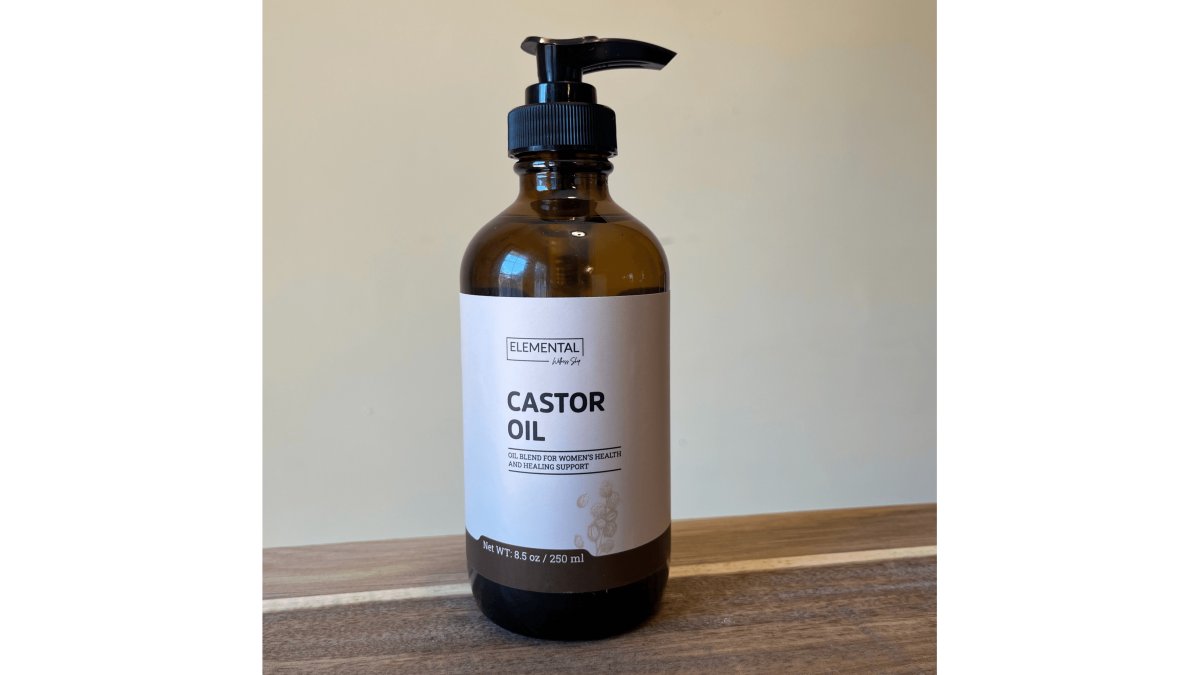
Our pick is the Organic Hexane-Free Castor Oil - Cold-Pressed & Therapeutic Grade at $14.99. It is unrefined, bottled to hold its natural potency, and labeled for exactly the three jobs most people buy castor oil for: packs, hair, and skin.
How to Use Castor Oil for Hair, Lashes, and Skin
How to use castor oil for hair comes down to three rules: apply to damp or dry hair, keep it off the roots unless your scalp is very dry, and give it time before you wash. The oil needs contact time to coat the strand.
Hair and scalp routine:
- Warm a small amount in your palms, roughly a teaspoon for shoulder-length hair
- Work it from mid-length to ends first, then massage any remainder into the scalp line
- Leave it in for at least 30 minutes, or overnight with a shower cap if your hair is coarse
- Wash with shampoo, lathering twice if needed to break the oil down
- Repeat once or twice a week, not daily
Lashes and brows:
Skin:
Packs, Bundles, and Pairings: Building a Routine
A single bottle of castor oil covers a lot of ground, but it does not cover everything, and pairing it well is what makes a routine stick. The mistake most people make is buying four products at once, using them for a week, and quitting.
| Goal | Product | Price | How It Fits |
|---|---|---|---|
| Hair thickness and breakage | CHEBE Hair Growth Thicker Bundle | $65.00 | Oil plus leave-in mask, used on wash days |
| Hormonal and lymphatic support | Women's Hormonal Wellness Trio | $147.00 | Drops, cleanse, and castor oil pack kit together |
| General hair, lash, and skin use | Organic Hexane-Free Castor Oil | $14.99 | Standalone, works with any existing routine |
How to Spot a Genuinely Hexane Free Castor Oil
Work through this checklist before you buy:

- "Cold pressed" or "expeller pressed" appears on the label, not just "pure" or "natural"
- "Unrefined" is stated, since refining is where solvent-extracted oil ends up
- The color is amber or pale yellow, not water-clear
- There is a faint natural scent, not a completely neutral one
- The ingredient list has one item: castor oil, ideally with the botanical name Ricinus communis
- Organic certification is named, with a certifier you can look up
- The bottle is dark glass or opaque, which protects an unrefined oil from light
- The seller answers questions about extraction without deflecting to "proprietary process"
One more thing worth knowing: castor oil is a thick, stable oil, so a bottle lasts a long time. Buying a larger size to save per-ounce is only a good deal if you will actually use it before it oxidizes. For most people, a smaller bottle used consistently beats a large one that goes rancid in the cabinet.
Conclusion
The hard part of buying castor oil is not finding a bottle. It is finding one where the extraction method, the color, and the ingredient list all agree with each other. Most labels ask you to take the front of the bottle on faith.
Frequently Asked Questions
What does hexane-free castor oil mean?
It means the oil was extracted without hexane, a petroleum-based solvent some manufacturers use to pull oil from castor beans quickly and cheaply. Hexane-free castor oil is typically obtained through cold pressing or expeller pressing instead, so no solvent residue is left behind. If you want a clean bottle, look for the words "hexane free" and "cold pressed" on the label, and check that the ingredient list shows only castor oil.
How can you verify if castor oil is hexane-free?
Start with the label: a trustworthy bottle states "hexane free" and "cold pressed" or "expeller pressed" directly. Next, check the ingredient list, which should read simply as castor oil with nothing else added. You can also look for a USDA organic seal, since organic certification restricts solvent-based extraction. If a brand is vague about its method, email the company and ask how the oil was extracted before you buy.
Is cold pressed castor oil always hexane-free?
Not automatically. Cold pressing uses mechanical pressure rather than chemical solvents, so a true cold-pressed oil should not involve hexane. The catch is labeling: some products say "cold pressed" loosely while still using a solvent at another stage. To be sure, look for a bottle that states both "cold pressed" and "hexane free," and confirm castor oil is the only ingredient listed.
What are the benefits of using hexane-free castor oil for hair growth?
Castor oil is rich in ricinoleic acid, a fatty acid that helps coat the hair shaft and scalp, which can reduce breakage and support a healthier environment for growth. Many people massage it into the scalp and along the edges two to three times a week, then leave it on for 30 minutes or overnight before washing. Results vary by person, and castor oil supports hair health rather than guaranteeing new growth.
Why is hexane used to extract castor oil in the first place?
Hexane is a solvent that dissolves oil out of castor beans efficiently, which lets manufacturers process large volumes quickly and at a lower cost than cold pressing. The trade-off is that trace solvent can remain in the finished oil unless it is thoroughly removed. Cold pressing avoids the solvent entirely, which is why hexane-free castor oil usually costs a little more per bottle.


