

Table of Contents
- Why Plant-Based Multivitamins Matter for Your Health
- Essential Nutrients for Plant-Based Diets
- Understanding Synthetic vs. Whole-Food Based Supplements
- How to Read Supplement Labels for Quality and Potency
- Third-Party Supplement Testing Standards to Trust
- Comparing Form Factors: Gummies, Capsules, Tablets, and Drink Mixes
- Key Selection Criteria for Your Plant-Based Multivitamin
- When to Consult with a Healthcare Professional
- Frequently Asked Questions
Last Updated: September 30, 2026
Why Plant-Based Multivitamins Matter for Your Health
A plant-based multivitamin fills nutritional gaps that plant-only diets often leave behind. This guide from JordanWellnessCo breaks down how to choose the best plant-based multivitamin for your specific needs.
Plant-based eating has real health benefits, but it creates real challenges. Your body still needs B12, iron, zinc, and omega-3s, nutrients harder to get from plants alone. A quality plant-based multivitamin bridges that gap without compromising your values.
The right supplement supports your energy, immune function, and long-term health. But not all plant-based multivitamins are equal, some contain poorly absorbed synthetic forms or lack key nutrients. Knowing what to look for is critical.
Essential Nutrients for Plant-Based Diets
Your body needs 13 vitamins and at least 15 minerals to function. Several key nutrients are either absent from plants or present in forms your body struggles to absorb.
Vitamin B12 exists naturally only in animal products and your body cannot make it or store large amounts. Without supplementation, plant-based eaters face deficiency within months or years. B12 supports nerve function, energy production, and DNA synthesis.
Iron in plants (non-heme iron) absorbs at only 2-20% efficiency, compared to 15-35% for heme iron from meat. You need more plant-based iron to meet your needs.
Zinc in plants is blocked by phytates and other compounds. Your body absorbs only 15-30% of the zinc from legumes, nuts, and seeds.
Omega-3 fatty acids (EPA and DHA) are found in fish. Plants contain ALA, which your body converts at only 5-10% efficiency. Many plant-based eaters remain deficient without supplementation.
Critical Micronutrient Deficiencies to Address
Plant-based eaters commonly fall short on calcium and vitamin D, which work together for bone health and immune response. Dosages vary widely across multivitamins.
Iodine supports thyroid function but appears in unpredictable amounts in sea vegetables. Most plant-based multivitamins include iodine from kelp or potassium iodide.
Selenium and copper support antioxidant defense and energy production. Supplementation ensures adequate intake.
Bioavailability: Why Nutrient Form Matters
Bioavailability means how much of a nutrient your body can actually absorb and use. The form matters enormously.
Cyanocobalamin is the most common B12 form but requires conversion to the active form. Methylcobalamin is the active form your body uses immediately, delivering better results.
Folic acid is synthetic and requires conversion, while methylfolate (L-5-methyltetrahydrofolate) is the active form your body uses immediately. Look for methylfolate in quality formulas.
Vitamin D3 comes from lanolin (sheep's wool) or algae. Algae-based D3 is plant-derived, making it suitable for strict plant-based diets. D2 (ergocalciferol) is plant-based but less bioavailable than D3.
Chelated minerals (bound to amino acids) absorb 30-50% better than oxides or carbonates. Look for selenium amino acid chelate, zinc picolinate, or copper gluconate.
Understanding Synthetic vs. Whole-Food Based Supplements
"Whole-food based" doesn't mean the supplement contains actual food, it means nutrients derived from food sources through extraction and concentration.
Synthetic vitamins are chemically identical to natural forms and processed the same way. They're consistent, stable, and affordable, but some people absorb them less efficiently, especially with digestive issues.
Whole-food concentrates start with real foods like spirulina and chlorella, containing naturally occurring nutrients plus cofactors that enhance absorption.
What matters most is the specific nutrient form and dosage, not the category label. A high-quality synthetic supplement often outperforms a poorly formulated whole-food product.
Whole-food based multivitamins often include beneficial botanicals like green tea extract (antioxidants), spirulina (trace minerals), and echinacea (immune support). These extras add value if core nutrients are solid.
JordanWellnessCo's Complete Multivitamin combines both approaches. It includes essential vitamins and minerals with a botanical blend featuring spirulina, green tea extract, and grape seed extract. This approach delivers core nutrition plus additional plant-based support in one convenient formula.

How to Read Supplement Labels for Quality and Potency
The supplement label tells you everything you need to know. Most people skip it. Don't.
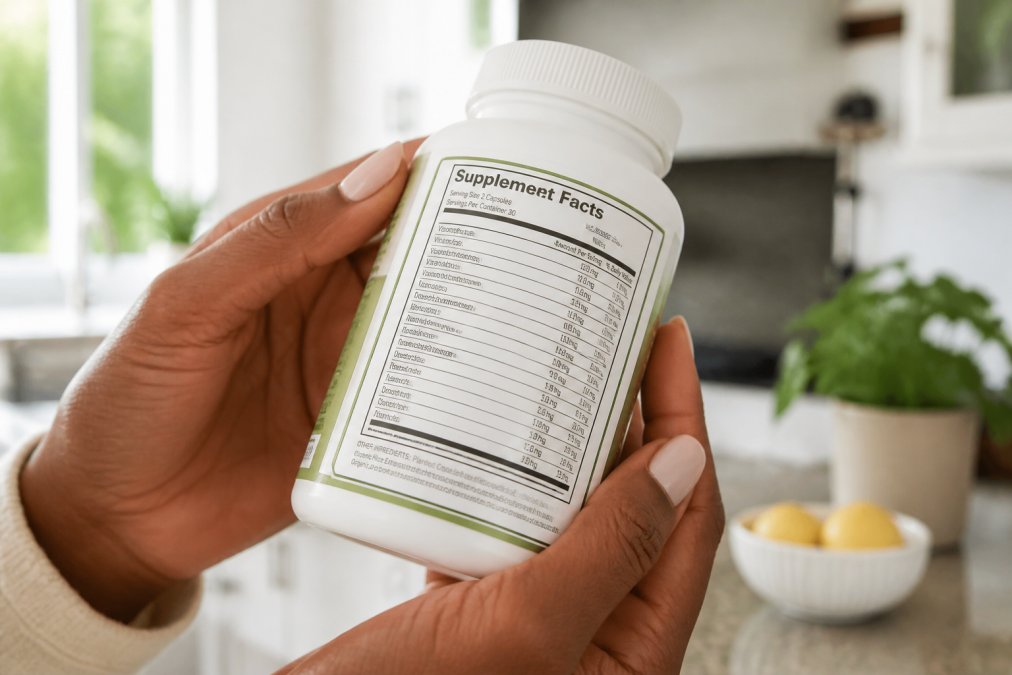
Start with the Supplement Facts panel, which lists every nutrient, the amount per serving, and the percentage of Daily Value (DV), the FDA-recommended daily intake. Higher isn't always better, but it matters for some nutrients.
Check serving size, many supplements require two capsules daily. If you take one instead of two, you get half the nutrients listed.
Check the ingredient list for every component in order by weight. If you see "proprietary blend" without individual amounts, skip it, you can't verify what you're getting.
The form of each nutrient appears in parentheses. "Vitamin B12 (as methylcobalamin)" indicates the active form. "Vitamin D (as cholecalciferol)" indicates D3, the most bioavailable form.
Other ingredients are binders, fillers, and capsule materials. Vegetable capsules suit plant-based diets. Fewer additives is generally better.
Identifying Third-Party Testing and Certification Marks
Look for these marks on the label:
USP (United States Pharmacopeia) is the gold standard, testing for potency, purity, and dissolution. The USP mark confirms the supplement contains what the label claims.
NSF Certified for Sport indicates the product is free from banned substances and contaminants.
ConsumerLab is an independent lab that tests supplements and publishes results publicly.
Third-party tested by [Lab Name], reputable labs include Eurofins, SGS, and Aemtek. You can verify results online.
Quality brands invest in third-party testing. Many plant-based multivitamins skip it to save costs.
Third-Party Supplement Testing Standards to Trust
Testing standards vary. Understanding them helps you evaluate quality claims.
cGMP (Current Good Manufacturing Practice) is the FDA baseline requiring manufacturers to test raw materials, maintain clean facilities, and verify finished products. Look for "made in a cGMP-compliant facility" on the label.
Third-party testing for potency verifies each nutrient is present in the claimed amount. Reputable labs test this.
Testing for contaminants checks for heavy metals, bacteria, and pesticide residues, especially important for plant-based ingredients like spirulina, which can accumulate heavy metals if grown in contaminated water.
WERCSmart Certification ensures formulation ingredients and consumer safety compliance, representing a safety commitment.
The strongest supplements combine cGMP manufacturing with third-party testing results you can see. Some brands publish lab reports online, this transparency is a green flag.
Comparing Form Factors: Gummies, Capsules, Tablets, and Drink Mixes
Form factor affects absorption, convenience, and compliance. Each has trade-offs.
Capsules are the standard, easy to swallow, stable for years, and protective of nutrients. Two capsules daily is typical. Downsides: some struggle with swallowing pills, and they require water.
JordanWellnessCo's Complete Multivitamin uses capsules, delivering a full spectrum of vitamins, minerals, and botanicals with higher nutrient concentrations than gummies.
Gummies taste good and don't require water, but have real limitations: higher sugar content, lower nutrient density, and poor compatibility with essential nutrients like B12 and iron.
Absorption and Convenience Trade-Offs
Capsules maximize absorption by protecting nutrients until they reach your digestive system. Gummies begin breaking down in your mouth, reducing bioavailability for some nutrients.
Key Selection Criteria for Your Plant-Based Multivitamin
Five factors separate good plant-based multivitamins from mediocre ones.
First, check nutrient forms. Methylcobalamin, methylfolate, D3 (from algae), and chelated minerals deliver better results than their alternatives.
| Selection Criteria | What to Look For | Why It Matters |
|---|---|---|
| Nutrient Forms | Methylcobalamin, methylfolate, D3, chelated minerals | Better absorption in your body |
| Dosages | Check DV percentages for each nutrient | Ensures adequate intake |
| Third-Party Testing | USP, NSF, or ConsumerLab mark | Verifies contents match label claims |
| Allergen-Free | Free from common allergens if labeled | Prevents adverse reactions |
| Botanical Blend | Spirulina, green tea, echinacea | Adds antioxidant support |
Allergen-Free and Clean Label Standards
Common allergens in supplements include soy, tree nuts, and sesame. Check the ingredient list carefully if you have sensitivities.
Interactions with Common Medications
Supplements can interact with medications. This isn't reason to avoid them, but you need to know the risks.
Sustainability and Packaging Transparency
Glass bottles are recyclable and protect nutrients better than plastic, though they're heavier to ship.
When to Consult with a Healthcare Professional
A plant-based multivitamin is preventive nutrition, not treatment. But certain situations warrant professional guidance.
Frequently Asked Questions
What makes a plant-based multivitamin different from a regular multivitamin?
Plant-based multivitamins derive their nutrients from plant sources rather than synthetic chemicals or animal products. They often use forms like methylcobalamin (B12 from algae) instead of cyanocobalamin, and may include whole-food concentrates like spirulina and botanical extracts. The bioavailability and nutrient absorption can differ depending on the specific forms used and how well your body processes plant-derived nutrients compared to synthetic versions.
How do I know if a plant-based multivitamin has good bioavailability?
Check the supplement label for the specific forms of nutrients listed. Look for chelated minerals (like selenium amino acid chelate or manganese amino acid chelate) and active B-vitamin forms like methylcobalamin and L-5-methyltetrahydrofolate, which typically have higher bioavailability. Third-party testing certifications from organizations that verify absorption rates can also indicate quality. Reading the ingredient list carefully helps you understand whether you're getting bio-active forms designed for better nutrient absorption.
What nutrients are most commonly deficient in plant-based diets?
Vitamin B12, iron, zinc, calcium, omega-3 fatty acids, and vitamin D are the primary nutrients of concern for plant-based eaters. B12 is critical because it's naturally found mainly in animal products. Iron from plant sources (non-heme iron) is less readily absorbed than iron from meat. A quality plant-based multivitamin should address these gaps with adequate dosages and forms that support optimal nutrient absorption.
Are plant-based multivitamins third-party tested, and why does that matter?
Quality plant-based multivitamins should carry third-party testing certifications from organizations like NSF International, USP, or ConsumerLab. Third-party testing verifies that the product contains the nutrients listed on the label in the stated amounts, and confirms it's free from contaminants and heavy metals. This testing standard protects you from mislabeled products and ensures the supplement actually delivers what it promises, which is especially important for plant-based formulas where nutrient forms vary widely.


