

Last Updated: November 7, 2026
Quick Summary
Herbal tea supports digestive health best when the blend matches your specific symptom, since peppermint calms cramping, ginger settles nausea, and fennel targets gas and bloating. Steep peppermint 5 to 7 minutes covered, simmer fresh ginger about 10 minutes, and crush fennel seeds before steeping 5 to 7 minutes.
- Peppermint can relax the valve at the top of the stomach, so skip it if you have active reflux or a hiatal hernia.
- Use one tea bag or about 1 teaspoon of dried peppermint leaf per 8-ounce cup and avoid steeping beyond 7 minutes.
- For constipation, steep 1 to 2 teaspoons of dried dandelion root in 8 ounces of water for 10 to 15 minutes.
- The home recipe simmers ginger and fennel for 8 minutes, then adds mint off the heat for 3 more minutes.
- See a doctor for severe or persistent abdominal pain, blood in the stool, or unexplained weight loss.
Table of Contents
- How Herbal Tea Supports Digestive Health
- Herbal Tea for Bloating and Gas Relief
- Peppermint Tea for Digestion: What the Evidence Shows
- Ginger, Chamomile, and Fennel: Three Teas for Stomach Discomfort
- Tea for Digestion and Constipation: What to Steep
- A Simple Gut Health Tea Recipe You Can Make at Home
- Safety, Interactions, and When to See a Doctor
- Choosing Your First Digestive Tea Blend
- Frequently Asked Questions
How Herbal Tea Supports Digestive Health
Herbal tea for digestive health is a low-cost way to support comfortable digestion between meals, and it works best when the blend matches your specific symptom. Many people expect one "digestive tea" to fix everything. It won't. Peppermint calms one thing, ginger settles another, and fennel targets a third.
Here is the distinction most guides skip: herbal infusions are not caffeinated teas. A true herbal tea is a water infusion of leaves, roots, seeds, or flowers, with no caffeine unless a tea leaf is blended in. That matters because caffeine can speed the gut up and worsen loose stools or urgency.
Hot water extracts aromatic oils and plant compounds from the herbs steeped in it. None of this replaces medical care for a real problem.
What you steep, how strong you make it, and when you drink it change the result more than the brand. Below, we break down each tea by symptom, show you how to prepare it, and flag the safety issues that matter.
Herbal Tea for Bloating and Gas Relief
Fennel seed and peppermint are two commonly chosen herbs for those looking for a starting point. Both are easy to find in a plain, single-ingredient form.
Fennel and peppermint are two commonly used herbs, and peppermint can relax the valve at the top of the stomach, which some people with reflux notice as heartburn.
A few practical points we would give a friend:
- Steep fennel seed crushed, not whole, to help the flavor release.
- Drink it warm and slowly, and keep the cup small.
If bloating comes with weight loss, blood in the stool, or pain that wakes you at night, see a doctor. Many people enjoy a simple fennel or peppermint cup after meals.
Peppermint Tea for Digestion: What the Evidence Shows
Peppermint is a widely discussed herb, and research on it is most often about peppermint oil rather than tea.
Here is how we would grade the evidence, from strongest to weakest:
Peppermint can relax the lower esophageal sphincter in some people, which is why it may not suit those with active reflux or a hiatal hernia.
How we would use it in practice:
- One tea bag or about 1 teaspoon of dried leaf per 8-ounce cup, steeped covered for 5 to 7 minutes.
- Drinking it after meals is a common approach.
- Keep it to a cup or two at a time and see how your body responds over one to two weeks before making it a habit.
- Skip it if you have active reflux, a hiatal hernia, or gallbladder disease you are treating without medical advice.
Watch out: steeping much longer than 7 minutes can make the cup taste bitter.
If you are comparing peppermint with other options, our symptom-by-symptom guide below shows where it fits alongside ginger, chamomile, and fennel.
Ginger, Chamomile, and Fennel: Three Teas for Stomach Discomfort
Three teas cover most everyday stomach discomfort, and each one has a different job. Ginger is often associated with nausea. Chamomile is often associated with relaxation. Fennel is often associated with gas and fullness.
Ginger is a popular choice for those who enjoy its spicy flavor. Fresh root simmered for 10 minutes makes a stronger cup than a tea bag, and a slice of lemon cuts the heat.
Chamomile is a caffeine-free herb that many people enjoy in the evening. It pairs well with lavender for a relaxing cup.
Fennel we covered above. Crush the seeds, steep 5 to 7 minutes, and enjoy it after a meal.
If you want to add a bitter element to prompt digestion before eating, digestive bitters are a common complement to these teas.

| Tea | Best For | Steep Time | Main Caution |
|---|---|---|---|
| Peppermint | Cramping, IBS-type spasms | 5-7 min, covered | Can worsen reflux |
| Ginger | Nausea, slow emptying | 10 min if fresh | Blood thinner interactions |
| Chamomile | Stress-related upset | 5-10 min | Ragweed allergy |
| Fennel | Gas, fullness, bloating | 5-7 min, crushed | Avoid in pregnancy at high doses |
Steep Times for Digestive Teas
Tea for Digestion and Constipation: What to Steep
Some people look for teas to support regularity, and these are often different from teas chosen for gas or bloating. The most useful options are gentle and fiber-based, not daily stimulant laxatives, and how you prepare and time them matters as much as which herb you choose.
Dandelion root is a commonly used herb. Steep 1 to 2 teaspoons of dried root in 8 ounces of water for 10 to 15 minutes for a bitter, earthy cup.
Slippery elm bark has a soft, mucilaginous texture. Stir about 1 teaspoon of powdered bark into warm water and drink it with a full glass of water. Check with a pharmacist about timing if you take other medications.
If a blend contains senna, follow the label and consult a healthcare professional before use, as it is not intended for daily use.
For a ready-made herbal option, our Prickly Pear Raspberry Detox Tea combines prickly pear, raspberry, and a herbal blend.

Watch out: if constipation is new, severe, or comes with blood in the stool, unexplained weight loss, or pain that wakes you at night, tea is not the answer and you should see a clinician.
A Simple Gut Health Tea Recipe You Can Make at Home
This herbal tea recipe takes about 15 minutes and uses ingredients you can find in most grocery stores. You can adjust it to your taste.
What you need:
- 1 teaspoon fresh ginger, thinly sliced
- 1/2 teaspoon fennel seeds, lightly crushed
- 5 to 6 fresh mint leaves, or 1 teaspoon dried peppermint
- 8 ounces filtered water
- Optional: a squeeze of lemon or a teaspoon of honey
Steps:
- Bring the water to a gentle boil, then add the ginger and fennel.
- Reduce to a simmer for 8 minutes, covered.
- Turn off the heat, add the mint, and steep covered for 3 more minutes.
- Strain into a mug and add lemon or honey if you like.
- Sip slowly after your largest meal of the day.
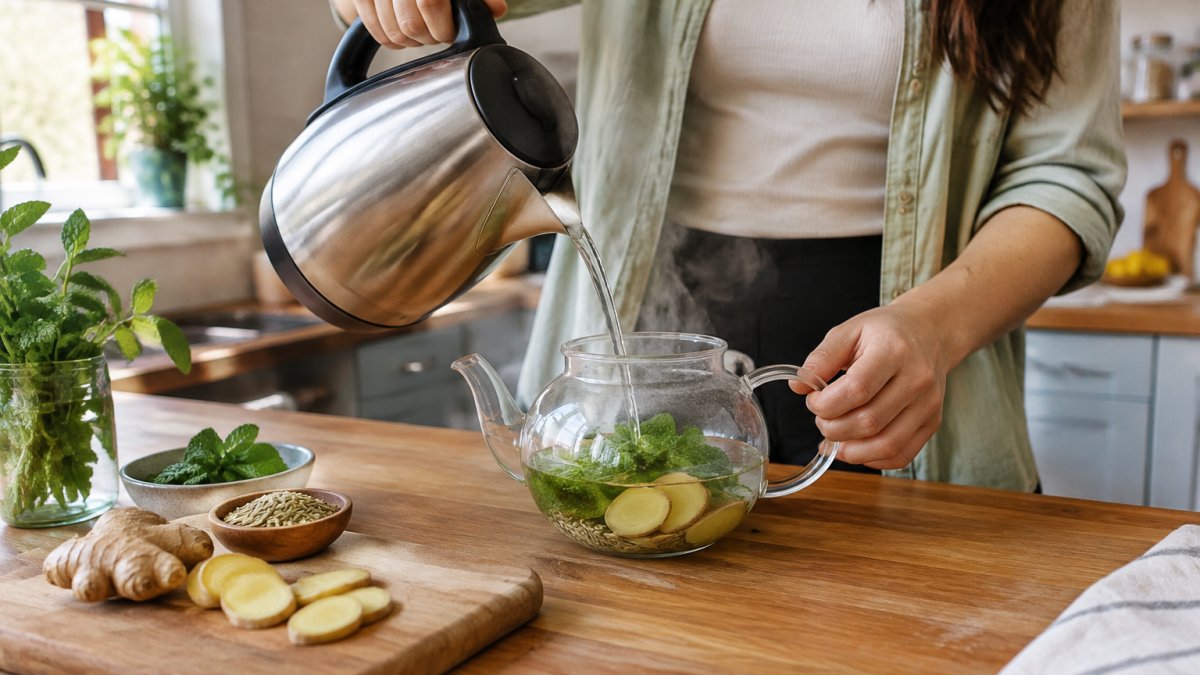
Watch out: steeping mint in hard boiling water for too long turns the cup bitter and drives off the oils you actually want. Add it at the end.
If you want to go beyond tea into a broader routine, our daily guide to improving gut health naturally covers food, fiber, and habit changes that work alongside a nightly cup.
Safety, Interactions, and When to See a Doctor
Herbal does not mean risk-free, and the interactions that matter most are the ones people never check. Before making any tea a daily habit, run it past a pharmacist if you take medication, are pregnant, or manage a chronic condition.
The specific concerns worth knowing:
See a doctor rather than self-treating if you have abdominal pain that is severe or persistent, unexplained weight loss, blood in the stool, fever, difficulty swallowing, or symptoms that wake you at night. This article is general information, not individual medical advice, and a qualified professional should guide any treatment decision.
Choosing Your First Digestive Tea Blend
Consider starting with one herbal tea before buying several blends.
Our advice for a first pick:
- Bloating and gas: a plain fennel or peppermint blend.
- Nausea or slow digestion: ginger, fresh if possible.
- Stress-related upset: chamomile, especially in the evening.
- Constipation: a gentle dandelion or slippery elm blend, with plenty of water.
For a caffeine-free option, Moonbeam Herbal Tea blends lavender, chamomile, and oatstraw.

Check the label for two things: whether the blend contains senna, and whether it hides caffeine from green or oolong tea. A digestive tea you drink at night should not keep you up.
JordanWellnessCo offers a curated selection of herbal teas and wellness essentials in one place, so you can explore a few options and find what suits your routine. Our selection includes caffeine-free options and herbal blends. Shop now at JordanWellnessCo.
Frequently Asked Questions
What is the best herbal tea for digestion?
There is no single best option because each herb targets a different symptom. Peppermint, ginger, chamomile, and fennel are herbs that many people enjoy after meals. A blend that combines two or three of these herbs covers more ground than any single tea. Start with one herb and note how you feel over time.
Should I drink herbal tea if I have diarrhea?
If you have diarrhea, consult a healthcare professional before choosing an herbal tea. If symptoms persist, or come with fever or blood, contact a doctor.
What tea is good for digestion and constipation?
If you are looking at teas for regularity, read the ingredient list and consult a healthcare professional before use.
Is herbal tea good to drink at night for digestion?
Yes, provided you choose a caffeine-free blend. Chamomile, peppermint, and fennel are caffeine-free herbs many people enjoy in the evening. Avoid caffeinated blends such as green tea in the afternoon or evening if you are sensitive to caffeine.
What herbs may support gut health?
Peppermint, ginger, chamomile, fennel, dandelion root, and cardamom are the herbs most often cited for digestive support. These herbs are commonly used in herbal teas. They are not a substitute for medical treatment, so consult a healthcare professional about any digestive concerns.


