
Table of Contents
- Are Herbal Supplements for Menopause Worth It? The Honest Answer
- How We Evaluated Menopause Supplements That Actually Work
- Black Cohosh for Menopause: What the Evidence Actually Shows
- How Long Do Menopause Supplements Take to Work?
- Menopause Supplement Safety and Side Effects You Need to Know
- Herbal Supplements vs. Hormone Therapy and Non-Hormonal Treatments
- Product Quality, Regulation, and Label Verification
- Conclusion: Making Your Decision
- Frequently Asked Questions
Last Updated: October 6, 2026
Are Herbal Supplements for Menopause Worth It? The Honest Answer
Herbal supplements for menopause are worth considering for some women and a waste of money for others. The deciding factor isn't the herb itself but whether you've matched a specific supplement to a specific symptom and are willing to give it a fair trial.
The short answer: botanicals like black cohosh and red clover have real but modest evidence, mostly for hot flashes and night sweats, and carry fewer risks than many assume. The longer answer involves dose, quality, interactions, and time.
What This Review Covers
This guide evaluates herbal supplements for menopause by symptom, not hype: which botanicals have the strongest research support, how long they take to work, which side effects and drug interactions matter, how they compare to hormone therapy and non-hormonal prescriptions, and how to verify a bottle contains what its label claims.
We grade the evidence honestly. Some herbs have decades of study; others have almost none. Knowing the difference saves money and sometimes protects your health.
How We Evaluated Menopause Supplements That Actually Work
We built our evaluation around four criteria: evidence quality, symptom specificity, safety profile, and label transparency. A supplement that scores well on all four is worth a trial.
Here's the framework we use, and you can apply it to any product:
| Criterion | What We Look For | Red Flag |
|---|---|---|
| Evidence quality | Human trials, not just animal or lab studies | "Traditional use" as the only support |
| Symptom specificity | Clear target: hot flashes, sleep, mood, or cycle changes | Vague claims to "balance hormones" |
| Safety profile | Known interactions listed, contraindications stated | No warnings section at all |
| Label transparency | Standardized extract, amount per serving, third-party testing | Proprietary blends hiding doses |
A common mistake is buying a product because the front label says "menopause support" without checking whether the ingredients match your worst symptom. A hot flash formula won't fix low mood.

Black Cohosh for Menopause: What the Evidence Actually Shows
Black cohosh is the most studied herb for menopausal symptoms, and the one with the most mixed results. Some trials show meaningful reductions in hot flashes and night sweats; others show effects no better than placebo.
That inconsistency is the honest headline. Black cohosh appears to help some women, particularly with hot flashes, night sweats, and irritability, but the research doesn't support a blanket promise.
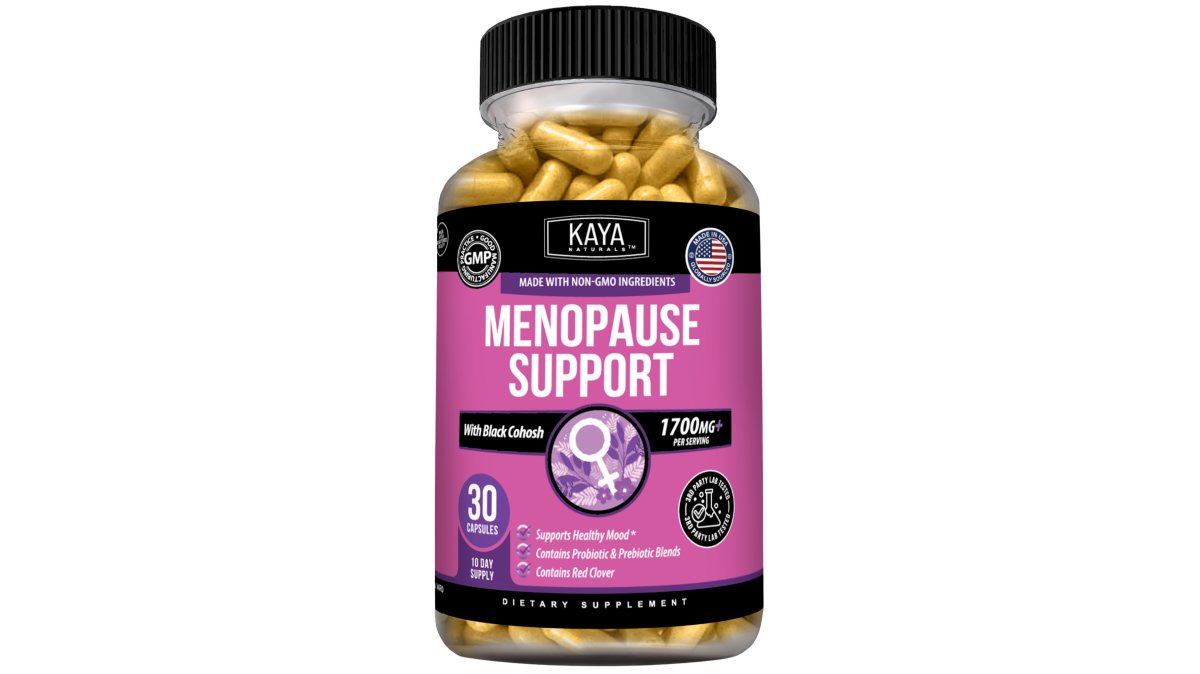
What most guides miss is that black cohosh is often blended with other botanicals rather than sold alone. Our Menopause Support: A Thoughtful Blend of Ingredients includes a blend of vitamins, probiotics, prebiotics, and herbal extracts, providing an all-encompassing approach to overall well-being.

Where black cohosh falls short: it isn't a fast fix, and it isn't proven for every symptom. If your main complaint is anxiety or low mood, other options deserve attention first.
How Long Do Menopause Supplements Take to Work?
Most menopause supplements take four to twelve weeks of consistent use before you can judge whether they're helping. That timeline is why so many women abandon a product after two weeks and conclude nothing works.
Botanical formulas that support hormone balance work gradually. Our Cycle Changes, Peri/Menopause tincture, for example, is labeled for regular use over two to six months, taken two to four times daily, a tonic approach of steady, cumulative support rather than an overnight switch.

A practical way to run your own trial:
- Pick one primary symptom to track, such as nighttime hot flashes per week
- Write down your baseline for two weeks before starting anything
- Take the supplement exactly as labeled, at the same times each day
- Log your symptom once daily, using the same scale
- Review at week six and again at week twelve
- Stop if there's no change and no trend toward improvement
If you can't tell whether something is working, you can't decide whether it's worth the money. Tracking turns a vague feeling into a decision.
Menopause Supplement Safety and Side Effects You Need to Know
Most herbal menopause supplements are well tolerated, but "natural" doesn't mean risk-free. The two issues that matter most are drug interactions and product quality, and the interaction picture is more specific than most guides admit.
The interaction problem, by herb
St. John's wort is the biggest concern.
Red clover contains isoflavones that behave weakly like estrogen.
Black cohosh has been linked in rare case reports to liver injury, and the NCCIH safety information on black cohosh advises caution for anyone with liver disease.
Menopause Support: - A Thoughtful Blend of Ingredients by Bellawell →
Dong quai and wild yam appear in many blends. Dong quai contains coumarin-like compounds that may increase bleeding risk, especially with anticoagulants or before surgery.
Evening primrose oil is generally well tolerated but can lower the seizure threshold, which matters if you take anticonvulsants, and may interact with blood thinners.
Side effects to expect
Common side effects include digestive upset, headache, and occasional dizziness. Most settle within the first week or two; if they don't, stop rather than push through.
What to do before you start
Bring the actual bottles to your appointment and ask about interactions with everything you take, prescriptions, over-the-counter medicines, and other supplements. If you have a history of liver disease, breast cancer, a hormone-sensitive condition, a bleeding disorder, or take an anticoagulant or antidepressant, get individual guidance first. If you're scheduled for surgery, stop most herbal supplements at least two weeks beforehand unless your surgeon says otherwise.
Herbal Supplements vs. Hormone Therapy and Non-Hormonal Treatments
Herbal supplements sit in the middle of a spectrum: gentler than prescription hormone therapy and more targeted than lifestyle changes alone, but less powerful than either prescription option.
Hormone therapy remains the most effective treatment for moderate to severe hot flashes and night sweats, requiring a prescription and ongoing medical supervision.
Where botanicals fit:
| Approach | Typical Role | Supervision Needed | Best For |
|---|---|---|---|
| Herbal supplements | Gentle, gradual support | Check interactions with a clinician | Mild symptoms, or those who prefer to avoid hormones |
| Hormone therapy | Most effective for hot flashes | Prescription and monitoring | Moderate to severe symptoms |
| Non-hormonal prescription | Alternative when hormones aren't suitable | Prescription | Women who can't use hormones |
| Lifestyle changes | Foundation for everything else | None | Everyone, at every stage |
Our Hot Flash Tamer, Daily Regulator is built around this gentler role, combining vitex berry and other botanicals in a tincture taken two to four times daily when hot flashes become regular.
The honest framing: if your symptoms are wrecking your sleep and your workday, talk to a clinician about prescription options first. Botanicals work best as a complement, not a replacement.
Product Quality, Regulation, and Label Verification
Dietary supplements are regulated as food, not drugs, so they don't need FDA approval before sale. That puts verification on you, and the gap between label claims and bottle contents is wider than most shoppers realize.
The FDA's consumer guidance on dietary supplements explains that manufacturers are responsible for the safety and labeling of their products, but the agency doesn't review them for effectiveness beforehand. The FDA has issued warning letters and recalls over the years for supplements containing undeclared pharmaceuticals, heavy metals, or ingredients not listed on the label.
What actually goes wrong
- Underdosing. A product lists an herb but contains far less than the label states, or none at all.
- Adulteration. Undeclared prescription drugs or synthetic compounds are added to make a product "work."
- Contamination. Lead, arsenic, cadmium, or mercury show up in some imported botanical powders.
- Misidentification. A different plant species is substituted for the one on the label.
- Proprietary blends. The label hides individual doses behind a single number, so you can't tell whether the active herb is present in a meaningful amount.
How to verify before you buy
- Does the label list a specific amount per serving for each ingredient?
- Is the herb listed as a standardized extract with a percentage, such as "black cohosh extract standardized to 2.5% triterpene glycosides"?
- Does the company publish third-party test results or hold a quality certification from an independent program?
- Is there a clear warnings section covering pregnancy, nursing, and medication use?
- Does the product avoid vague "proprietary blend" language that hides doses?
- Can you find a lot number or a certificate of analysis on request?
The limits of certification
Third-party certifications reduce risk but don't eliminate it. A certification tells you a batch was tested against certain criteria at a point in time; it doesn't guarantee every future batch. Price is a weak proxy for quality, but suspiciously cheap products with long ingredient lists deserve scrutiny, as do products making sweeping claims. Any supplement promising to "cure" menopause symptoms is overreaching, because these products aren't intended to diagnose, treat, cure, or prevent any disease.
Conclusion: Making Your Decision
The real challenge with herbal supplements for menopause isn't finding a product, it's deciding whether a gradual, gentle approach fits your symptoms and patience. If your hot flashes are mild and you want to avoid hormones, a well-chosen botanical formula with a twelve-week tracking plan is a reasonable experiment.
At JordanWellnessCo, we stock formulas built for that middle path. Our Women's Health Tincture covers PMS through post-menopausal support, and our menopause range spans capsules, tinctures, and daily tonics so you can match the format to your routine. Shop now and build a plan you can actually measure.
Frequently Asked Questions
Is there a menopause supplement that actually works?
Some herbal supplements show modest benefit for specific symptoms. Black cohosh and red clover have the most research behind them for hot flashes, though results vary. A 2023 review found that many studies are small or short-term, making firm conclusions difficult. Track your symptoms for 8-12 weeks to see if a particular product helps you.
How long does it take for menopause supplements to work?
Most herbal supplements for menopause take 4-12 weeks of consistent use before you notice meaningful changes. Black cohosh may show effects in 4-8 weeks, while adaptogens like ashwagandha can take longer. Products labeled as tonics, such as Hot Flash Tamer, suggest taking them 2-4 times daily for as long as needed. Keep a symptom diary to track changes objectively, and talk to your healthcare provider if you see no improvement after 3 months.
Are herbal menopause supplements safe to take with medications?
Not always. St. John's wort interacts with antidepressants, birth control, and blood thinners. Black cohosh has been linked to rare liver issues, and red clover may interfere with hormone-sensitive conditions. Always check with your pharmacist or doctor before combining supplements with prescription medications. Bring your supplement bottles to your appointment so your provider can review all ingredients, including proprietary blends, for potential interactions.
What should I look for when choosing a menopause supplement?
Look for third-party testing seals like USP, NSF, or ConsumerLab, which verify ingredient amounts and purity. Check that the label lists specific herb amounts, not just a proprietary blend. Avoid products making cure-all claims. For hot flashes, options like Hot Flash Tamer ($21.59) list individual herbs with dosages. For daily support, Menopause Support by Bellawell ($34.99) includes vitamins, probiotics, and herbal extracts. Compare ingredient lists and choose based on your primary symptoms.
When should I talk to a healthcare professional about menopause symptoms?
Talk to your doctor if symptoms interfere with sleep, work, or daily life, or if you experience bleeding after menopause, chest pain, or severe mood changes. Also consult a professional before starting any herbal supplement, especially if you have liver disease, a history of hormone-sensitive cancer, or take prescription medications. A healthcare provider can help you weigh herbal options against hormone therapy and non-hormonal treatments based on your health history.


