
Last Updated: November 11, 2026
Quick Summary
Choose a yoga mat for sweaty hands by prioritizing wet grip over dry grip: pick a moisture-friendly material like polyurethane or cork, look for a fine dense texture that channels sweat away, and confirm the base stays stable on the floor. Test any mat with dry, damp, and saturated grip checks before the return window closes.
- Polyurethane is the top performer for wet grip because it absorbs moisture quickly and stays grippy.
- Cork gets grippier as it dampens, which suits hot yoga, though it is firm and less cushioned.
- For joint sensitivity, choose 6-7mm of thickness and keep a firm, high-density base.
- A yoga towel is the cheaper fix when your mat has good dry grip but poor wet grip.
- Press through the base of your fingers and spread them wide to widen contact area and reduce slipping.
Table of Contents
- Why Standard Yoga Mats Fail Sweaty Hands
- Yoga Mat Material for Grip: What Each Surface Does When You Sweat
- Textured Versus Smooth Surfaces and How Sweat Changes Traction
- Finding the Best Yoga Mat for Sweaty Hands and Feet
- Yoga Towel for Sweaty Hands: When a Towel Beats a New Mat
- How to Stop Hands From Slipping in Yoga: Technique and Testing Fixes
- Thickness, Cushioning, and Joint Comfort Without Losing Stability
- Cleaning, Odor, and Grip Over a Mat's Lifespan
- Frequently Asked Questions
Why Standard Yoga Mats Fail Sweaty Hands
Most yoga mats are built for dry skin. That single fact explains why your hands slide during the third round of downward-facing dog. A standard mat relies on friction between your palm and the surface. Once sweat pools, that friction drops and the mat stops helping you.
This guide covers how to choose a yoga mat for sweaty hands, from material choice to testing grip before you buy.
Sweat changes everything. Your palms release moisture, the mat surface can't absorb it, and a slippery film forms between skin and mat. The result: slipping, lost balance, and strain on your wrists.
Dry Grip Versus Wet Grip
Dry grip is how well your hands hold the mat when your skin is clean and dry. Wet grip is how well they hold once sweat is present. Most mats perform well dry and fail wet.
Wet grip depends on three things:
- Surface texture that channels moisture away
- Material that stays tacky when damp
- A base that doesn't slide on the floor
If you're new to building a practice setup, our beginner fitness gear guide covers the basics of what to buy first.
Yoga Mat Material for Grip: What Each Surface Does When You Sweat
Material decides wet grip more than any other factor. Each surface type behaves differently once sweat enters the picture.
Natural rubber is known for strong traction because it stays tacky. The trade-off: it's heavy and some people are sensitive to latex.
PVC is dense, closed-cell, and easy to wipe clean. Wet grip is moderate. Sweat sits on top rather than soaking in.
Polyurethane is the top performer for wet grip. It absorbs moisture quickly and stays grippy. It also wears faster and needs careful cleaning.
Cork gets grippier as it dampens, which suits hot yoga. It's firm and less cushioned.
Microfiber soaks up sweat like a towel. Grip improves once it's slightly damp.
| Material | Wet Grip | Sweat Handling | Best For |
|---|---|---|---|
| Natural rubber | Strong | Moderate | General practice |
| PVC | Moderate | Wipes clean | Home workouts |
| Polyurethane | Excellent | Absorbs fast | Hot yoga |
| Cork | Strong when damp | Surface dries fast | Heated classes |
| Microfiber | Good when damp | High absorption | Vinyasa flow |
Textured Versus Smooth Surfaces and How Sweat Changes Traction
Texture is the second lever. A textured surface gives sweat somewhere to go. A smooth surface lets it spread.
On a smooth mat, moisture forms a film across the whole palm. Your hand loses contact across a wide area. On a textured mat, raised patterns create small channels. Water moves off the contact points, and grip holds longer.
Texture has limits. Deep grooves trap sweat and grime, which means more cleaning. Very rough textures can irritate sensitive skin.
For hot yoga and high-sweat practice, look for a fine, dense texture rather than deep ridges. Fine texture manages moisture without shredding your palms.
Finding the Best Yoga Mat for Sweaty Hands and Feet
The best yoga mat for sweaty hands and feet combines a moisture-friendly material with a fine texture and a stable base. Match it to your sweat level and practice style, not to marketing claims.
Here's how we'd break it down.
| Your Situation | What to Choose |
|---|---|
| Light sweat, general practice | Natural rubber, medium texture |
| Heavy sweat, hot yoga | Polyurethane or cork |
| Home workouts, easy cleanup | Closed-cell PVC |
| Joint sensitivity | Thicker mat, 6-7mm |
| Budget-first | Microfiber with a towel |
A Decision Tree by Sweat Level and Practice Style
Start with sweat level. Then check your practice style.
- Light sweat, slow practice: natural rubber with medium texture.
- Moderate sweat, vinyasa flow: microfiber or polyurethane.
- Heavy sweat, heated room: cork or polyurethane, plus a towel.
- Sensitive joints: add thickness, but keep a firm base.
- Sensitive skin: avoid rough textures and strong rubber odor.
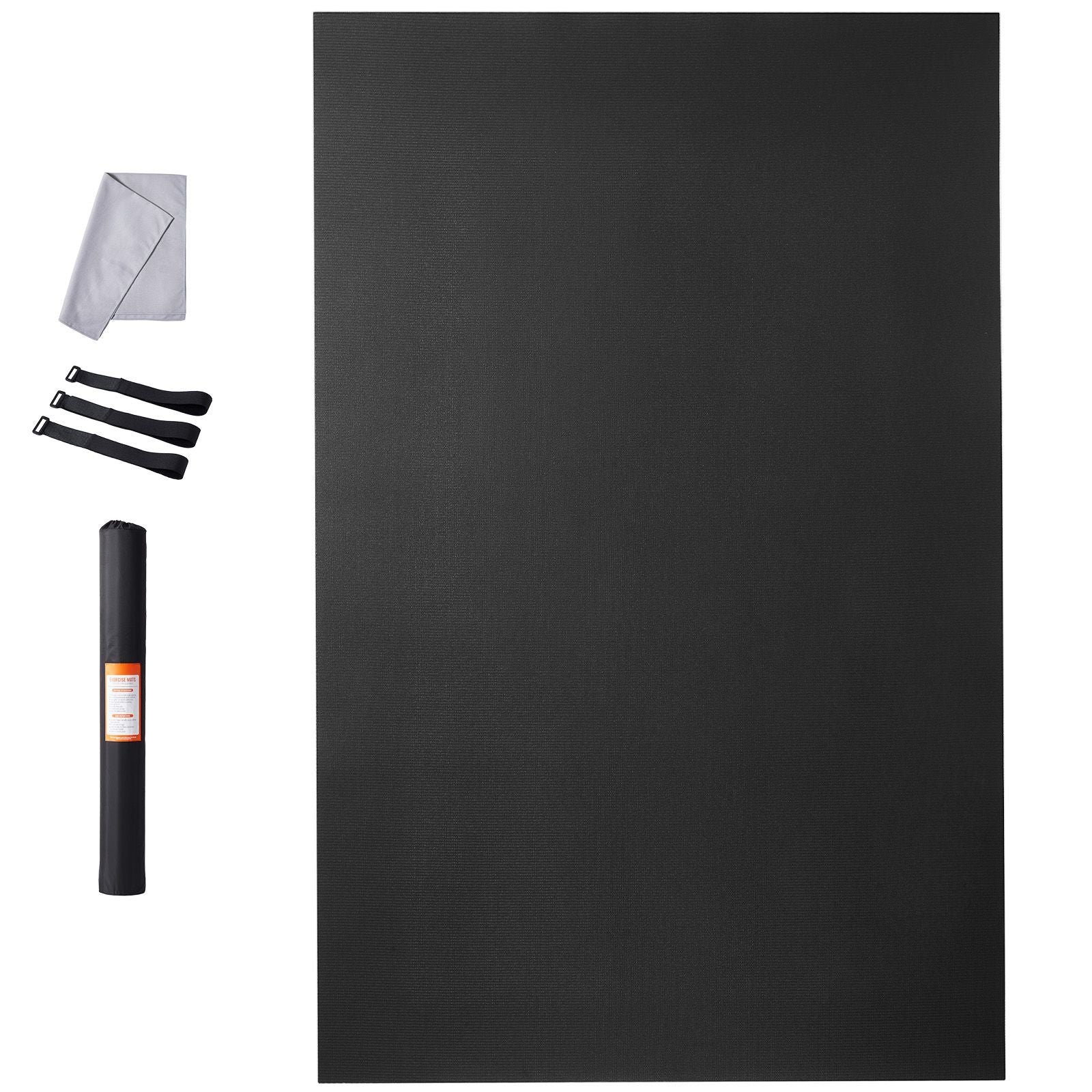
If you're ready to buy, our non-slip high-density exercise mat uses a dense circular texture on the base for grip stability and a 7mm surface for joint cushioning.
Yoga Towel for Sweaty Hands: When a Towel Beats a New Mat
A yoga towel is the cheaper fix when your mat is fine but your hands aren't. A towel placed over the mat absorbs sweat before it reaches the surface.
Towels win in three cases:
- Your mat has good dry grip but poor wet grip
- You sweat heavily only in heated classes
- You want to protect a mat you already like
Towels lose when they bunch up. A towel that slides is worse than a slippery mat.
Microfiber towels absorb the most moisture. Cotton towels feel softer but hold sweat closer to your skin.
How to Stop Hands From Slipping in Yoga: Technique and Testing Fixes
Technique fixes slipping before you spend money. Hand placement is the biggest one.
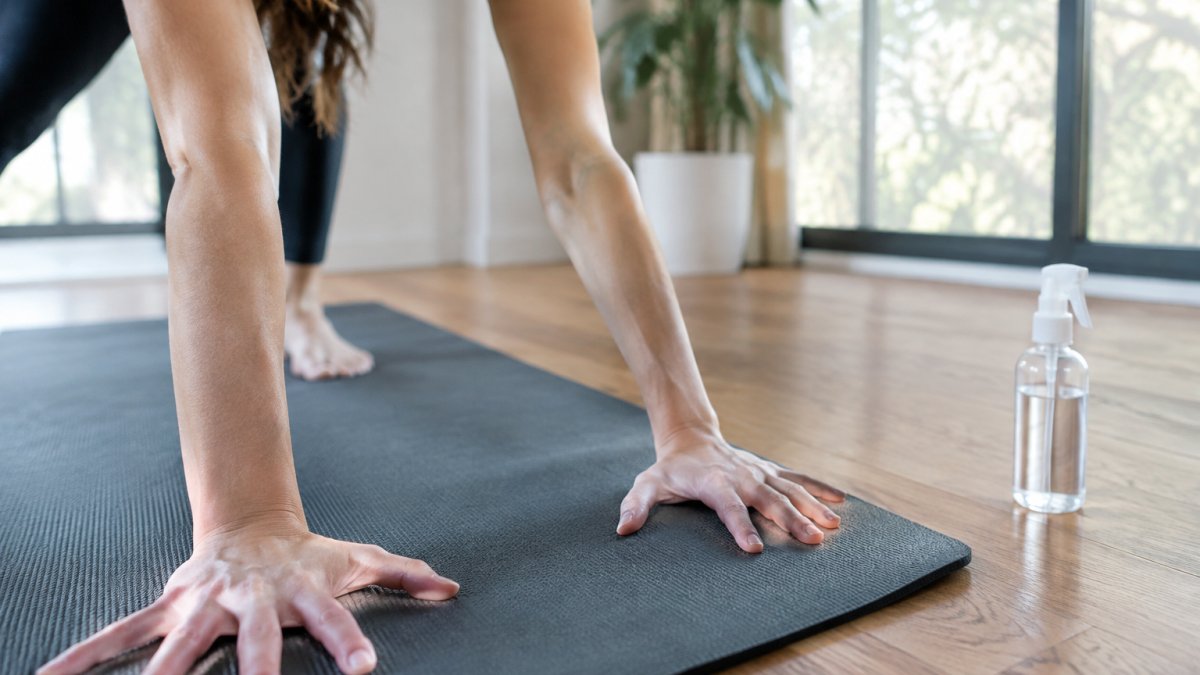
Press through the base of your fingers, not just the heel of your hand. Spreading your fingers widens contact area. Keep your palms dry by wiping them on a towel between poses. In downward-facing dog, shift weight toward the knuckles and the ball of the hand rather than dumping load into the wrist. In arm balances, dry the palms on your shorts or a hand towel before each attempt rather than readjusting mid-pose.
If you practice in a heated room, breathable apparel helps. Our breathable mesh yoga top is designed for moisture-friendly workouts.

How to Test Grip Before You Buy
Grip claims on product labels vary. A repeatable test can tell you more than a label alone.
The dry test. Place the mat on a hard floor.
The damp test. Spray a fine mist of water on a 6-inch square where your palm sits.
The saturated test. Spray the same area until water beads visibly, then press and twist again.
The floor-slide check. With the mat damp, stand on one end and push it sideways with your foot.
Interpreting manufacturer claims. "Non-slip" is not a regulated term and usually describes dry grip. "Moisture-wicking" describes absorption, not traction.
Testing at home before the return window closes. Buy from a retailer with a return policy, unroll the mat on a hard floor, and run all four checks within the first week. Do them in a heated room if you practice hot yoga. A mat that passes dry and damp but fails saturated is a towel-and-mat combination, not a standalone solution.
A mat that passes all four checks will hold up in a real class. A mat that fails the saturated test will fail you in week two.
Watch out: testing on carpet masks base slippage, so always run the floor-slide check on the surface you actually practice on.
Thickness, Cushioning, and Joint Comfort Without Losing Stability
Thicker isn't always better. Extra cushioning protects knees and wrists, but too much softness makes balance poses unstable.
Standard mats run about 3-5mm. For joint sensitivity, 6-7mm adds comfort without turning the mat into a sponge. Anything thicker starts to wobble underfoot.
Firmness matters more than thickness. A dense 6mm mat supports you better than a squishy 8mm one. Look for high-density construction.
If you're setting up a small space, our guide to space-saving home gym equipment pairs well with mat selection. And for joint recovery between sessions, these recovery tools for active adults support the same goal.
Cleaning, Odor, and Grip Over a Mat's Lifespan
Grip fades. That's normal, and it's fixable if you know what you're looking at.
Break-In by Material
Natural rubber typically needs a few sessions before the surface stops feeling powdery; the tack improves as the mold-release residue wears off. Polyurethane often feels grippier on day one and then stabilizes. Cork reaches full grip only after it has absorbed some moisture, so judge it after two or three sweaty sessions, not on the first unroll. Microfiber feels slick until it is slightly damp, which is normal, not a defect.
Signs Traction Is Gone Versus Dirty
A slick layer of sweat, body oil, and lotion residue is the most common cause of a mat that "stops working." Before you replace it, wash it and retest. If grip returns, the mat was dirty. If grip stays poor after a full wash and dry, the surface has worn smooth or the texture has flattened, and it is time to replace.
Watch out: cleaning with oil-based or high-fragrance sprays can leave a film that makes the mat slicker than the sweat did.
Cleaning by Surface Type
Open-cell mats (polyurethane, microfiber, cork) absorb sweat and need regular cleaning. Use a mild solution of water and a drop of dish soap, wipe with a damp cloth, and air dry fully out of direct sun. Never soak an open-cell mat; trapped moisture breeds odor and breaks down the bond between layers. Closed-cell mats (PVC, most natural rubber) wipe down easily but hold surface residue, so wipe after every sweaty session rather than weekly.
Odor Retention and Skin Sensitivity
Absorbent surfaces hold sweat deeper and can retain odor longer if not dried fully. Nonabsorbent surfaces stay fresher between washes but can trap residue on the surface. If you have sensitive skin, fine textures are gentler than deep grooves, and natural rubber can irritate people with latex sensitivity. Fragrance-free cleaners reduce irritation risk on open-cell mats.
Lifespan Expectations
With consistent cleaning and full drying, a well-made mat holds steady traction for years. Expect the surface texture to flatten gradually with heavy use, and expect the first sign of decline at the points where your hands and feet land most often. Rotating the mat end-to-end spreads wear and extends usable grip.
Sweaty hands don't have to end your practice. The right mat, a towel, and a few technique fixes solve most slipping problems. At JordanWellnessCo, we stock fitness gear that supports purposeful training, from non-slip mats to breathable apparel, all in one place. Get started with JordanWellnessCo and build a practice setup that holds its grip.
Frequently Asked Questions
What type of yoga mat is best for sweaty hands?
Open-cell surfaces that absorb moisture and keep traction when damp work best for sweaty hands. Natural rubber and polyurethane tops lead for wet grip, while microfiber performs well once slightly damp. Closed-cell PVC is durable and easy to clean but stays slick under heavy sweat. Match the surface to your sweat level: light sweaters can use a textured rubber mat, while hot yoga practitioners usually do better with polyurethane or a towel-topped setup.
Are rubber or polyurethane yoga mats better for grip?
Both hold well, but they behave differently. Natural rubber offers strong dry grip and good wet traction with a textured top, and it is durable over years of use. If odor and weight matter to you, rubber is heavier and can carry a latex smell at first.
Is a yoga towel better than a non-slip yoga mat for sweaty hands?
A yoga towel for sweaty hands is the cheaper fix if your current mat is otherwise fine. Towels add absorbent traction on top of any mat and are washable, which helps with hygiene. They can bunch during transitions, though, and they do not fix a mat that slides on the floor. A dedicated non-slip mat solves the problem at the source. Many practitioners use both: a grippy mat plus a towel for hot classes.
How do I clean a yoga mat without reducing its grip?
Wipe the mat with a mild soap and water solution, then wipe again with clean water and let it air dry fully before rolling. Clean after heavy sweat sessions to limit odor, and follow the care instructions that came with your mat.


