
Last Updated: November 6, 2026
Quick Summary
A natural bug repellent works by using plant oils that mask the scents mosquitoes follow, but results depend on the oil, the dose and frequent reapplication. Oil of lemon eucalyptus (PMD) is the strongest plant-based option, lasting about 2 hours, while citronella and lemongrass last about 1 hour. Dilute essential oils to 1-3% in a carrier oil and reapply on schedule.
- DEET remains the benchmark, offering several hours of protection versus 1-2 hours for most plant oils.
- For a 1 oz bottle, use about 6 drops for 1%, 12 drops for 2%, and 18 drops for 3% dilution.
- Never exceed a 3% dilution for adults, and cut it to about 1% for children over age two.
- Heat, sweat, swimming and wind shorten protection time, so reapply on the shorter end of the range.
- Skip citrus oils like lemon and bergamot in daytime blends because they increase sun sensitivity.
Table of Contents
- Natural Bug Repellent for Mosquitoes: What Actually Works
- Why Plant Oils Repel Mosquitoes at All
- Natural vs. DEET: An Honest Comparison
- Essential Oils That Repel Mosquitoes
- Natural Mosquito Repellent for Skin: Choosing a Safe Formula
- Natural Bug Repellent for Mosquitoes DIY: Recipes With Exact Ratios
- How Long Protection Lasts and When to Reapply
- How to Prevent Mosquito Bites Beyond Repellent
- Safety for Children, Pregnancy, Sensitive Skin, and Pets
- Choosing an EPA-Registered Repellent and What to Keep in Your Bag
- Frequently Asked Questions
Natural Bug Repellent for Mosquitoes: What Actually Works
Most natural bug repellent for mosquitoes fails for one simple reason: people pick a scent they like, splash it on once, and expect an all-day shield.
A common pattern is for someone to buy a citronella spray, use it once at dusk, and still get bitten. The product wasn't necessarily useless; the method often was.
Below, we break down which plant oils have real evidence behind them, how to mix your own blends with exact ratios, and how to build a repellent routine that holds up.
Why Plant Oils Repel Mosquitoes at All
Mosquitoes hunt by smell. They follow carbon dioxide, body heat, and the lactic acid on your skin toward a target.
Certain plant oils release strong vapors that mask those cues. The mosquito loses the scent trail and moves on.
The effect is real but short-lived. A plant oil creates a scent barrier, and once that barrier thins out, mosquitoes find you again.
Natural vs. DEET: An Honest Comparison
Here's the part most guides gloss over: DEET is still the benchmark. It's the most studied repellent on the market, and the EPA's repellent guidance confirms it as an effective, registered option.
Natural options can work well, but they usually need more frequent reapplication. The table below shows how the two stack up:
| Factor | Plant-Oil Repellents | DEET |
|---|---|---|
| Protection window | Short, often 1-2 hours | Longer, several hours |
| Reapplication | Frequent | Less frequent |
| Skin feel | Light oils, often gentler | Can feel strong or greasy |
| Best for | Short outdoor time, scent-sensitive users | Long exposure, heavy mosquito pressure |
Neither is "better" in every case. Match the tool to the trip.
Essential Oils That Repel Mosquitoes
Not all plant oils are equal. Some have decades of study behind them; others are folk remedies with thin evidence. Here are the ones worth your attention.
Oil of Lemon Eucalyptus: The Strongest Plant-Based Option
Oil of lemon eucalyptus is the standout. It's the plant-based ingredient with the most consistent evidence, and the CDC's repellent information lists its active component, PMD, as an effective option.
A few practical notes:
- It's not the same as lemon eucalyptus essential oil sold for diffusers.
- Look for the PMD-based product on the label.
- It tends to last longer than most other plant oils.
Where it falls short: it isn't ideal for very young children, so check age guidance on the label.
Citronella, Lemongrass, and Geranium
Citronella is the best-known name in natural repellents, and it does deter mosquitoes, though for a shorter window than PMD. Lemongrass carries similar compounds and works in much the same way.
Geranium oil rounds out this group. It's often blended with citronella to stretch protection.
These oils tend to evaporate quickly, so reapplication may be needed more often than with some longer-lasting options.
Peppermint, Clove, Thyme, and Cinnamon Oils
These stronger-smelling oils can deter mosquitoes, but they need care. Clove, thyme, and cinnamon oils are potent and can irritate skin when used undiluted.
- Peppermint: refreshing scent, mild deterrent effect
- Clove: strong, but must be heavily diluted
- Thyme: useful in blends, not solo
- Cinnamon: effective but a common irritant
If you enjoy working with plant oils, our guide to essential oils for morning focus shows how we think about diluting and blending them safely.
Natural Mosquito Repellent for Skin: Choosing a Safe Formula
A safe natural mosquito repellent for skin starts with dilution. Pure essential oils are far too concentrated to apply directly.
Follow these rules:
- Dilute essential oils in a carrier oil like fractionated coconut or jojoba.
- Patch-test on your inner arm first.
- Skip citrus oils on skin before sun exposure.
- Avoid the face, eyes, and broken skin.
If you're building a natural skincare routine, our safe natural skincare guide covers how to layer plant-based products without overloading your skin. And for picking quality ingredients, our steps to choose organic personal care walk through what to look for on a label.
Natural Bug Repellent for Mosquitoes DIY: Recipes With Exact Ratios
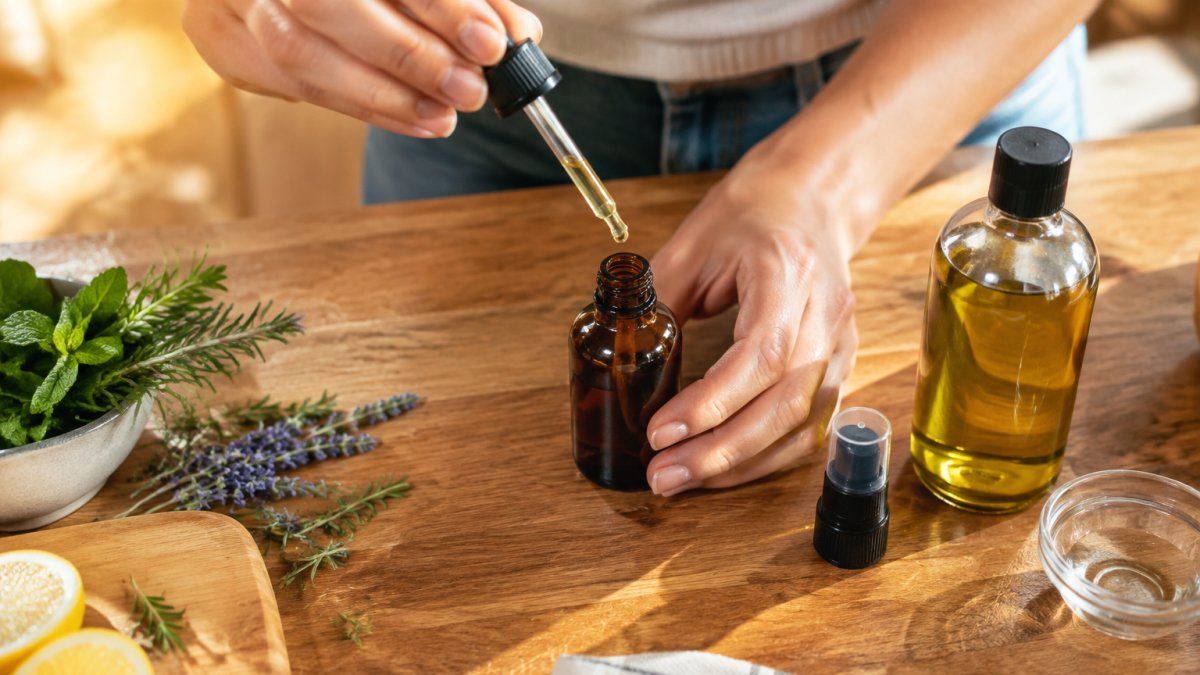
Most homemade repellent fails because the ratio is guessed. A drop of essential oil is roughly 0.05 ml, so the math is simple: 1 ml of essential oil per 100 ml of carrier is about a 1% dilution.
The Basic 2% Spray for Adult Skin
This is the workhorse blend for a backyard evening or a short hike. It lands at roughly 2% dilution, which most practitioners consider a reasonable balance of protection and skin comfort.
- 30 ml (1 oz) witch hazel or fractionated coconut oil
- 8 drops citronella oil
- 4 drops lemongrass oil
- 2 drops geranium oil
That is 14 drops total in 30 ml, or about 2.3%. Shake well before each use, spray on exposed skin, and reapply every 1 to 2 hours outdoors.
A 1% Balm for Sensitive Skin and Older Children
For skin that reacts easily, drop the concentration and use a solid base that releases vapor slowly.
- 15 g (0.5 oz) beeswax
- 30 ml (1 oz) carrier oil such as jojoba or sweet almond
- 6 drops oil of lemon eucalyptus (PMD-based)
Melt the beeswax with the carrier oil over low heat, remove from heat, stir in the oil of lemon eucalyptus, and pour into a small tin. Six drops in roughly 45 g of finished balm is about a 1% dilution.
A 3% Blend for Heavy Mosquito Pressure
When mosquitoes are thick and you are not staying out long, a stronger blend is reasonable for adults.
- 30 ml (1 oz) carrier oil
- 12 drops clove oil
- 6 drops peppermint oil
That is 18 drops in 30 ml, or about 3%. Clove and peppermint are potent, so patch-test first and keep the blend off the face.
Watch out: never exceed a 3% dilution for adults, and cut it to about 1% for children over age two.
How to Scale Any Recipe
Once you know the drop count per ounce, scaling is easy. For a 2 oz (60 ml) bottle at 2%, double the drops to about 24 total. For a 4 oz (120 ml) bottle at 1%, use about 24 drops. Write the concentration and date on the bottle, and make small batches, because plant oils lose potency over months.
How Long Protection Lasts and When to Reapply
Protection time depends on the oil, the heat, and how much you sweat. Actual duration varies widely, so check product labels and reapply as needed.
| Ingredient | Typical Protection | Reapply |
|---|---|---|
| Oil of lemon eucalyptus (PMD) | About 2 hours | Every 2 hours |
| Citronella | About 1 hour | Every hour |
| Lemongrass | About 1 hour | Every hour |
| Geranium | About 1 hour | Every hour |
| Clove or thyme blends | About 1 to 2 hours | Every 1 to 2 hours |
| Peppermint | Under 1 hour | Every 30 to 60 minutes |
What Shortens the Window
Heat and humidity speed evaporation, so a blend that lasts two hours on a cool morning may fade in half that time on a hot afternoon. Sweat physically carries oils off the skin, and swimming or heavy exercise removes them almost entirely. Wind also thins the vapor layer mosquitoes detect. On any of those days, reapply on the shorter end of the range.
What Lengthens It
Carrier oils and balms release vapor more slowly than alcohol sprays, so a balm at the same concentration often holds longer. Applying to dry skin, not sweaty skin, helps the blend stay put. Clothing treated with a registered repellent protects covered areas so you rely less on skin application.
Match the Repellent to the Outing
A one-hour garden session is fine with citronella or lemongrass. A two-hour hike calls for PMD. A long day with heavy mosquito pressure is the case where a registered product, natural or otherwise, earns its place. Reapply on schedule rather than waiting to feel a bite, because the first bite is proof the barrier has already thinned.
Typical protection time by repellent ingredient
How to Prevent Mosquito Bites Beyond Repellent
Repellent is one layer. Reducing exposure is the other.
To prevent mosquito bites, combine a few habits:
- Wear light, loose, long sleeves at dawn and dusk.
- Remove standing water from pots, gutters, and buckets.
- Use screens and fans; moving air disrupts weak fliers.
- Treat clothing with a registered repellent for high-risk areas.
Fewer mosquitoes nearby means less reliance on any spray.
Safety for Children, Pregnancy, Sensitive Skin, and Pets
Safety comes down to age, dilution, and testing.
- Children: use lower dilutions, avoid hands and faces, and check age limits on PMD products.
- Pregnancy: stick to well-diluted, registered options and ask your provider about ingredients.
- Sensitive skin: patch-test every new blend and start with a single oil.
- Pets: many essential oils are unsafe around cats and dogs, so keep human repellents away from them.
If your skin reacts easily, our guide to repairing your skin barrier naturally explains how to calm and protect sensitive skin between exposures.
For pets, use a product made for them. Our outdoor safety kit with pet sunscreen and flea, tick, and bug repellent is designed for pets, so keep it separate from human repellents.

Choosing an EPA-Registered Repellent and What to Keep in Your Bag
The safest shortcut is an EPA-registered product. The EPA's registered repellent list lets you confirm that a formula has been reviewed for safety and effectiveness.
For a day outdoors, pack:
- A registered repellent spray or balm
- A small bottle for reapplication
- Light long sleeves for dusk
- A pet-safe repellent if your dog joins you
Ready-made kits can save guesswork. Our outdoor safety kit bundles sun and bug protection for pets in one place.
Mosquito season rewards preparation, not luck. Build a blend or buy a registered product, reapply on schedule, and cut down the standing water around you.
Frequently Asked Questions
What natural bug repellent works best for mosquitoes?
Oil of lemon eucalyptus is one plant-based option often discussed, and some formulations are EPA-registered. Citronella, lemongrass, and geranium oils also show measurable repellent activity but usually for shorter windows. No natural bug repellent matches DEET for duration, so plan on reapplying more often, especially if you are sweating or outdoors for hours.
How can I make a natural bug repellent for mosquitoes DIY at home?
Combine about 10 to 15 drops of essential oil per 1 ounce (30 ml) of carrier oil such as fractionated coconut or jojoba, or per 1 ounce of a 50/50 water-and-witch-hazel base for a spray. Shake well before each use and patch-test on your inner arm first. Keep the batch small, store it away from heat and light, and label it with the date you made it.
Do essential oils repel mosquitoes, and how often should you reapply?
Yes, several essential oils that repel mosquitoes have measurable activity, including citronella, lemon eucalyptus, peppermint, and clove. Protection times vary by oil and formulation, and sweating or swimming can shorten them, so check product labels and reapply as needed. Reapply more frequently in high-bite areas rather than assuming a single application lasts an afternoon.
Is natural mosquito repellent for skin safe for children and pets?
Diluted plant oils are generally gentler than concentrated ones, but children and pets need extra care. Do not apply essential oils to infants, keep them away from the eyes and mouth, and patch-test first. Many essential oils are toxic to cats and dogs if ingested or applied to their skin, so use a pet-specific product for animals. Check with a pediatrician or veterinarian if you are unsure.


