
Last Updated: November 13, 2026
Quick Summary
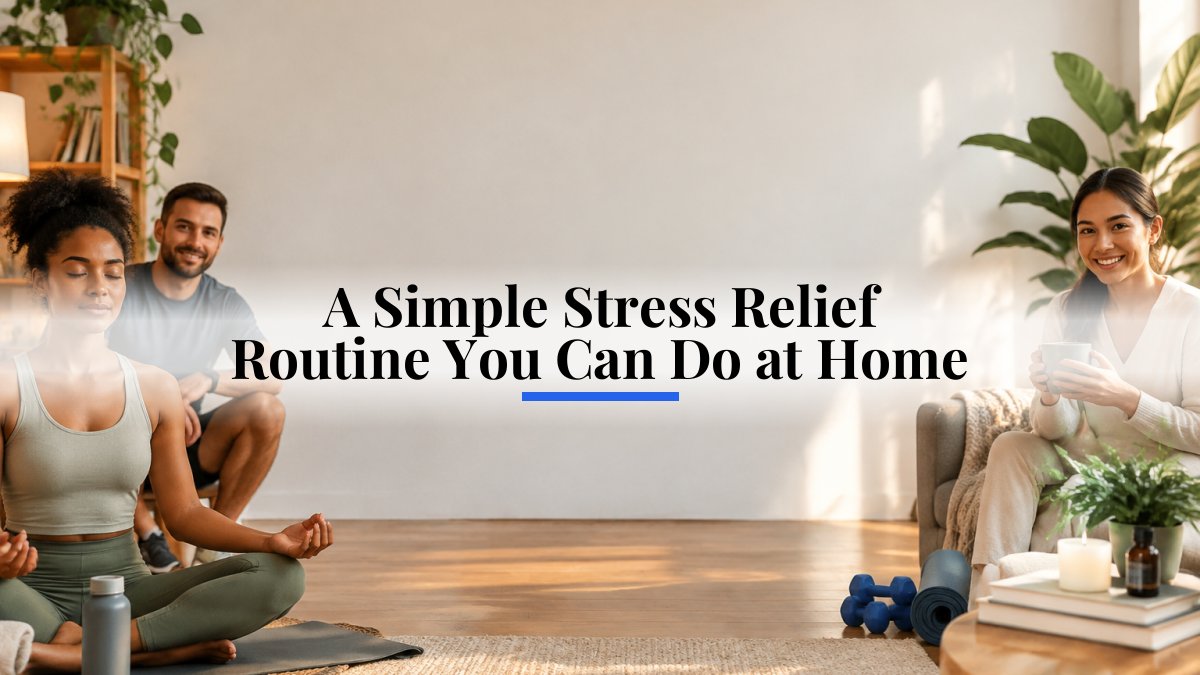
A simple stress relief routine at home takes ten minutes and follows four steps in order: two minutes of slow breathing, three minutes of gentle movement, three minutes of grounding and body awareness, and two minutes of stillness. Repeat it in the same spot most days, because consistency matters more than intensity.
- Set up with a quiet spot, comfortable clothes, a timer, and a mat or carpet.
- Breathe in through your nose for four counts, hold four, and exhale for six.
- A 3-minute version uses one minute each of breathing, shoulder rolls, and grounding.
- Match exercise intensity to your energy level, from grounding on low days to brisk walking on high days.
- Rate your stress from 1 to 10 before and after for two weeks to see if the routine works.
Table of Contents
- Why a Simple Stress Relief Routine at Home Works
- What You Need Before You Start
- Your 10-Minute Stress Relief Routine, Step by Step
- Breathing Exercises for Stress Relief You Can Do Anywhere
- Stress Relief Exercises at Home for Every Energy Level
- How to Relieve Stress Quickly When You Only Have a Few Minutes
- How to Tell If Your Routine Is Working
- Build Your Home Stress Relief Kit with JordanWellnessCo
- Frequently Asked Questions
Why a Simple Stress Relief Routine at Home Works
A simple stress relief routine at home works because it gives your body a predictable signal to shift out of fight-or-flight mode. When you repeat the same calming steps in the same order, your nervous system learns the pattern. Heart rate settles. Muscles let go. Breathing slows.
Most people do not need a complicated program. They need ten minutes and a plan they will actually follow.
The catch is consistency, not intensity. A short routine you repeat most days does more for stress management than an elaborate one you abandon after a week. The American Psychological Association's stress resources make the same point: small, repeated self-care habits carry more weight than occasional big efforts.
That is the whole idea here. Ten minutes, four steps, done at home with no equipment beyond a mat and a quiet corner.
What You Need Before You Start
You need very little: a quiet spot, comfortable clothes, a timer, and a floor mat or carpet. That is it.
A few setup tips make the routine easier to keep:
- Pick the same spot each day. Your brain starts to link that corner with winding down.
- Silence notifications. Screen time during the routine defeats the purpose.
- Keep water nearby. Slow breathing can dry your mouth.
- Set a timer for ten minutes. You will stop checking your phone.
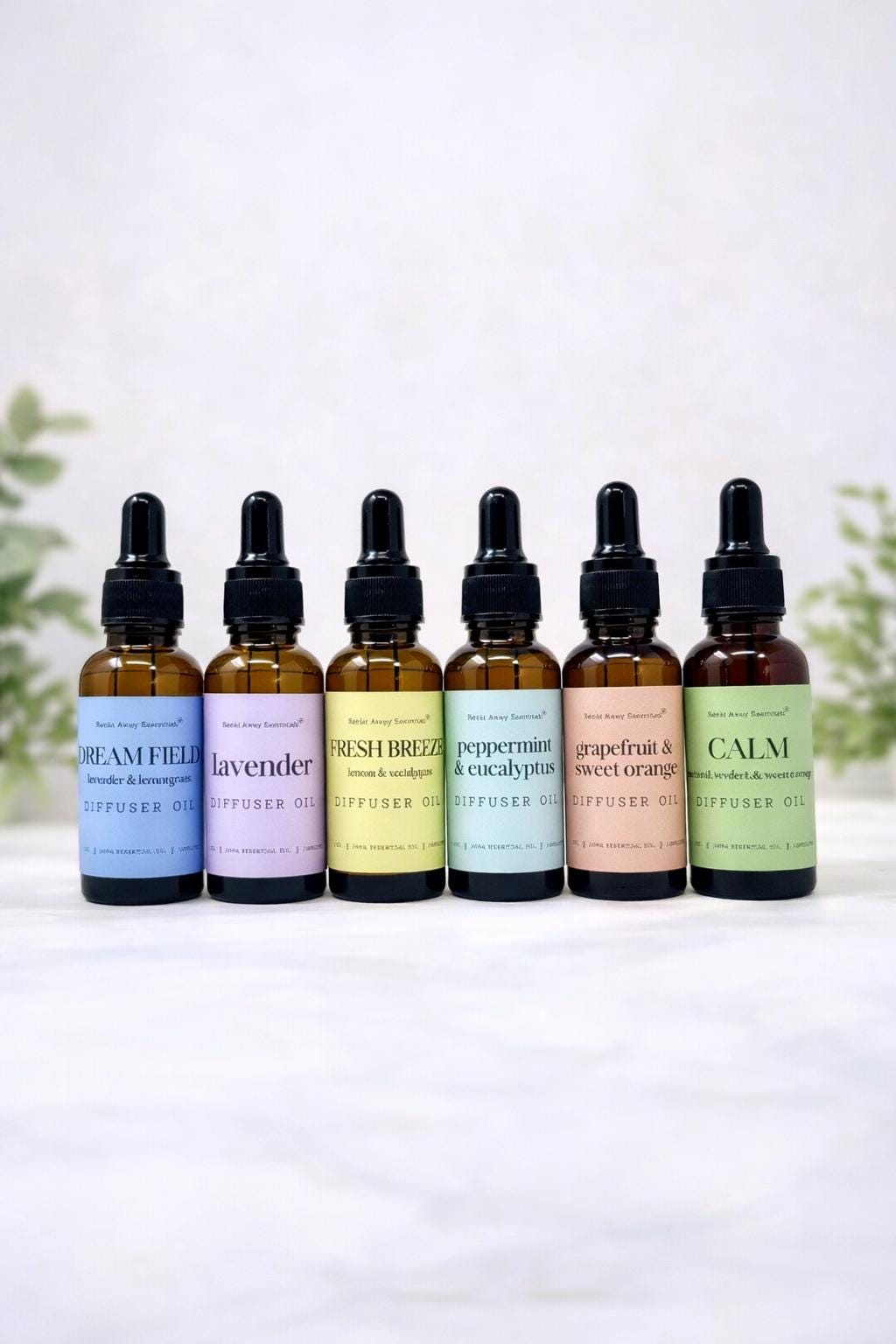
- Add a calming scent if you like. A few drops of diffuser oil in an ultrasonic diffuser can anchor the routine with a familiar smell.
Skip the urge to buy gear first. Start with what you own. Add tools later, once the habit sticks.
Your 10-Minute Stress Relief Routine, Step by Step
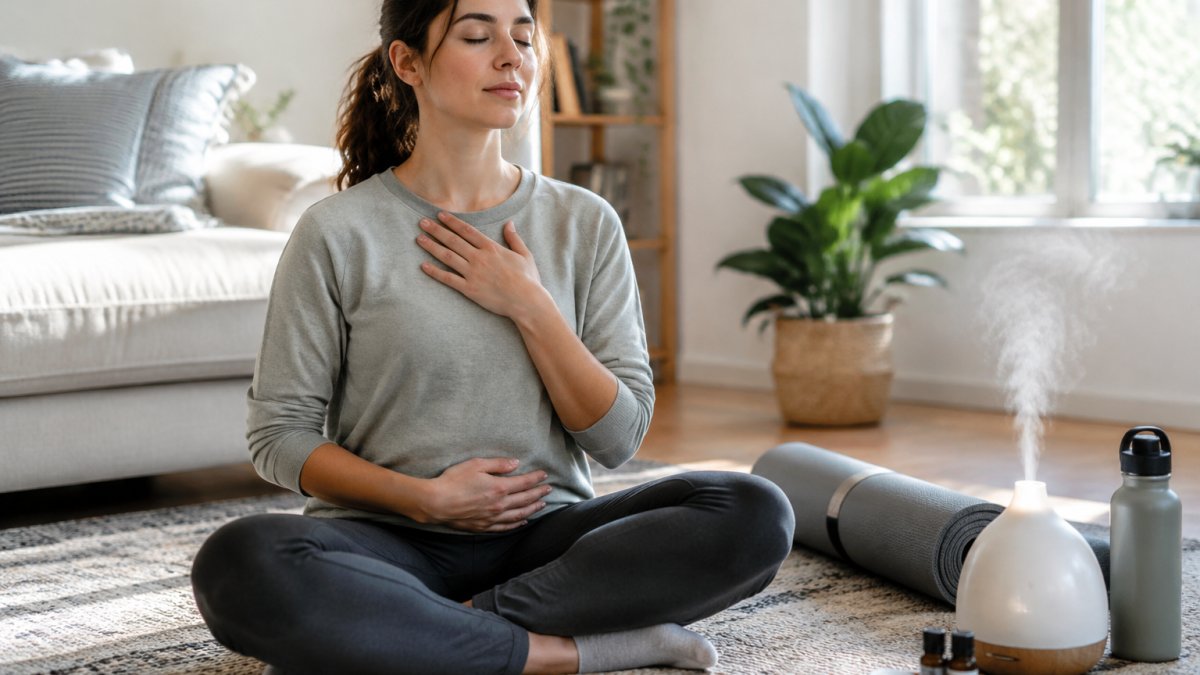
Here is the full 10-minute stress relief routine. Follow the steps in order. Each one sets up the next. If you only have a few minutes, use the 3-minute version below. If you have more time, use the 20-minute version.
Minutes 1-2: Slow Breathing to Settle In
Sit tall and close your eyes. Breathe in through your nose for a count of four. Hold for four. Breathe out for six. Repeat for two minutes.
A longer exhale is a common focus in slow-breathing practices. If counting feels fussy, just make every out-breath a little longer than the in-breath.
Watch out: if you feel dizzy or short of breath, stop counting and breathe normally for a minute. Slow breathing should feel easy, not like a workout.
Minutes 3-5: Gentle Movement to Release Tension
Stand up and move slowly. Roll your shoulders back five times. Tilt your head side to side. Reach your arms overhead and stretch.
Then do a few slow squats or a gentle forward fold. Nothing should hurt. The goal is muscle tension release, not a workout. Move at half your normal speed and notice where your body holds tight.
If standing is uncomfortable, do the same movements seated: shoulder rolls, neck tilts, and seated spinal twists. The point is slow, deliberate motion, not range of motion.
Minutes 6-8: Grounding and Body Awareness
Sit back down. Press your feet into the floor and feel the contact. Name five things you can see, four you can hear, and three you can feel.
This is a classic grounding technique, and it works because it pulls attention out of worry and into the present. Pair it with body awareness: scan from your feet to your head and relax each area as you pass it.
Minutes 9-10: Wind Down and Reset
Finish with two minutes of stillness. Breathe normally. Let your mind wander without chasing thoughts.
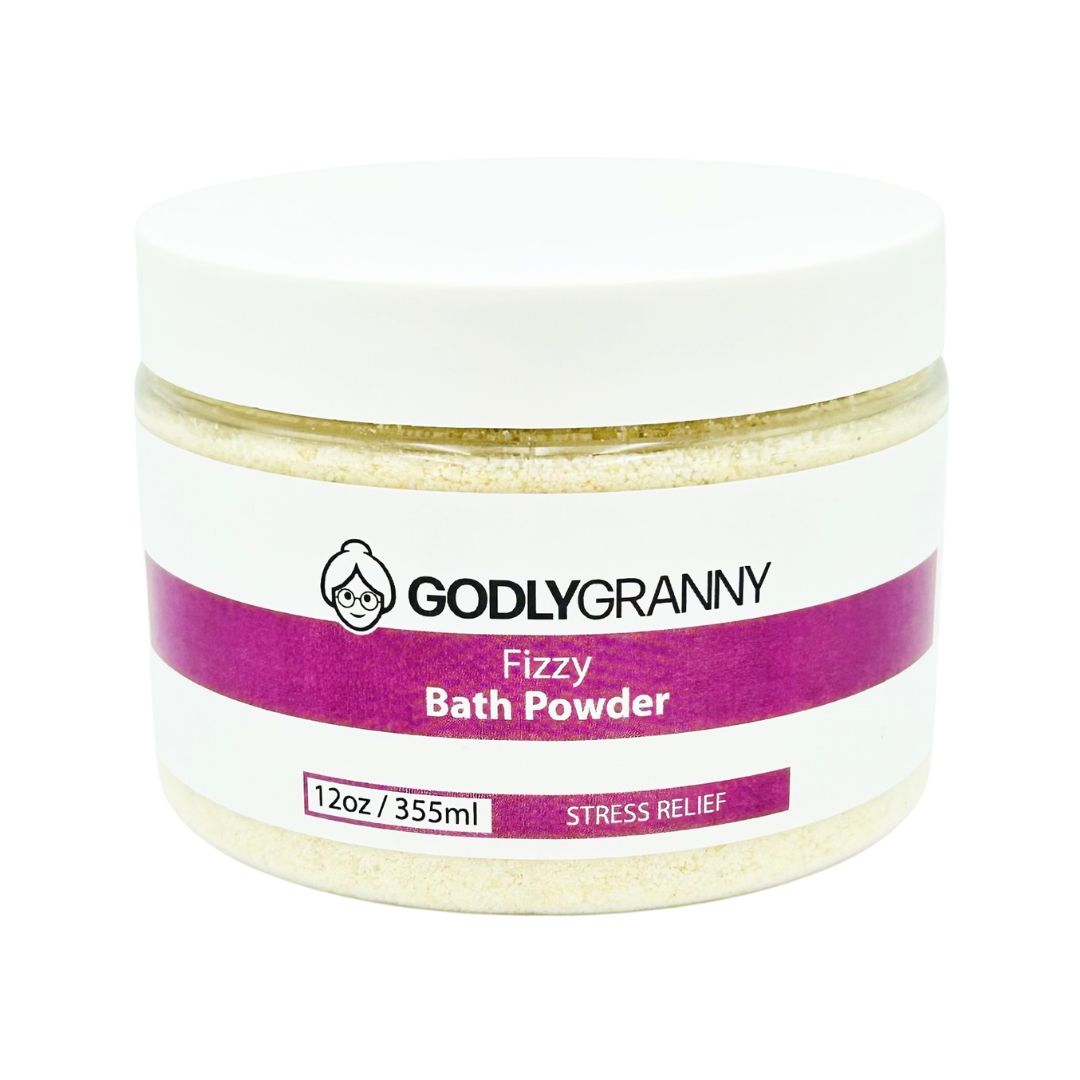
A warm compress or a lavender foot soak makes a nice close if you have extra time. A self-heating eye mask works well too, especially if screen strain is part of your stress. Then sit quietly for a minute before you get up.

3-Minute Version
Use this when you are short on time or stressed in the middle of the day. Minute 1: slow breathing (four in, six out). Minute 2: shoulder rolls and a gentle neck stretch. Minute 3: grounding (name three things you see, two you hear, one you feel).
20-Minute Version
Add five minutes of walking or stretching after the movement step, and five minutes of quiet reading or rest after the wind-down. Keep the same order so your body learns the sequence.
Seated and Low-Mobility Version
Do the entire routine from a chair. Breathe, roll your shoulders, tilt your head, press your feet into the floor, and finish with stillness. Skip any movement that causes pain. The routine works because of the sequence and the slow pace, not because of standing.
If a Step Feels Uncomfortable
Breathing exercises are not a good fit for everyone. If slow breathing makes you anxious, shorten the exhale or skip to the movement step. If movement hurts, reduce the range or switch to the seated version. If grounding feels forced, try naming sounds instead of sights. Stop any step that increases discomfort and move to the next one.
Breathing Exercises for Stress Relief You Can Do Anywhere
Breathing exercises for stress relief are the fastest tool in this routine because they travel with you. No mat, no timer, no quiet room required.
Three that work well:
- Box breathing. Inhale four counts, hold four, exhale four, hold four. Repeat four times. Good before a meeting.
- 4-6 breathing. Inhale four, exhale six. Do it for a minute at your desk.
- Physiological sigh. Two quick inhales through the nose, then one long exhale through the mouth. One or two rounds takes seconds.
A common mistake is breathing too hard. Slow breathing should feel easy, not like a workout. If you get dizzy, stop and breathe normally.
Stress Relief Exercises at Home for Every Energy Level
Stress relief exercises at home can be matched to your energy level. On a low day, gentle is better. On a restless day, movement helps more.
| Energy Level | Best Option | Time | Why It Fits |
|---|---|---|---|
| Low | Slow breathing, grounding | 5 min | No movement required |
| Medium | Stretching, yoga, walking | 10 min | Loosens tension without strain |
| High | Jogging, Pilates, brisk walk | 15 min | Burns off restless energy |
| Very low | Foot soak, eye mask, rest | 10 min | Comfort-first wind down |
Time
Physical activity is a common way people manage stress. A brisk walk counts. So does stretching on the floor. Pick the row that matches how you feel today, not how you felt last week.
How to Relieve Stress Quickly When You Only Have a Few Minutes
To relieve stress quickly, use one tool, not five. Pick a single technique and give it your full attention for two minutes.
The fastest options:
- One long exhale. Breathe out slowly for six seconds. Repeat three times.
- Cold water on your wrists. A quick cool rinse can reset your focus.
- A short walk. Even five minutes outside changes your headspace.
- Shoulder release. Roll your shoulders back slowly ten times.
Short bursts add up. Three two-minute resets across a workday can do more than one long session you keep postponing.
How to Tell If Your Routine Is Working
You will know the routine is working if you notice small shifts within two to three weeks. Better sleep. A shorter fuse. Less jaw clenching. A calmer baseline.
Track it simply with a before-and-after check-in. Before you start the routine, rate your stress from 1 to 10. After you finish, rate it again. Write both numbers down or note them in your phone. Do this for two weeks. You are looking for a trend, not a single good day.
Many people notice a small drop in stress ratings after a routine like this. If your after-routine rating is consistently lower, the routine may be helping.
If the numbers do not move after two weeks, adjust one variable at a time. Try a different time of day, a longer exhale, or the 20-minute version. Change one thing and track for another week.
For a deeper look at what to expect, our guide to stress and stress management walks through how stress affects the body and how to measure progress. If stress is affecting your daily life despite a steady routine, talk with a qualified professional.
Build Your Home Stress Relief Kit with JordanWellnessCo
Building a home stress relief kit is the easiest way to make the routine stick. When your tools are already in the corner, you remove the friction that kills good habits.
Start with the basics: a mat, a timer, and a quiet spot. Then add one or two comfort items that fit your routine. You can find a diffuser oil for a calm scent, a lavender foot soak for the wind-down minutes, and a self-heating eye mask for screen-tired eyes. Each one slots into the ten-minute plan above.
If you want the broader habit-building context, our guide to natural ways to reduce stress covers seven daily habits that pair well with this routine.
The routine only works if you repeat it. Keep the kit visible, keep the steps short, and keep going on the days you do not feel like it.
Stress builds quietly, and the fix is rarely dramatic. Ten minutes, four steps, and a corner of your home are enough to start. JordanWellnessCo stocks the self-care essentials that support that routine, from calming diffuser oils to wind-down foot soaks and eye masks, all in one place.
Frequently Asked Questions
How long should a stress relief routine take?
Ten minutes is enough to make a difference, and it is short enough to repeat daily. A simple stress relief routine at home can follow a fixed sequence: two minutes of slow breathing, three minutes of gentle movement, three minutes of grounding, and two minutes of winding down. If you have more time, extend the movement and grounding portions rather than adding new steps. Consistency matters more than length, so a routine you actually finish beats a longer one you skip.
What is the 3-3-3 rule for stress?
The 3-3-3 rule is a grounding technique: name three things you can see, three sounds you can hear, and three parts of your body you can move or feel. It pulls attention away from racing thoughts and back to your surroundings. It fits neatly into a stress relief routine as a quick reset between breathing and movement. You can use it anywhere, but it works especially well at home where you can pause without interruption.
Which breathing exercises for stress relief are easiest to learn?
Start with slow breathing: inhale through your nose for a count of four, hold for four, and exhale for six. The longer exhale is what helps settle the stress response. Box breathing, with equal counts of four for inhale, hold, exhale, and hold, is another simple option. Practice either one for two minutes at the start of your routine. If you feel lightheaded, return to normal breathing and try a shorter count next time.
What should I do if a technique feels uncomfortable?
Stop and switch to something gentler. Some people feel dizzy during breath holds, and some stretches feel sharp rather than simply tight. Sharp pain, numbness, or lightheadedness means back off. Shorten the counts, reduce the range of motion, or swap the step for a quieter one such as sitting still and noticing your surroundings. Discomfort that fades as you settle is normal; pain that increases is a signal to adjust or skip that step and mention it to a healthcare professional if it keeps happening.


